
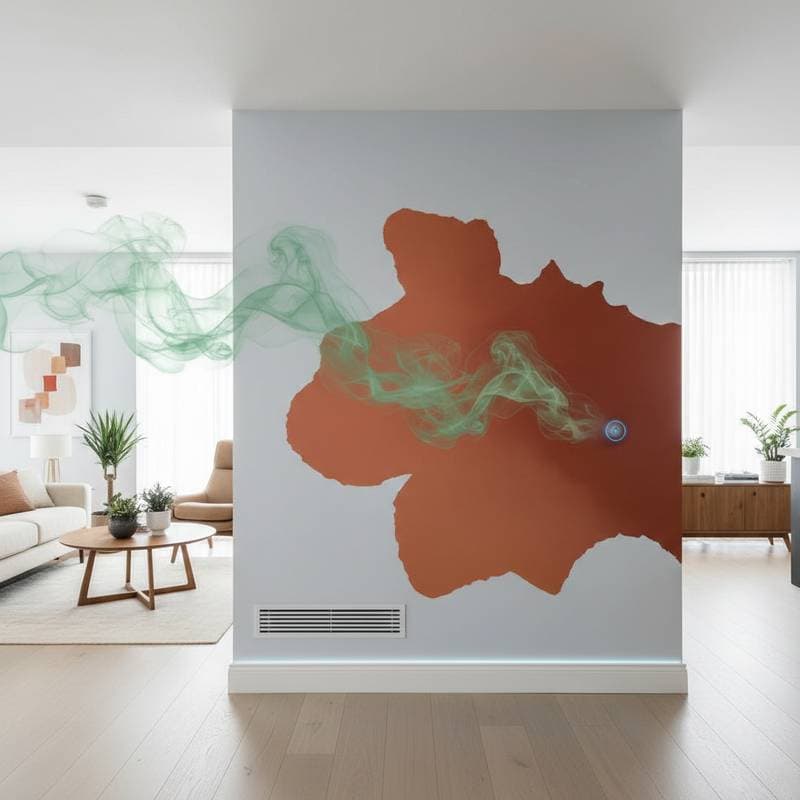
Paint That Signals Toxic Air Through Color Changes
Picture a serene living room wall in gentle sage green that maintains its soothing appearance until indoor air quality declines. At that moment, the color subtly shifts to indicate potential hazards. This advancement bridges futuristic science with practical home improvement, redefining interior design by prioritizing health alongside style.
Specialized paints incorporate intelligent materials that respond to elevated levels of volatile organic compounds, known as VOCs. These compounds arise from sources like cleaning products, paints, and furniture off-gassing. By providing visual cues without the need for separate gadgets, such paints create environments that actively safeguard occupants while remaining unobtrusive.
Homeowners seeking enhanced air quality find these solutions particularly valuable. They integrate seamlessly into daily life, offering protection that feels intuitive rather than intrusive.
Mechanisms of Color-Changing Detection Paint
Core to these paints are specialized pigments and nanoparticles designed to interact with airborne pollutants. Upon exposure to VOCs, these elements undergo chemical reactions that modify the paint's optical properties, resulting in a noticeable color transformation.
Titanium dioxide particles, for instance, oxidize when encountering gases like formaldehyde, prompting a hue shift. Copper-based additives similarly react to benzene, altering light reflection patterns. More sophisticated variants embed micro-sensors that transmit air quality metrics to mobile applications, enabling precise monitoring.
Primary Detection Processes
- Colorimetric Shifts: The coating transitions from one shade to another upon toxin detection, for example, evolving from light blue to muted gray in the presence of formaldehyde.
- Light-Activated Responses: Pigments intensify reactions under ambient lighting, amplifying sensitivity to common indoor pollutants.
- Integrated Sensor Technology: Embedded components link to apps, providing quantitative data on VOC concentrations for informed action.
Application mirrors conventional painting methods: apply with standard tools, allow drying, and observe normal performance until activation. This simplicity ensures broad accessibility for residential use.
Practical Applications and Case Studies
Consider a compact urban apartment where a designer applied neutral gray detection paint to kitchen surfaces adjacent to cooking areas. The resident, an avid home chef experimenting with diverse recipes, previously overlooked ventilation needs. Shortly after installation, the paint darkened during extended stovetop use, prompting timely window opening and fresher air circulation.
In a family home, parents selected a soft beige variant for their infant's nursery to address sensitivities from new furnishings. As assembly released VOCs, the paint shifted to a pale mauve, alerting caregivers to ventilate thoroughly before occupancy. This intervention averted possible allergic responses, demonstrating the paint's role in proactive health management.
Such instances illustrate the paint's utility beyond experimentation. It supports routine habits by embedding safety into the home's aesthetic framework.
Scientific Foundations of Responsive Pigments
On a molecular scale, these paints balance chemical reactivity with visual stability. Pigment molecules engage pollutants via oxidation or reduction, restructuring to change light absorption and reflection.
Ongoing research expands detection capabilities to handle diverse threats, including carbon monoxide, ammonia, and nitrogen oxides, each triggering unique color cues. This multi-pollutant approach positions the technology as a comprehensive indoor safeguard, akin to essential fixtures like fire alarms.
Stability remains a key focus; formulations include buffers to resist influences from moisture or thermal fluctuations, minimizing erroneous signals. These refinements ensure the paint retains its decorative integrity in everyday settings.
Affordable Entry Points to Detection Technology
Full-room applications may deter some users due to initial costs. Several entry-level options allow testing without major investments.
- Sample Applications: Brands offer compact containers for trialing detection paint on limited areas, functioning as dedicated air monitors.
- Pre-Coated Decor Elements: Wall panels or accents finished with responsive coatings double as art pieces and quality indicators.
- Customization Sets: Enthusiasts can incorporate indicator chemicals into base coats for targeted, small-scale implementations.
As production advances, pricing aligns closer to high-end conventional paints, broadening adoption. These alternatives invite gradual integration into existing spaces.
Insights from Specialists
Experts in environmental science stress that color-changing paints enhance, rather than supplant, foundational practices like proper airflow and upkeep. Dr. Lena Ortiz, a materials expert in indoor air dynamics, advocates viewing them within a comprehensive wellness plan. She recommends combining them with air-purifying foliage, such as peace lilies or snake plants, to optimize outcomes.
Designer Miguel Harper highlights perceptual benefits. He observes, "When paint communicates with the environment, it changes how clients think about their homes. They start viewing walls as living surfaces, not static backgrounds."
This perspective fosters deeper environmental awareness, encouraging habits that sustain well-being.
Integrating Color Signals into Daily Home Life
Adopting detection paint involves selecting shades that harmonize with interiors while prioritizing sensitivity to local pollutants. Placement in high-exposure zones, like near appliances or entryways, maximizes effectiveness.
Maintenance requires occasional inspections for wear, though durable formulas withstand typical cleaning. Pairing with ventilation routines amplifies benefits, creating layered protection.
Ultimately, these paints empower residents to inhabit spaces that respond dynamically to health needs. They elevate ordinary walls into silent guardians, promoting vitality through innovative design.