
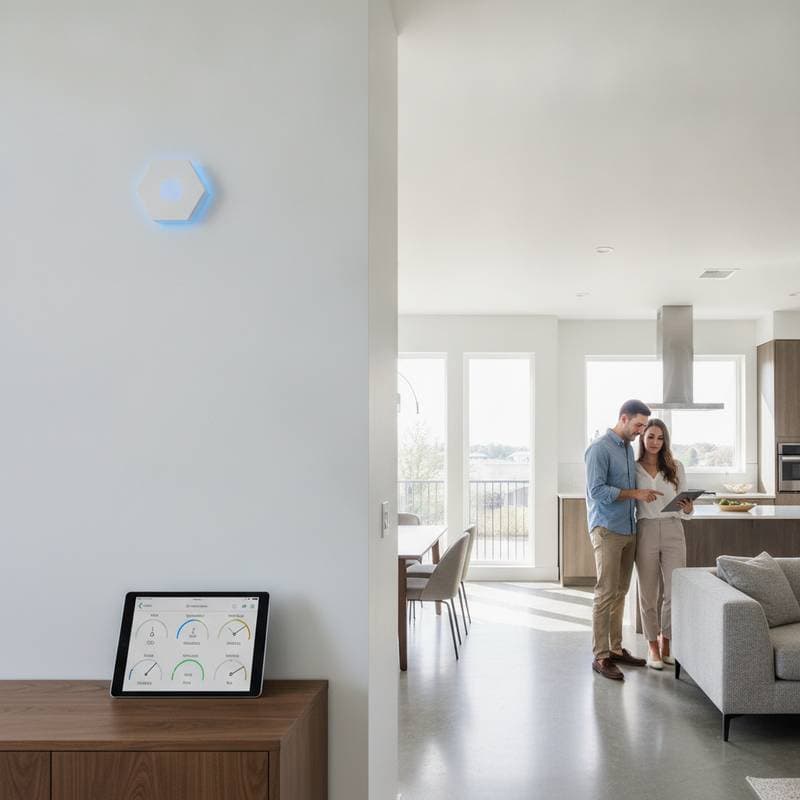
Smart Sensors Are Becoming Standard in New Homes for Air Safety
New homes increasingly use connected sensors to detect harmful gases and poor ventilation. These devices help you spot risks early and improve indoor air with simple, informed actions.
You cannot see carbon monoxide, excess humidity, or many volatile organic compounds, often called VOCs. This article explains what these sensors detect, where they belong, how to respond to alerts, and when professional help is needed.
Sensors support safe habits and working alarms, but they do not replace ventilation, appliance inspections, or emergency services.
What To Know
Smart air sensors measure conditions such as carbon monoxide, smoke, humidity, particles, radon, and selected VOCs. Some connect to a home network and send alerts to a phone. Others work as stand alone alarms. A reading is a warning, not a diagnosis.
Follow the device instructions, keep carbon monoxide and smoke alarms installed, and leave the home immediately if an alarm signals dangerous gas. The move toward built in monitoring reflects tighter attention to indoor air.
New homes often have better insulation and fewer uncontrolled air leaks. That can lower energy use, but it also means pollutants may remain indoors unless mechanical ventilation removes them. Building scientist Joseph Allen, associate professor at Harvard T.H. Chan School of Public Health, has explained that ventilation is a basic control for indoor pollutants. Sensors help you see when that control is not working well.
Why New Homes Need Air Monitoring
A tightly sealed building can hold heat and conditioned air more effectively. It can also hold cooking smoke, cleaning fumes, moisture, and emissions from new flooring or furniture.
VOCs are gases released by materials and products such as paint, adhesives, pressed wood, fragrances, and solvents. Some cause irritation. Others can harm health with repeated or heavy exposure.
Carbon monoxide presents a different risk. It forms when fuel burns without enough oxygen. Furnaces, fireplaces, boilers, water heaters, stoves, generators, and attached garages can all be sources. Carbon monoxide has no reliable smell. A sensor that detects it gives you a warning that your senses cannot provide.
Humidity matters for another reason. Persistently damp air can support mold growth, damage finishes, and create conditions that feel uncomfortable. Very dry air can irritate skin and airways. Particle sensors can reveal smoke, cooking particles, and dust that may pass through a room before you notice them.
Smart monitoring does not make every new home safe by itself. It gives you information about changing conditions. You still need a working exhaust fan, clean filters, sealed combustion equipment, and a plan for emergencies.
What Smart Sensors Can Detect
Sensor packages differ widely. Read the label and technical specifications before you buy or accept a builder installed system.
- Carbon monoxide sensors detect a colorless, odorless gas linked to fuel burning.
- Smoke alarms detect smoke particles and remain essential even when an air monitor is installed.
- VOC sensors estimate the presence of certain gases from products, finishes, and household activities.
- Particle sensors measure tiny airborne particles from smoke, cooking, dust, and outdoor pollution.
- Humidity sensors track moisture conditions that can affect mold, comfort, and materials.
- Radon monitors measure radioactive gas that can enter through soil and foundation openings.
- Combustible gas sensors detect gases such as natural gas or propane, though coverage and placement vary.
A VOC sensor often reports a combined index rather than identifying one chemical. Treat a rising reading as a prompt to investigate, not proof of a specific toxic gas.
Tools and Materials
- Manufacturer instructions and the device app
- A ladder or step stool for safe mounting
- Batteries approved by the manufacturer
- A soft, dry cloth
- A simple notebook or digital log for readings
- A carbon monoxide alarm for each required area
- A hygrometer, if your sensor does not measure humidity
Step By Step
1. Map likely sources
Walk through the home and list fuel burning appliances, fireplaces, garages, bathrooms, kitchens, laundry areas, bedrooms, and rooms with new finishes. Mark spaces where moisture, smoke, solvents, or combustion gases could collect.
2. Check the sensor type
Confirm what the device actually measures. A general air quality monitor may not detect carbon monoxide. A VOC sensor may not detect natural gas. A smoke alarm may not measure particles in a way that helps you compare daily air conditions.
3. Place carbon monoxide alarms correctly
Install alarms outside sleeping areas and on each level, following local code and manufacturer guidance. Keep them away from direct drafts, bathrooms, and cooking appliances unless the instructions specify otherwise. Do not use an indoor air monitor as a substitute for a listed carbon monoxide alarm.
4. Position room sensors thoughtfully
Place a general monitor at breathing height in a central living area, away from windows, supply vents, humidifiers, and direct sunlight. Avoid placing it beside a stove, diffuser, or cleaning cupboard. A false spike may come from concentrated vapors near the device.
5. Connect the system securely
Use the official app and a strong, private network password. Turn on alerts for carbon monoxide, smoke, high humidity, and severe air quality changes. If the system stores data online, review its privacy settings before connecting more household devices.
6. Establish a baseline
Let the monitor run under ordinary conditions before judging one reading. Record conditions during cooking, showering, cleaning, and closed window periods. A baseline helps you notice patterns and test whether an action, such as using an exhaust fan, improves the air.
7. Respond to VOC increases
Open windows when outdoor conditions are safe, run a correctly vented exhaust fan, and remove the suspected source. Put paints, solvents, and fuel containers in approved storage outside living areas. Do not cover an odor with fragrance products. If irritation continues, leave the area and seek medical advice.
8. Respond to carbon monoxide alerts
Leave immediately and call emergency services from outside. Do not reenter until qualified responders say it is safe. Do not silence the alarm and continue investigating indoors. Afterward, have fuel burning equipment and venting inspected by a qualified technician.
9. Test and maintain every device
Use the test button according to the instructions. Replace batteries and sensors at the stated intervals. Dust can block openings, so wipe the exterior with a dry cloth. Never paint, spray, or tape over an alarm.
Dos and Don'ts
Dos
- Use source control first. Remove pollutants, vent cooking outdoors, and repair leaks before relying on filtration.
- Compare patterns. Repeated increases after showers or cooking point to ventilation needs.
- Keep records. Notes help a technician find equipment or moisture problems.
- Use listed alarms. Look for recognized safety certification and follow placement instructions.
- Treat symptoms seriously. Headaches, dizziness, nausea, or breathing trouble require fresh air and medical guidance.
Don'ts
- Do not assume a low VOC score means no toxic gas exists. Many sensors detect a broad mixture, not every chemical.
- Do not place a monitor behind furniture or curtains. Blocked airflow can distort readings.
- Do not ignore a carbon monoxide alarm because you feel fine. Low exposure can cause symptoms that people dismiss.
- Do not use ozone generators as a quick fix. Ozone can irritate lungs and react with indoor chemicals.
- Do not depend on an app alone. Internet outages and dead batteries can interrupt alerts.
Reading Sensor Data Without Panic
Smart sensors can create unnecessary worry when you treat every number as a pass or fail result. Look for direction, duration, and cause. A short increase during frying is expected. A high reading that persists after cooking ends deserves attention. A humidity increase after a shower should fall when the fan runs and the room dries.
Manufacturers use different scales, so do not compare a score from one brand with a score from another. Read the manual for alert thresholds and calibration limits. Some sensors need clean air, a setup period, or periodic calibration. Others estimate conditions through algorithms. This means a reading can guide your next action, but it cannot replace laboratory testing.
For VOC concerns, remove likely sources one at a time. Store chemicals away from living spaces, stop using fragranced sprays, and increase outdoor air when weather and outdoor pollution permit. If a new home has persistent odors, eye irritation, or headaches, ask the builder for material information and arrange an independent indoor air assessment.
When To Call A Pro
Call a qualified professional for active gas odors, repeated carbon monoxide alerts, suspected combustion problems, mold from a hidden leak, radon concerns, or electrical exposure near a sensor. Ask an HVAC technician to inspect fuel burning equipment and venting. Use a certified radon measurement or mitigation professional when readings remain elevated. Builder warranty issues, sealed hardwood damage, and concealed moisture also need documented inspection before you make repairs.
Cost and Time Snapshot
Basic smoke and carbon monoxide alarms often cost about $20 to $80 each. General smart air monitors commonly cost $60 to $300. Radon monitors often cost $100 to $250, while professional testing or mitigation can range from $150 to more than $3,000. Installation may take 15 minutes to several hours, depending on wiring, network setup, and the number of rooms.
Maintenance or Upkeep
- Test smoke and carbon monoxide alarms monthly, following the manufacturer instructions.
- Check batteries whenever the device gives a low battery warning.
- Wipe sensor openings with a dry cloth when dust builds up.
- Review readings after remodeling, new furniture, pest treatments, or appliance changes.
- Clean or replace HVAC filters according to the filter maker and equipment guidance.
- Check bathroom and kitchen fans for weak airflow.
- Repeat investigation when odors, condensation, irritation, or unusual readings return.
Making Smart Monitoring Useful
A sensor works best when it leads to a clear action. Pair measurements with good ventilation, safe appliance care, low emission materials, and working alarms. Start with sleeping areas, fuel burning equipment, and rooms where moisture or chemicals collect. Then add monitoring where your household sees repeated problems.