
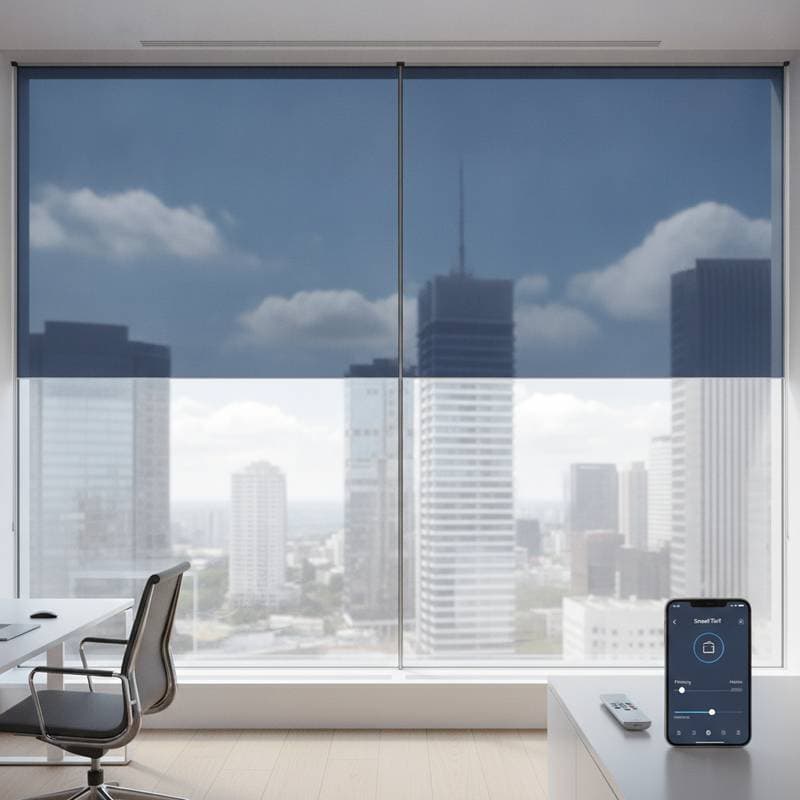
Motorized Smart Film Delivers Glare Control Without Dust
- Confirm window compatibility before purchase.
- Gather all tools and clean the glass surface completely.
- Follow temperature guidelines during application.
- Test electrical connections prior to final wiring.
- Establish a maintenance routine using only approved cleaners.
Motorized smart film transforms window management by allowing instant adjustments to light, privacy, and heat. Users control tint levels through simple switches or apps, eliminating the need for bulky window coverings.
Performance Advantages Over Traditional Blinds
Blinds trap dust and require frequent cleaning while also risking breakage. Motorized film maintains a flat, unobtrusive surface that resists dirt buildup and operates in near silence.
The film applies directly to existing glass. Once installed, it switches between clear and tinted states within seconds. This capability supports both residential and commercial settings where consistent light control improves comfort.
Required Tools and Materials
- Measuring tape
- Spray bottle filled with mild soap solution
- Microfiber cloths
- Plastic squeegee
- Power supply and wiring kit
- Smart controller or remote
- Insulated gloves
- Stable step stool
A credit card wrapped in cloth can substitute for a squeegee when needed.
Application Guidelines
Recommended practices
- Verify that glass type accepts adhesive film, particularly on double-glazed or tempered units.
- Remove all particles from the glass before placement.
- Secure wiring along frames to maintain a tidy appearance.
- Perform a function test immediately after installation.
- Limit cleaning products to mild formulas.
Practices to avoid
- Application during temperature extremes that impair adhesion.
- Folding or creasing the material.
- Contact with sharp objects after placement.
- Overloading a single power supply beyond its rated capacity.
- Coverage of damaged glass surfaces.
Investment and Installation Timeline
Expect costs between one hundred and five hundred dollars for each standard window. Factors such as film grade, control system, and power requirements influence the final price. Larger or multi-panel projects increase expenses accordingly.
A single small window takes one to two hours for manual installation. A complete room may require several hours. Professional teams complete work more quickly yet add labor fees.
Reasons for Adoption
Motorized film preserves outward views while reducing glare and solar heat. Rooms stay brighter than they would with fully closed blinds, and the absence of cords or slats improves both safety and appearance.
Energy performance stands out as a primary benefit. The film limits heat gain, which lowers cooling loads and supports steady indoor temperatures. Users can maintain daylight while still achieving privacy, resulting in reduced electricity consumption over time.
Design consistency also drives interest. Clear glass aligns with modern interiors, and the film allows on-demand privacy without visual interruption from hardware.
Window Compatibility and Safety
The product adheres to smooth glass but should not cover textured, frosted, leaded, or cracked surfaces. Confirm warranty terms before application. In humid spaces, seal edges to prevent moisture damage. Select UV-stable film for south-facing exposures.
Low-voltage power supplies that carry proper certification provide safe operation. Route cables away from pinch points and moving components.
Long-Term Environmental Impact
Lower cooling demand reduces overall energy use and associated emissions. Ultraviolet blocking extends the lifespan of furnishings and flooring. Durable film construction decreases replacement frequency compared with conventional blinds.
Daily Operation and Upkeep
Routine use involves simple app commands or wall switches to adjust tint. Annual inspections of wiring and edge seals keep the system reliable. Replacement occurs only after many years of service, supporting both convenience and resource conservation.