
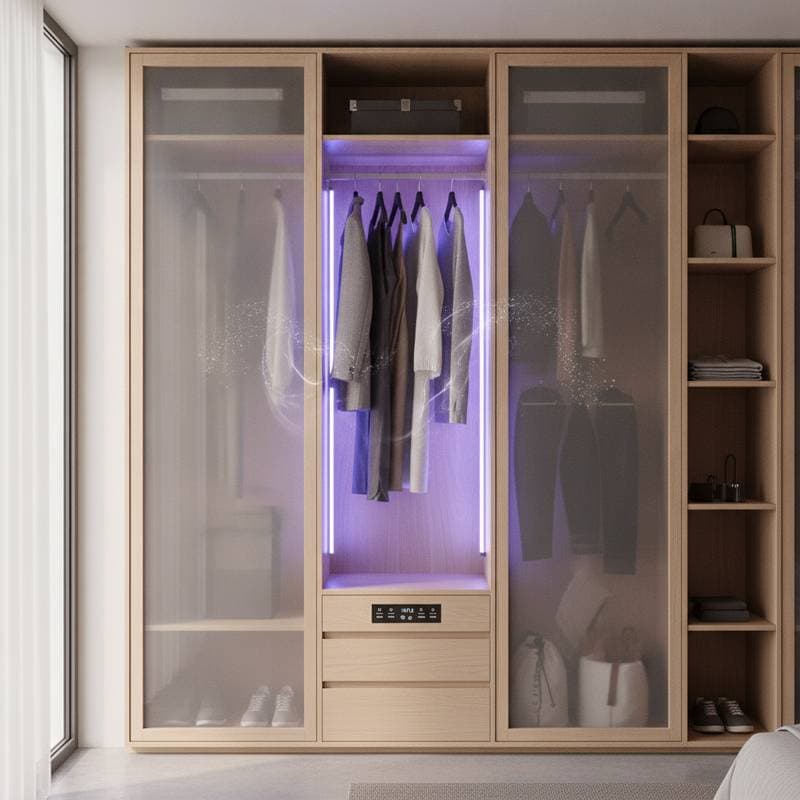
UV-C Closets Refresh Clothes Without Water or Detergent
UV-C closets apply short-wavelength ultraviolet light to disinfect garments and eliminate odors in minutes. This approach reduces the need for frequent washing while preserving fabric integrity.
The technology targets bacteria, viruses, and odor compounds directly on dry textiles. Users gain a practical option for maintaining freshness between wears.
Core Principles of Operation
UV-C light damages microbial DNA and RNA to prevent reproduction. It also fragments sulfur-based molecules responsible for sweat and smoke smells.
Exposure duration and fabric compatibility determine results. Overuse risks fiber weakening or dye fading, so manufacturer guidelines must govern each session.
Required Items
- UV-C closet or garment cabinet
- Dry, unstained clothing
- Lint roller or soft brush
- Cotton gloves for delicate items
- Microfiber cloth for interior surfaces
Preparation and Use Sequence
- Shake garments to dislodge loose particles and inspect for stains that require separate treatment.
- Hang items with at least one inch of space between them to allow full light coverage.
- Secure the door completely before starting any cycle.
- Choose a 10-to-20-minute setting for routine refresh or a longer cycle for athletic wear.
- Allow the cycle to complete without interruption.
- Open the door and permit air exchange for several minutes to disperse residual ozone.
- Wipe interior surfaces weekly to maintain bulb efficiency.
- Protect silk, velvet, or untreated wool with shorter cycles or a cotton barrier bag.
- Return cooled garments to regular storage once they feel neutral and dry.
Recommended Practices
Test a single garment first when fabric response remains uncertain. Replace bulbs after roughly nine hundred hours or when odor reduction declines. Apply the unit to shoes, hats, and linens that retain smells. Follow all model-specific timing instructions.
Avoid direct viewing of active bulbs. Never process wet items. Limit cycles on sensitive textiles. Recognize that UV-C treatment does not remove visible soil or oils.
Professional Service Situations
Mold inside the unit, electrical faults, or widespread fading warrant technician inspection. Leather, suede, and embellished pieces benefit from controlled commercial equipment that balances moisture and exposure.
Investment and Duration
Compact models range from two hundred to five hundred dollars. Larger cabinets exceed this range. Replacement bulbs cost fifteen to forty dollars. Each cycle occupies ten to thirty minutes plus brief setup and ventilation time.
Routine Care
Clean interior walls monthly with a dry cloth. Clear vents to avoid heat accumulation. Inspect door seals quarterly for proper closure. Recalibrate sensors if automatic shutoff fails.
Additional Advantages
Fewer wash cycles conserve water and detergent. Reduced mechanical agitation extends garment lifespan. Coats, uniforms, and accessories receive quick treatment without machine washing.
Practical Constraints
UV-C light leaves dirt and oils untouched, so it supplements rather than replaces laundering. Thick fabrics may require extended or double-sided exposure. Bright reds and blacks can show minor fading after repeated use; rotation and shorter cycles mitigate this effect.
Establishing a Sustainable Routine
Integrate short refresh cycles into weekly wardrobe care. Reserve full washes for visibly soiled pieces. Consistent upkeep keeps clothing ready for wear while lowering overall laundry demands.