
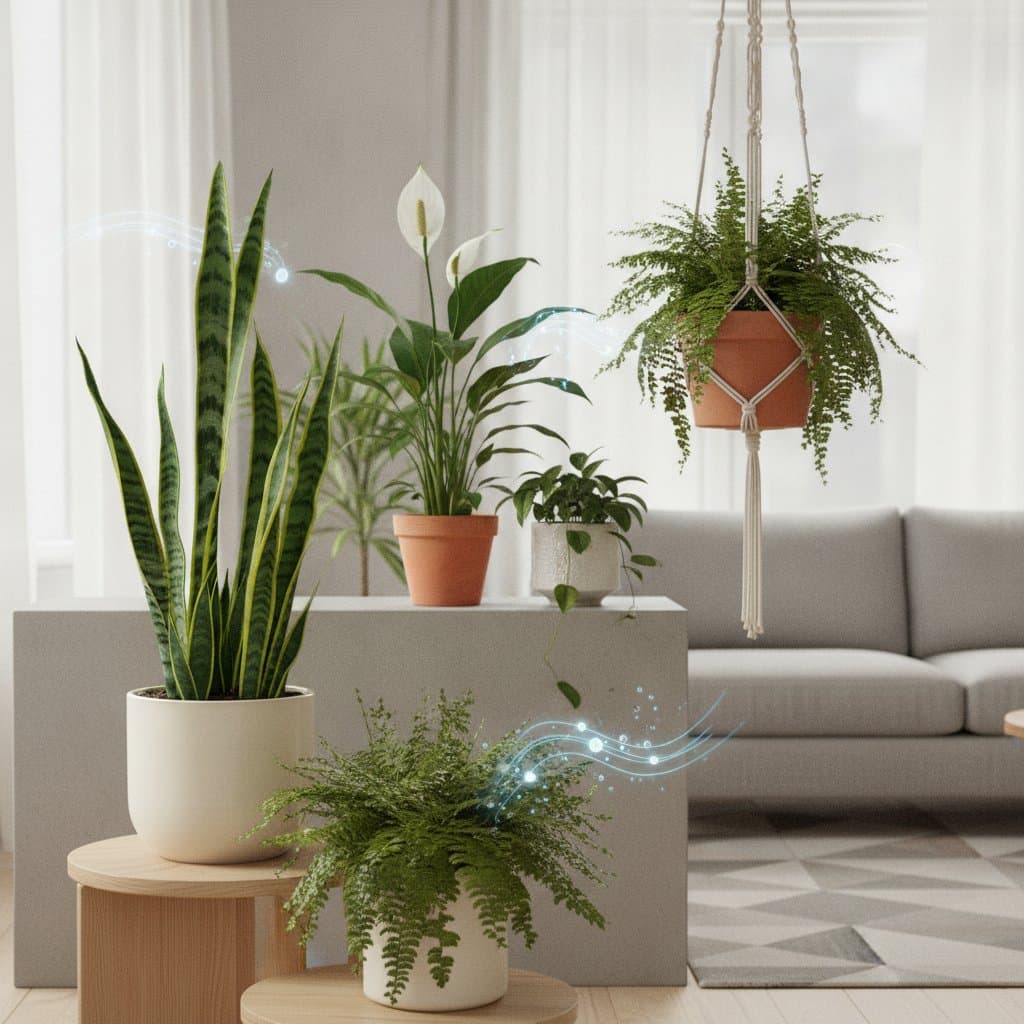
Best Houseplants Ranked by VOC Removal Power
We spend much of our time indoors. The quality of indoor air therefore matters as much as the comfort of our furniture. Volatile organic compounds, or VOCs, drift from paints, furniture finishes, cleaning products, and new carpets. These invisible pollutants can irritate eyes and lungs, especially in spaces with limited ventilation. Certain houseplants absorb and neutralize some of these airborne toxins. No plant replaces proper ventilation and cleaning, yet a few strategically chosen species can make a home feel fresher and more vibrant.
This list ranks effective houseplants for VOC removal. The ranking draws on studies and practical experience while balancing scientific insights with real world care needs. Readers in apartments or family houses will find options that suit their conditions.
1. Snake Plant (Sansevieria trifasciata)
Best for: Nighttime air purification and low maintenance homes
Light needs: Low to bright indirect light
Care level: Very easy
The Snake Plant continues photosynthesis at night and releases oxygen in darkness. This trait makes it suitable for bedrooms. It filters formaldehyde and xylene, two VOCs released by paints and cleaning agents. A medium sized plant in a six inch terracotta pot tolerates neglect and dry air. The upright sword like leaves add sculptural interest to minimalist spaces. Water every two to three weeks and let the soil dry completely between waterings.
2. Spider Plant (Chlorophytum comosum)
Best for: Beginners and high traffic spaces
Light needs: Medium to bright indirect light
Care level: Easy
The Spider Plant removes formaldehyde and carbon monoxide. It suits kitchens or living rooms. The long arching leaves with pale stripes bring movement to a room. Water once a week and allow the top inch of soil to dry. Healthy plants produce baby offshoots that propagate easily. Group several plants in different pot sizes near a sunny window for a layered effect.
3. Bamboo Palm (Chamaedorea seifrizii)
Best for: Formaldehyde removal and tropical warmth
Light needs: Bright indirect light
Care level: Moderate
The Bamboo Palm filters formaldehyde released from pressed wood furniture and adhesives. Its tall arching fronds create a relaxed atmosphere that fits modern and traditional interiors. A mature plant reaches six feet in a twelve inch pot and fills empty corners. Keep soil consistently moist but never soaked. Trim yellowing fronds to encourage new growth. Place it near a north facing window for filtered light.
4. Areca Palm (Dypsis lutescens)
Best for: Larger spaces that need humidity and VOC control
Light needs: Bright filtered light
Care level: Moderate
The Areca Palm adds moisture to dry indoor air while filtering toluene and xylene. Its feathery fronds soften square architectural lines. Keep soil evenly moist with well draining potting mix. Prune old fronds to maintain shape and limit pests. The palm reaches seven feet and works best in spacious rooms near sliding doors that admit bright indirect sunlight.
5. Pothos (Epipremnum aureum)
Best for: Low light rooms and busy households
Light needs: Low to bright indirect light
Care level: Very easy
Pothos removes formaldehyde, benzene, and xylene. It thrives in nearly any light condition. Heart shaped leaves trail from shelves or train around windows. Cuttings root easily in water. Water only when soil dries completely. Trim vines periodically to promote bushier growth. A single cutting can become a lush cascade that softens hard surfaces while filtering air.
Selecting and Positioning Plants
Begin with one or two plants that match your light conditions and routine. Place them where you spend the most time, such as workspaces or sleeping areas. Combine species with different strengths. A Peace Lily offers broad spectrum VOC removal while a Snake Plant supplies nighttime oxygen. Healthy plants filter most effectively, so clean leaves regularly, water correctly, and repot when needed.
Houseplants will not eliminate all indoor toxins. They do contribute to a home that feels fresher and calmer. Each leaf becomes a small act of care for your space. Over time the presence of living plants fosters a deeper connection to your surroundings.