
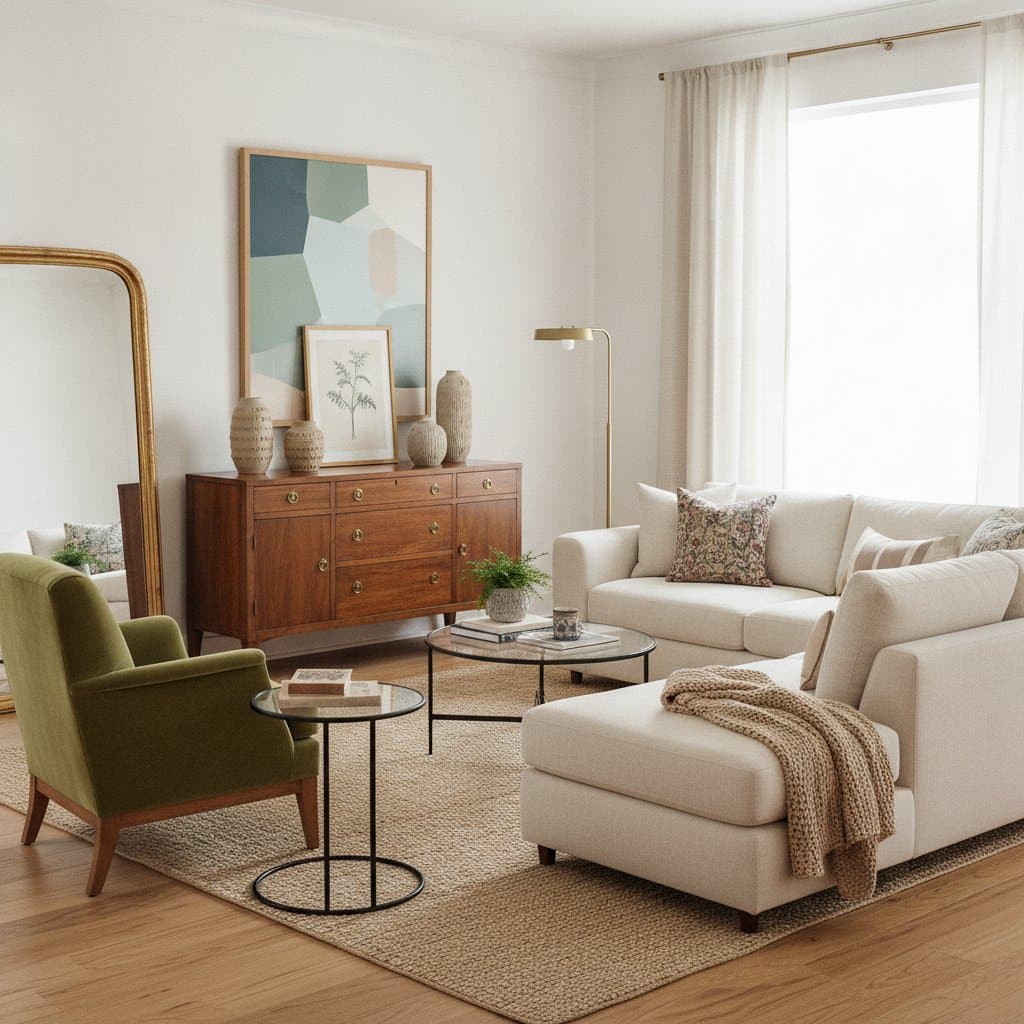
Young Buyers Embrace Vintage Charm in Modern Homes
A new generation of homeowners is rewriting the rules of contemporary design by welcoming the past back into their living rooms. Instead of sterile minimalism, they layer vintage textures, heirloom furniture, and nostalgic patterns into sleek, modern settings. The result is a comfortable blend often labeled grandmillennial design. This look celebrates personality, history, and craftsmanship while staying fresh and uncluttered.
Why This Shift Matters
For years, many first time buyers gravitated toward all white kitchens, gray walls, and flat pack furniture. Those spaces felt clean but sometimes lacked warmth or individuality. The pendulum has started to swing toward interiors that feel lived in and storied. Young homeowners want their spaces to say something about who they are, not just what trends dictate. They crave comfort, authenticity, and emotional connection.
The rise of vintage modern mixing reflects both practical and personal needs. Pre owned furniture is often more affordable, and older pieces tend to be well constructed. Beyond economics, these choices show a growing appreciation for sustainable living and a rejection of disposable design.
At a Glance
- Who lives here: Young homeowners and renters seeking individuality
- Location: Urban apartments, suburban cottages, and compact townhomes
- Square footage: Typically 700 to 1600 square feet (about 65 to 150 square meters)
- Design approach: Layering vintage finds with contemporary finishes
- Budget range: Moderate, often combining thrifted pieces with a few splurges
Blending Eras with Purpose
When they began layering vintage pieces, everything changed. An antique oak sideboard anchored the living room. Its patina softened the crisp edges of their modern sofa. A floral armchair inherited from a grandmother became the conversation piece that tied the space together.
Layout changes included reorienting the seating to face the windows instead of the television. This opened the room to natural light. A compact dining table doubled as a workspace. Flexibility is a hallmark of thoughtful design.
Storage solutions came from vintage trunks and mid century credenzas. These offered discreet space for electronics and linens. The pieces looked sculptural but worked hard behind the scenes.
Lighting strategy involved swapping harsh overhead fixtures for layered light. One linen shaded table lamp, one floor lamp with brass detailing, and soft LED strips beneath open shelving created the effect. The glow added dimension and calm without major electrical work.
Material choices featured linen curtains, rattan accents, and dark walnut frames. These created warmth against cool plaster walls. Each surface invited touch and reminded them that texture brings life to minimal color schemes.
The result was a home that felt both curated and spontaneous. Every object had a story, yet the overall effect remained cohesive.
Why Vintage Feels Modern Again
Grandmillennial design is not about recreating the past exactly as it was. It is about borrowing its warmth and craftsmanship to soften the edges of modern living. The movement values pattern and ornament but filters them through current sensibilities.
Design historian and stylist Clara Jensen notes that young homeowners are rediscovering that comfort and detail can coexist with simplicity. She explains that mixing old and new is less about nostalgia and more about permanence. People want materials that last. They are tired of replacing everything every few years.
This philosophy resonates with those who prioritize sustainability. Choosing pre owned furniture reduces demand for new manufacturing and keeps quality items in circulation. It also allows for experimentation. A sixty dollar thrift store chair can become a statement piece with new upholstery in a rich, moody hue like Sherwin Williams Mulberry Silk.
Common Constraints and Smart Workarounds
Small spaces benefit from furniture with visible legs to create openness. Opt for glass or light wood finishes that keep sightlines clear.
Budget limits call for hunting estate sales, consignment stores, and online marketplaces. Focus spending on one or two high quality items that anchor the room.
Rental restrictions are managed with removable wallpaper, framed fabric panels, or leaning art. These bring pattern without permanent change.
Time constraints are addressed by decorating slowly. Collect items that speak to you rather than rushing to fill every corner. Over time, a cohesive story will naturally emerge.
Designer Insights
Balance is key. Designer Nancy Wu explains that mixing vintage and modern works best when the proportions feel intentional. Too many ornate pieces can overwhelm a small room, but one antique paired with clean lines feels timeless.
Color connects eras. She recommends repeating at least one color across different styles. A faded blue in an old rug can echo the upholstery on a new chair. This ties everything together without feeling forced.
Patience pays off. Wu encourages clients to wait for the right pieces rather than settling. Homes evolve. The best spaces are built over time.
Living with the Changes
Once the layers come together, the comfort is immediate. Vintage modern interiors feel welcoming because they balance memory with practicality. The scratches on a farmhouse table tell stories, while the modern sofa invites everyday use. Life happens easily in these rooms.
Homeowners often find that their surroundings influence their routines. They linger longer at the table, keep flowers on the counter, and take pride in simple rituals. Each object, from the thrifted lamp to the handmade vase, reinforces a sense of belonging.
Living with vintage charm in a modern setting is not about perfection. It is about connection to history, to craft, and to the rhythms of daily life. The mix teaches patience and appreciation.
Making It Yours
Whether you live in a compact apartment or a spacious house, you can bring vintage character into your modern home. Start with one meaningful piece, maybe a family heirloom or a thrift store treasure, and build around it with thoughtful restraint.
In the end, this design movement is not about following a strict formula. It is about expressing who you are through the stories your home tells.