
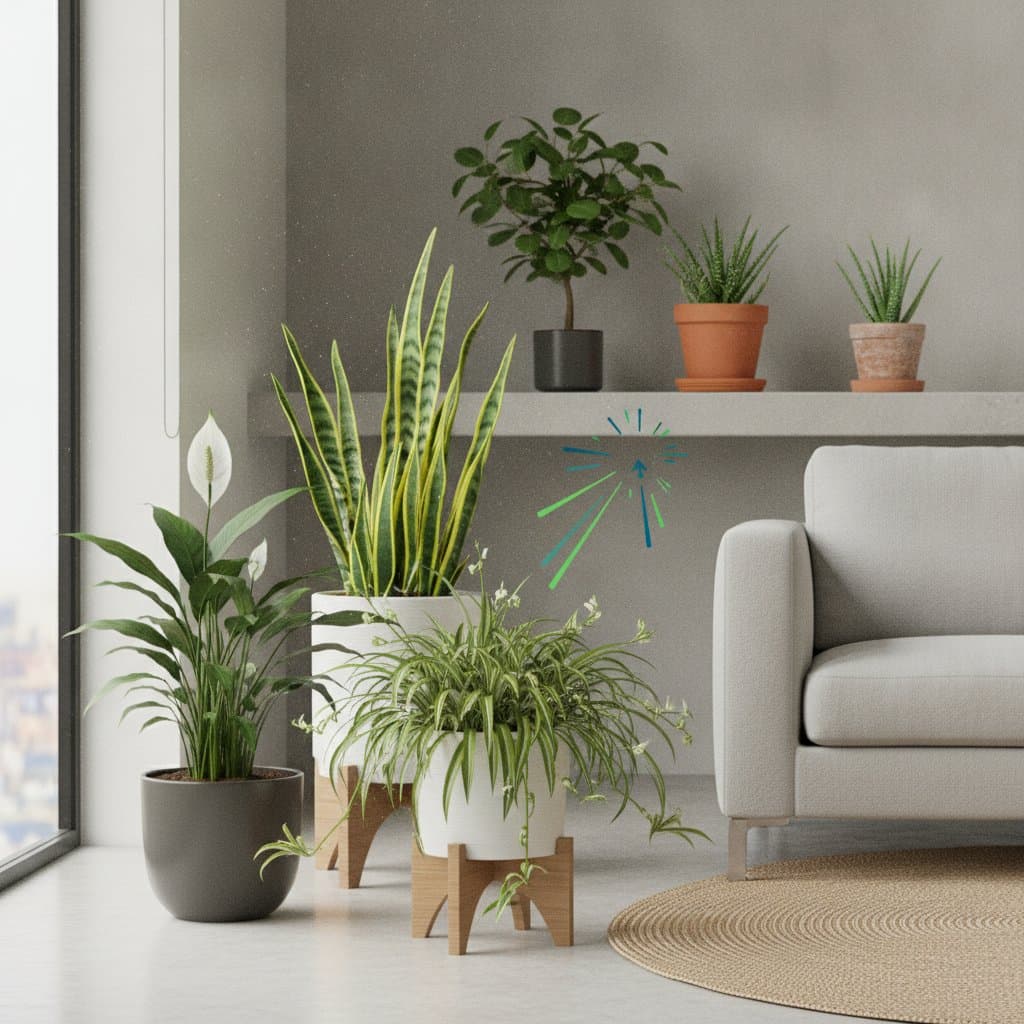
VOC-Eating Houseplants for Cleaner Indoor Air
We all want our homes to feel fresh, safe, and welcoming. Many materials in modern homes release volatile organic compounds into the air. These compounds originate from paint, adhesives, cleaning products, and furniture finishes. They can irritate eyes, lungs, and skin over time. Certain houseplants absorb and filter these pollutants while enhancing the space with beauty and calm.
Importance of VOC-Eating Plants
Indoor air frequently holds two to five times more pollutants than outdoor air. Opening windows provides relief, yet it remains impractical in some seasons or climates. Plants draw air through leaves and roots. Microorganisms in the soil break down harmful compounds into harmless substances. This process yields cleaner air and a balanced environment.
Greenery also adds moisture, softens sound, and connects occupants to nature. Thoughtful placement benefits apartments and houses alike.
Quick Overview
- Individuals seeking healthier indoor air benefit most.
- Suitable locations include living rooms, bedrooms, offices, kitchens, and bathrooms.
- Maintenance ranges from moderate to low based on the species.
- Budget falls between 10 and 100 per plant, varying by size and source.
- Optimal results come from one medium plant per 100 square feet.
Addressing Indoor Pollutants
Many people notice headaches or fatigue after long periods indoors. VOC accumulation from everyday materials often causes these symptoms. Synthetic carpets release formaldehyde. Household cleaners emit benzene. Paints can off-gas for months.
One homeowner described the issue after redecorating a studio apartment. The fresh appearance came with a lingering smell that lasted for weeks. A natural method to clear the air without extra chemicals became the goal.
Proven Species for Air Purification
The right mix of indoor plants changes both the feel and function of a room. The following species combine resilience with beauty.
Spider Plant
A favorite for beginners, the spider plant thrives in moderate light and typical indoor humidity. Its narrow green and white leaves arch gracefully from a central base and regularly produce baby offshoots. Studies show spider plants help reduce formaldehyde and xylene levels.
Place it near a window with indirect sunlight. Water weekly and allow the soil to dry slightly between waterings.
Peace Lily
Peace lilies feature glossy leaves and white blooms that resemble calla flowers. They filter benzene, trichloroethylene, and formaldehyde effectively.
These plants prefer low to medium light and consistently moist soil. Wipe leaves occasionally to support efficient pollutant absorption.
Snake Plant
This sculptural plant tolerates low light and infrequent watering. It produces oxygen even at night. Snake plants remove formaldehyde, toluene, and nitrogen oxides.
Water every two to three weeks depending on humidity. Avoid overwatering to prevent root rot.
Boston Fern
This lush fern adds softness to corners and hanging baskets. It absorbs formaldehyde and xylene, suiting rooms with furniture finishes or cleaning products.
Keep the soil damp but not soggy. Mist regularly if indoor air feels dry.
Rubber Plant
Broad, dark green leaves act like air filters while adding height and drama. The plant removes formaldehyde effectively.
Place it in bright, indirect light. Wipe the leaves weekly to prevent dust buildup that blocks filtering ability.
English Ivy
This trailing plant works well in hanging pots or on shelves. It reduces airborne mold and benzene, making it suitable for kitchens and bathrooms.
It prefers moderate light and evenly moist soil. Trim back vines to maintain shape and encourage growth.
Practical Setup Guidelines
Choose pots with drainage holes to prevent root rot. Terracotta or ceramic styles allow airflow and moisture balance. Use a well-draining potting mix labeled for indoor foliage.
Group plants of varying heights for a layered effect that maximizes surface area for air exchange. Dust leaves with a soft, damp cloth once a week. Rotate plants monthly so all sides receive even light.
Start with smaller nursery pots and repot as the plants grow. They clean the air just as effectively as mature specimens.
Starting a Plant-Based Air Strategy
Creating a healthier home does not require a full renovation. Start small. Place a spider plant on a desk, a peace lily on a dresser, or a snake plant near a bed. Notice how the air feels after a few weeks. Many people report a subtle freshness and fewer lingering odors.
Wall-mounted planters or hanging baskets keep greenery off the floor while improving circulation in tight spaces. Portable plant stands help renters adjust positions when light conditions shift.
Integrating Plants into Daily Routines
Over time, greenery transforms a home atmosphere in multiple ways. Cleaner air supports clearer thinking and deeper rest. The daily act of tending to plants builds mindfulness.
These plants ease allergies, refresh stuffy corners, and bring more life indoors. They require light, water, and attention in return.