
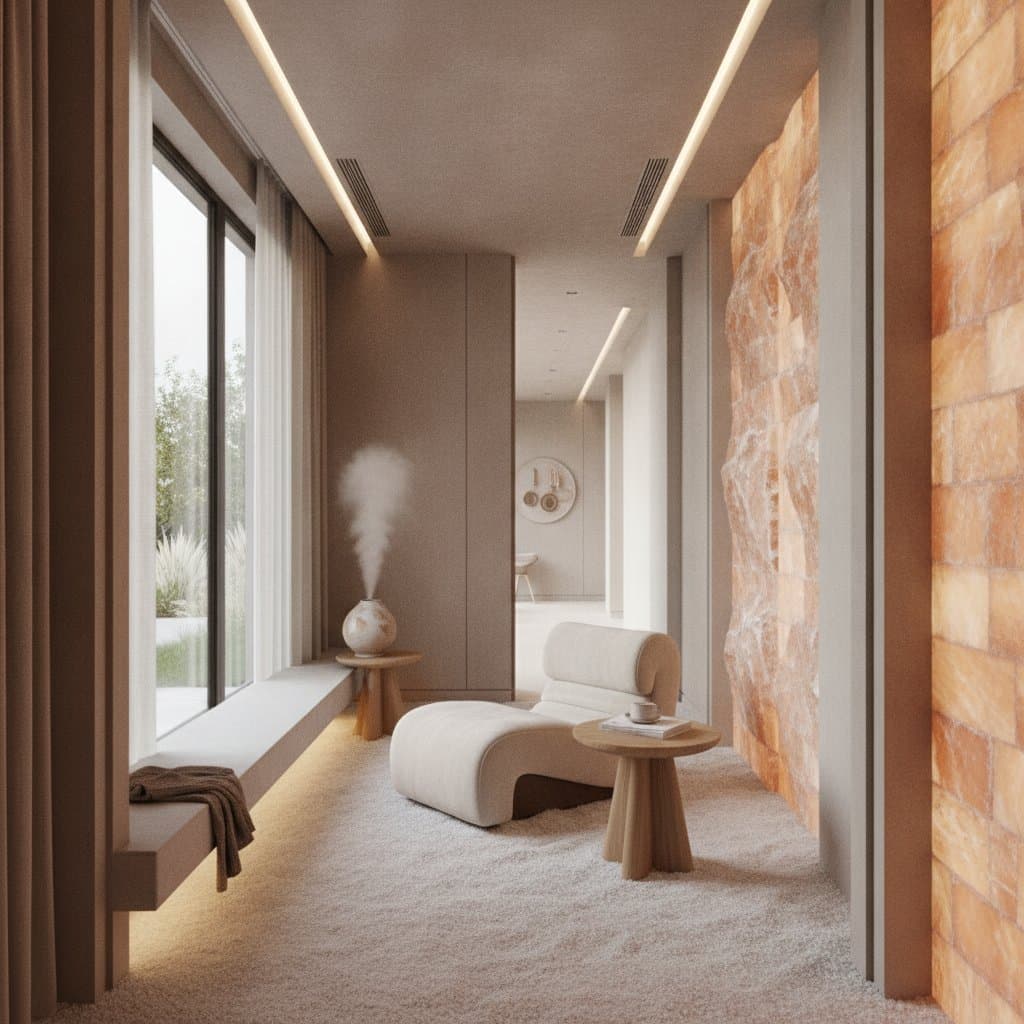
Salt Therapy Rooms Integrated into Modern Homes
Salt therapy rooms bring the benefits of natural salt caves into residential spaces. These dedicated areas use controlled salt particles to promote relaxation and easier breathing within a calm setting.
Most homes circulate dry air that can irritate airways over time. A properly built salt therapy room counters this effect through balanced humidity and consistent particle dispersion.
This guide covers planning, construction, and upkeep for a functional home halotherapy space.
People with serious respiratory conditions or hypertension should speak with a physician before regular use.
Core Principles of Salt Therapy
A halotherapy room releases fine salt particles into the air via a halogenerator. This setup recreates the stable microclimate found in salt caves. Controlled conditions support respiratory comfort and mental calm when humidity stays between 40 and 50 percent.
Required Materials
- Pure non-iodized rock salt or medical-grade salt
- Halogenerator sized for the room volume
- Dehumidifier for moisture control
- Digital hygrometer and thermometer
- Low-heat LED lighting fixtures
- Corrosion-resistant surfaces such as sealed tile or stone
- Washable seating and textiles
- HEPA-filter vacuum
- Optional salt bricks for accent walls
Construction Steps
Select an Appropriate Space
Choose a quiet interior room with stable temperatures and limited external light. Basements or spare bedrooms often suit this purpose. Keep the area away from high-moisture zones like bathrooms. Ensure the space can maintain slight positive pressure for particle suspension while allowing periodic ventilation.
Determine Dimensions and Flow
A compact 6-by-8-foot footprint accommodates one or two users comfortably. Specify nonporous wall finishes that resist salt corrosion. Position the halogenerator inlet to create gentle circulation without drafts on occupants. Plan separate zones for seating and equipment.
Treat Walls and Floors
Apply salt-textured plaster or mount Himalayan salt panels on one wall for visual depth. Backlight panels with LED strips to produce a soft ambient glow. Seal all joints to prevent moisture migration into adjacent structures. Skip metal trim that could corrode over time.
Stabilize Air Conditions
Mount monitoring instruments at seated head height. Maintain 40 to 50 percent relative humidity with a compact dehumidifier when necessary. Environmental health specialist Dr. Lena Moore notes that steady humidity prevents salt particles from clumping or dropping out of suspension.
Install the Halogenerator
Place the unit outside the primary seating area so particles enter indirectly. Follow manufacturer dosing guidelines, typically one to two teaspoons of dry salt per session. Run brief calibration cycles to verify even distribution before regular operation.
Incorporate Lighting and Seating
Install indirect warm LED lighting behind panels or under benches. Select simple cotton or microfiber covers that wipe clean easily. Avoid heavy upholstery that traps salt residue.
Validate Performance
Conduct an empty-room test for 15 minutes. Observe particle behavior and adjust airflow as needed. Follow with a short personal trial to confirm comfort levels. Reduce output if dryness occurs in the throat or eyes.
Establish Cleaning Protocols
Remove loose salt after every session with a HEPA vacuum. Wipe surfaces with a damp cloth and dry immediately. Empty the generator hopper to avoid clogs. Inspect filters and vents monthly.
Schedule Ongoing Use
Two or three 20-minute sessions weekly provide steady benefits without overload. Ventilate the room between uses to manage residual moisture.
Recommended Practices
Monitor humidity before each session. Rely exclusively on pure non-iodized salt. Clean surfaces promptly after use. Limit fabric quantity for simpler upkeep. Seek medical advice for existing respiratory concerns.
Avoid metal accents prone to corrosion. Do not exceed recommended generator run times. Prevent humidity spikes that cause particle clumping. Exclude essential oils and pets from the space.
Professional Installation Situations
Engage specialists for custom salt walls, integrated ventilation, or complex lighting. Certified electricians should handle any wiring near salt surfaces. Address signs of corrosion or condensation immediately with professional assessment.
Budget and Timeline Overview
Basic DIY setups range from 800 to 3000 dollars. Full professional builds with salt walls often exceed 10000 dollars. Allow two weekends for simple rooms and several weeks for elaborate designs.
Routine Care Requirements
Vacuum residue weekly. Wipe all surfaces after sessions. Verify climate readings before entry. Refresh salt supply after 20 to 30 uses. Perform deep cleaning of fixtures quarterly.
Design Integration Approaches
Homeowners increasingly place salt rooms adjacent to saunas or meditation areas rather than isolating them. Clean lines and neutral palettes replace cave-like aesthetics.
Interior designer Ava Reynolds observes that clients seek restorative spaces that complement overall home style. Hidden equipment and layered lighting help achieve a calm lounge atmosphere.
Effective design choices include indirect daylight through frosted glass, mixed textures of salt and sealed wood, and concealed vents behind slatted panels.
Safety Considerations
Halotherapy supports general wellness and does not replace medical care. Supervise children and limit session length. Reduce concentration if air feels harsh or leaves a salty aftertaste.
First Steps Toward Implementation
Begin with a portable generator and enclosed corner to test personal response. Consistent short sessions reveal whether a permanent installation fits household routines. Focus on reliable climate control and simple maintenance to sustain long-term value.