
What To Know
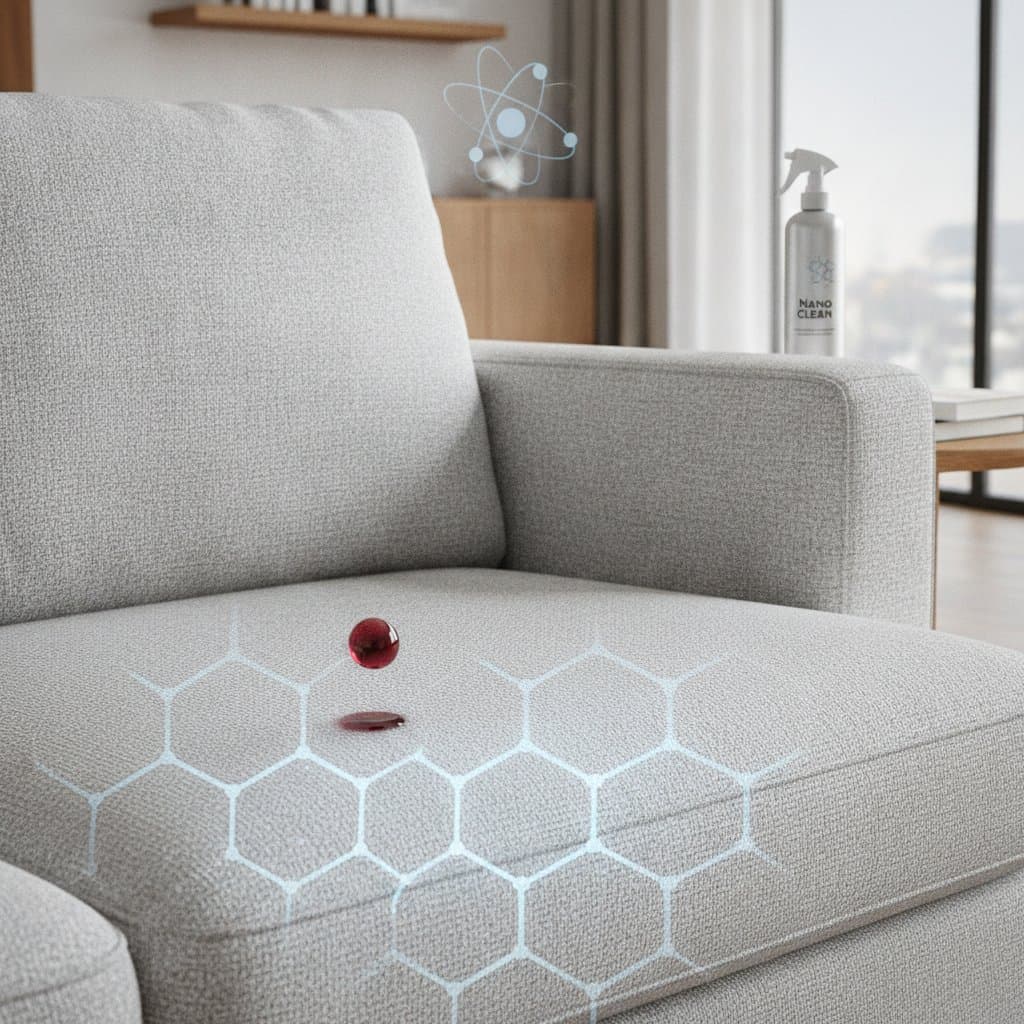
Self-cleaning nano fabrics rely on microscopic coatings that block liquids and repel grime. These coatings create an invisible barrier that stops stains from soaking into the fibers. The technology performs best on tightly woven textiles such as polyester, nylon, and treated cotton. Users should avoid nano sprays on unsealed leather or delicate silk because the products can discolor or stiffen those fibers. A small test area always comes first.
Tools and Materials
- Microfiber cloth
- Mild detergent or upholstery cleaner
- Spray bottle or pump sprayer
- Nano fabric coating formulated for upholstery
- Soft brush for even coverage
- Protective gloves and mask
Water-based formulas labeled safe for indoor use reduce chemical exposure when that preference exists.
Step By Step
Step 1: Prepare the Surface
Vacuum the upholstery thoroughly to remove dust and crumbs. Remaining debris prevents the coating from bonding properly.
Step 2: Clean Before Coating
Mix one teaspoon of mild detergent with two cups of warm water. Dampen a microfiber cloth with the solution and wipe the surface evenly. Allow the fabric to dry completely before the next step. Residual moisture dilutes the product and weakens its protective effect.
Step 3: Test a Hidden Spot
Spray a small area under a cushion or at the back of the furniture. Wait for it to dry, then inspect for color change or texture difference. Stiffening or darkening indicates the coating may not suit that fabric.
Step 4: Apply the Nano Coating
Hold the sprayer about eight inches from the surface. Apply a light, even mist in overlapping passes. Avoid soaking the fabric. A thin layer suffices for most synthetic materials.
Step 5: Brush and Set
Use a soft brush to distribute the coating evenly. This action helps nanoparticles settle between fibers rather than resting only on top. Work in sections on large pieces to prevent uneven drying.
Step 6: Let It Cure
Leave the fabric untouched for at least eight hours in a well-ventilated room. Do not sit on or cover the furniture during this period. Full bonding creates a durable shield.
Step 7: Check the Protection
After curing, sprinkle a few drops of water on the surface. Beading and rolling droplets confirm the coating is active. Soaking indicates a second thin coat is necessary.
Step 8: Maintain Regularly
Dust with a dry microfiber cloth once a week. Avoid harsh cleaners, bleach, or steam because these break down the nano layer. Reapply the coating every six months or when water stops beading.
Dos and Don’ts
Dos
- Test before full application to prevent damage.
- Clean the fabric completely before spraying.
- Ventilate the room while applying the coating.
- Reapply periodically for lasting results.
Don’ts
- Use on unsealed leather, suede, or silk.
- Over-saturate the fabric.
- Mix coating products from different brands.
- Expose coated surfaces to high heat or direct sunlight during curing.
Materials scientist Lena Ortiz notes that nano coatings change the surface tension of fibers so liquids remain on the surface instead of seeping in. Consistent upkeep keeps the barrier functional.
When To Call A Pro
Custom, antique, or natural-fiber upholstery such as wool or linen requires a professional fabric care specialist. These materials can react unpredictably to nano coatings. A specialist can test compatibility and apply lab-grade products safely. Furniture with deep stains, water damage, or prior chemical treatments also needs expert handling to avoid discoloration or coating failure.
Cost and Time Snapshot
A bottle of nano coating that covers one large sofa or two chairs costs 20 to 40 dollars. Professional application ranges from 100 to 300 dollars depending on fabric type and surface area. The process requires one to two hours of active work plus overnight curing. Special cleaning or multiple coats increase the total cost.
Maintenance or Upkeep
Routine Care Checklist
- Weekly: Dust with a clean microfiber cloth to remove surface dirt.
- Monthly: Wipe with a damp cloth and mild soap if needed.
- Every 6 Months: Reapply coating when water no longer beads.
- Watch For: Dull or uneven texture that signals coating wear.
Homes with pets or children may require earlier reapplication because abrasion wears the protective layer faster.
The Science Behind Nano Coatings
Nano coatings use particles measured in nanometers, or one-billionth of a meter. These particles form a tight grid that blocks moisture and grime from entering fabric fibers. The result is a hydrophobic and sometimes oleophobic surface that resists both water and oil-based stains. Some formulas include photocatalytic materials such as titanium dioxide that break down organic residues when exposed to light. This reaction neutralizes odors and bacteria without extra cleaning agents.
Textile chemist Brian Keller explains that the main advantage is longevity. Unlike surface sprays that wear off quickly, nano coatings bond with the fiber structure itself. The bond provides greater durability under daily use and gentle cleaning.
Environmental and Safety Considerations
Check volatile organic compound content before application. Water-based formulas produce lower emissions and suit indoor use better. Avoid open flames and use aerosol sprays only with ventilation. Biodegradable or PFAS-free labels indicate greener options. Dispose of used cloths and empty containers according to local guidelines.
Choosing the Right Fabric for Nano Treatment
Nano coatings perform best on synthetic or blended fabrics with tight weaves. Polyester and acrylic blends resist moisture naturally and enhance coating performance. Cotton and linen benefit as well, yet they may need an additional primer layer for full protection. Velvet, chenille, or any fabric with loose pile can mat or develop uneven sheen after treatment.
Pro Tips for Success
- Apply in moderate humidity for even drying.
- Use two light coats instead of one heavy layer for stronger coverage.
- Keep pets and children away during curing.
- Store leftover coating in a cool, dark place to maintain shelf life.
- Track reapplication dates to stay consistent with maintenance.
Living with Self-Cleaning Upholstery
Daily life becomes simpler after application. Coffee spills bead up instead of soaking in. Pet hair brushes off with one swipe. Dust has less grip on the surface. The finish preserves the original look and feel of most fabrics when applied correctly. Fewer deep cleans and lower water use follow over time.