
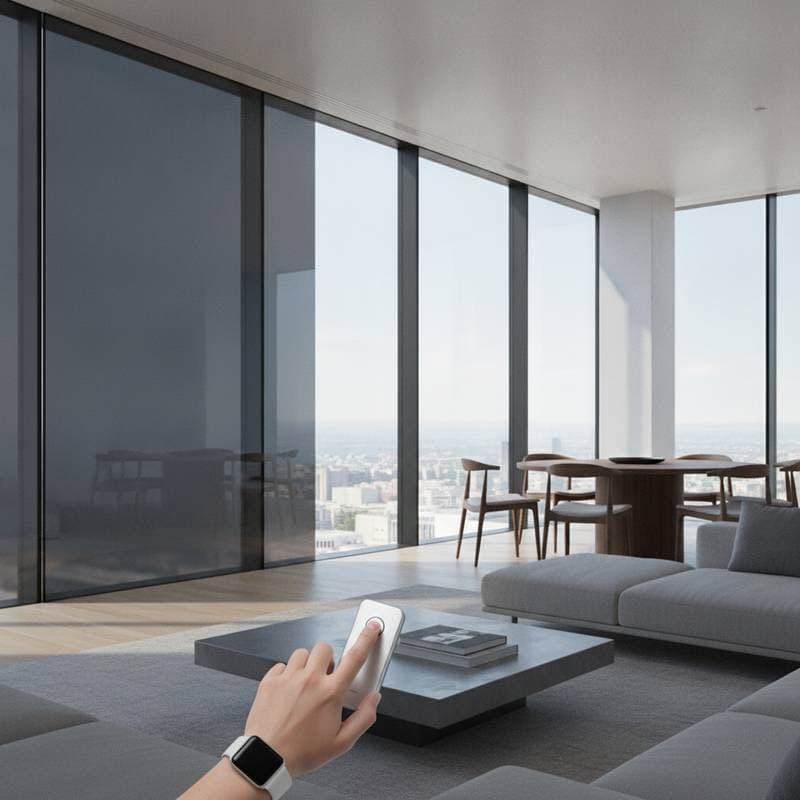
Blackout Smart Glass Ends the Need for Traditional Curtains
You can darken a room or flood it with daylight at the press of a button. Blackout smart glass uses electricity to shift from clear to opaque in seconds. This delivers instant privacy, glare control, and a streamlined interior without fabric or rods.
Curtains collect dust and obstruct views even when drawn open. Smart glass removes those issues while preserving full control over light and visibility.
This guide explains how the technology functions, identifies ideal applications, and outlines key considerations before installation.
Installation requires a qualified electrician. The system is not suitable for DIY upgrades.
How the Technology Works
Electrochromic layers inside the glass move ions when voltage is applied. This movement alters light transmission and produces the shift between clear and dark states. Sealed edges protect the layers from moisture that could impair performance.
Ideal Applications
The material suits living rooms, offices, and conference spaces where glare control and privacy matter. Open floor plans gain the most because tint changes occur without interrupting sight lines. Avoid installation in high humidity zones such as saunas unless the product carries specific moisture ratings.
Installation Requirements
Measure each opening accurately and confirm that frames can support the added thickness of the glass unit. Route low voltage wiring to a dedicated power supply before the panels arrive. A certified electrician must complete all connections and perform an initial calibration.
Maintenance Practices
Clean surfaces monthly with a mild nonabrasive solution and a microfiber cloth. Keep edges dry to protect internal seals. Schedule an annual inspection to verify response times and electrical integrity.
Cost Overview
Material prices range from 80 to 150 dollars per square foot. Installation adds 10 to 25 dollars per square foot. Control systems cost between 200 and 800 dollars depending on automation features. Standard residential windows typically require half a day for completion.
Safety and Power Considerations
Confirm that window frames can bear the weight of thicker units. In regions prone to outages, select systems that retain the last tint state or default to clear according to household privacy needs. Disconnect power before any cleaning or adjustment.
Environmental Impact
The glass reduces demand for disposable fabrics and blinds. It also moderates solar heat gain, which can lower cooling loads during peak sunlight hours. At end of life, the units enter standard glass recycling streams after films and coatings are removed by certified processors.
Design Approaches Without Fabric
Pair the glass with textured rugs, upholstered seating, and wall coverings to maintain warmth. Slim decorative valances may frame the opening without adding functional layers. Neutral palettes keep attention on the view rather than the window treatment.
Energy Performance
Clear mode admits maximum daylight for passive heating. Tinted mode blocks ultraviolet radiation that fades interior finishes. Sensor driven automation adjusts tint levels throughout the day to stabilize indoor temperatures.
Next Steps
Begin with a single prominent window to evaluate light quality and response speed. Retain all documentation for warranty service and future maintenance. Proper installation and routine care allow the system to deliver consistent privacy and comfort for years.