
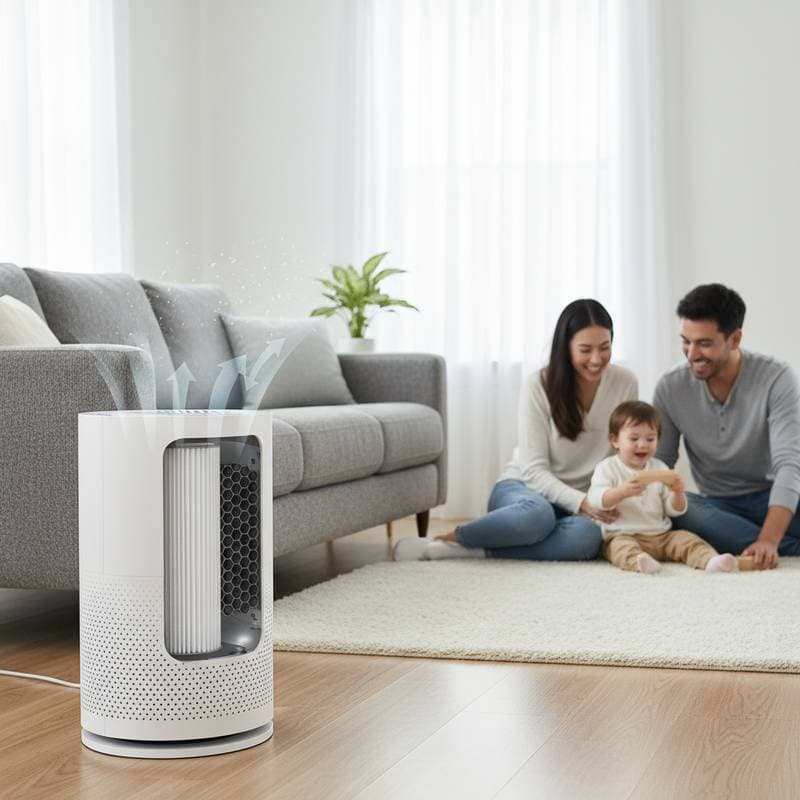
Why Families Prefer Ionization-Free Air Purifiers
Indoor air quality influences daily life in profound ways. Families across urban settings and suburban homes now prioritize devices that deliver clean air without unintended consequences. Ionization-free air purifiers stand out as a reliable choice, employing mechanical filtration to remove contaminants effectively while avoiding the potential hazards associated with other technologies.
These systems use high-efficiency particulate air (HEPA) filters and activated carbon to capture particles and odors. They provide a straightforward path to healthier living spaces, particularly for households with children, elderly members, or allergy sufferers. By focusing on proven methods, families gain confidence in their air purification efforts.
The Concerns with Ionization Technology
Ionization purifiers generate charged particles to attract and settle airborne pollutants. This approach can seem innovative, yet it often produces ozone as a byproduct. Ozone, even in small quantities, acts as a respiratory irritant and may exacerbate conditions like asthma or allergies.
Users of ionizing devices sometimes experience symptoms such as throat discomfort, chest tightness, or fatigue after extended exposure. Regulatory bodies highlight these risks, prompting many to seek alternatives. Ionization-free options eliminate such concerns by relying solely on physical filtration, ensuring air remains unaltered chemically.
The Mechanics of Ionization-Free Filtration
Mechanical filtration forms the core of these purifiers. Air drawn into the unit passes through a multi-layered system, starting with a pre-filter that traps larger debris like pet hair or lint. The subsequent true HEPA filter then captures finer particles, including dust mites, pollen, and viruses down to 0.3 microns in size.
An activated carbon filter follows to neutralize gaseous pollutants, such as those from household cleaners or cooking fumes. This layered process repeats as the fan circulates air multiple times per hour, progressively enhancing quality. Maintenance involves periodic filter replacements, typically every six to twelve months, to sustain peak performance.
Building Trust Through Transparency
Trust arises from understanding and verifiability in air purification. Ionization-free models display their filters openly, allowing users to inspect and replace them with ease. Independent lab tests often certify their efficacy, with clean air delivery rate (CADR) ratings providing measurable benchmarks for smoke, dust, and pollen removal.
Families value this clarity, especially in sensitive environments like nurseries or bedrooms. Without the unpredictability of ion generation, these purifiers integrate seamlessly into daily routines. Pet owners and those in high-traffic homes report noticeable reductions in allergens and scents, fostering a more comfortable atmosphere.
Core Benefits of Mechanical Filtration Systems
-
Absence of Harmful Emissions
These purifiers avoid producing ozone or ions, making them ideal for asthma-prone individuals and tightly sealed rooms. -
Validated Effectiveness
Decades of research support HEPA and carbon filtration, with consistent results in capturing over 99.97 percent of targeted particles. -
Simplified Upkeep
Filter changes require minimal effort, and costs remain steady, often under fifty dollars annually for moderate use. -
Subtle Noise Levels
Fan-only operation keeps sound below 50 decibels on low settings, comparable to a quiet conversation. -
Versatile Application
Compact designs suit small spaces like offices, while larger units handle family rooms without needing extra installation.
Selecting an Optimal Ionization-Free Purifier
Begin by assessing the square footage of the space. Select a unit with a coverage rating 1.5 times the room size to account for doors and activity levels. Prioritize models certified with true HEPA filters, as lesser variants may underperform on ultrafine particles.
Incorporate carbon filtration if volatile compounds from renovations or hobbies pose issues. Reputable manufacturers such as Levoit, Winix, and Rabbit Air provide options from entry-level to premium, with energy-efficient designs that lower electricity bills. Test units in-store if possible to gauge airflow and noise.
For budget planning, factor in initial purchase alongside filter lifespans. Many come with indicator lights signaling replacement times, simplifying long-term management. This approach ensures the purifier aligns with specific needs, from allergy relief to general freshness.
The Well-Being Gains from Pure Air
Clean air extends beyond physical health to influence emotional states. Residents often note improved sleep and reduced stress in purified environments. The steady operation of these devices becomes a reassuring presence, symbolizing proactive care for loved ones.
Allergy seasons pass with less disruption, and daily activities feel more invigorating. This shift creates a foundation for better focus and interactions within the home. Ultimately, ionization-free purifiers support a balanced lifestyle centered on safety and vitality.
Embracing Cleaner Indoor Environments
Adopting an ionization-free purifier marks a commitment to informed choices. Households experience tangible improvements, from diminished dust buildup to fresher mornings. Regular use reinforces habits that prioritize health, turning the home into a true haven.
Evaluate options based on your unique circumstances, whether combating urban pollution or seasonal pollen. These systems deliver reliable results, empowering families to breathe easier with assurance. The result is a space that nurtures well-being every day.