
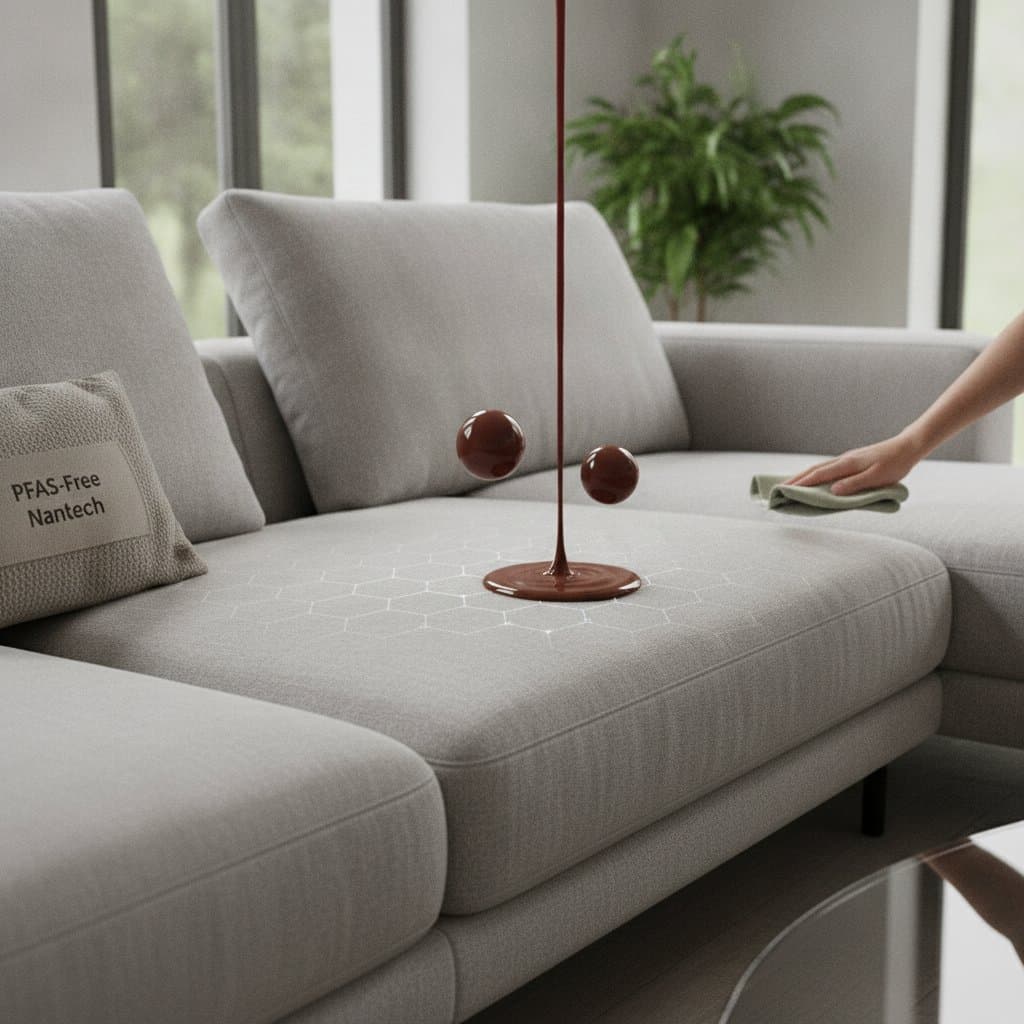
Nanotech Fabrics Deliver Stain-Free Upholstery by 2026
Nanotechnology now enables upholstery that resists everyday spills without relying on chemical treatments. Microscopic coatings create surfaces where liquids bead and roll away. This development reduces cleaning demands while extending the lifespan of furniture.
The challenge with traditional upholstery lies in stain removal and fabric wear from repeated cleaning. Nanotechnology addresses these issues through durable surface modifications.
These fabrics offer practical benefits but remain vulnerable to sharp objects, excessive heat, and certain chemicals.
Core Principles of Nanotech Coatings
A nanotech fabric features a microscopic layer bonded to individual fibers. This layer lowers surface energy so liquids cannot penetrate or spread. Spills remain on the surface for easy removal with a cloth.
Manufacturers apply the treatment either during fiber production or as a post-weave finish. Buyers should verify that any selected fabric carries safety certifications confirming suitability for indoor environments.
Essential Cleaning Supplies
- Soft microfiber cloth
- Mild dish soap
- Spray bottle filled with clean water
- Vacuum equipped with an upholstery attachment
- Soft brush
- Optional manufacturer-approved protector spray
Cleaning Procedure
- Review the care label for terms such as nanocoated or hydrophobic. Follow all manufacturer instructions before applying any cleaner.
- Test the chosen solution on an inconspicuous area. Allow several minutes to observe any reaction with the coating.
- Vacuum the surface thoroughly to lift loose particles that could cause abrasion.
- Blot fresh spills with a dry microfiber cloth. Avoid rubbing motions that push liquid into the fibers.
- Prepare a solution of one teaspoon mild dish soap in one cup of warm water. Mist lightly and wipe with a damp cloth without saturating the material.
- Pat the area dry with a clean towel. Ensure complete air drying to preserve coating integrity.
- Reapply a manufacturer spray when water ceases to bead. Perform this step in a ventilated area and allow full curing time.
- Vacuum weekly and perform a light wipe monthly to maintain surface performance.
- Address any greasy or pigmented spills without delay to prevent permanent marks.
Recommended Practices
Recommended actions
- Blot all spills at once.
- Restrict cleaning agents to mild soap solutions.
- Vacuum on a regular schedule.
- Conduct spot tests for every new product.
- Position furniture away from direct sunlight.
Actions to avoid
- Scrubbing with abrasive tools.
- Application of bleach, vinegar, or alcohol sprays.
- Steam cleaning without explicit approval.
- Assumption that all stain-resistant labels indicate nanotech treatment.
- Neglect of small tears or punctures.
Professional Intervention
Persistent stains, peeling coatings, or delicate antique pieces warrant professional attention. Experts can select appropriate solvents that respect the protective layer. Mold growth or persistent odors also require specialized equipment.
Investment and Time Considerations
Nanotech upholstery carries an initial premium of 10 to 30 percent over standard fabrics. Reapplication services vary in cost depending on the size of the piece. Routine maintenance requires only minutes per session, lowering long-term expenses through reduced deep cleaning and fewer replacements.
Ongoing Care Schedule
- Vacuum surfaces each week.
- Wipe with a damp cloth once per month.
- Respond to spills immediately.
- Inspect beading performance every few months.
- Repeat treatment when the surface shows dullness or residue.
Mechanism Behind Performance
The technology replicates natural water-repellent structures at the molecular scale. Fibers receive a textured finish that prevents liquid adhesion. Liquids form droplets that carry away particles as they move.
Materials scientists note that reduced surface energy prevents bonding between liquids and fibers. Coatings often rely on silica or fluorine-free polymers that meet current safety standards.
Selection Guidance
Texture and water response differ across products. Synthetic fibers such as polyester retain coatings longer than natural blends. Built-in treatments generally outlast after-market sprays.
Retailers can confirm whether protection integrates during manufacturing. Open-weave or unsealed materials absorb moisture despite coatings and should be avoided in high-use settings.
Sustainability Aspects
Modern formulations replace older persistent compounds with biodegradable alternatives. Extended furniture life decreases landfill contributions. Fabrics combining recycled content with water-based coatings provide comparable protection while minimizing environmental impact.
Practical Implementation
Many current collections already include treated options. Testing a single chair or ottoman reveals daily performance before larger investments. Home-applied sprays offer an interim solution for existing pieces.
Consistent blotting and light maintenance preserve appearance across both treated and untreated fabrics. This approach minimizes stress from accidental spills while supporting longer intervals between intensive cleanings.