
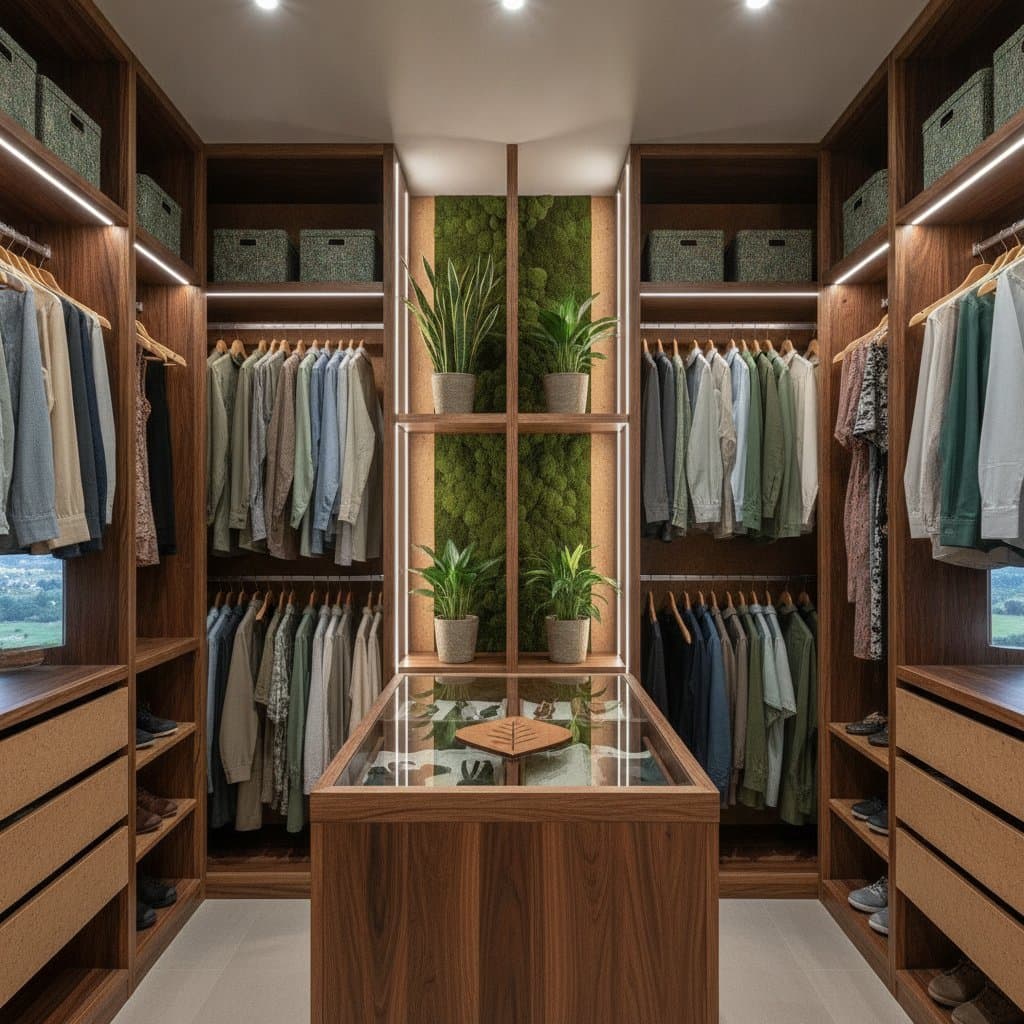
Carbon-Negative Closets Remove More Than They Emit
A carbon-negative closet organizes clothing while removing more carbon from the atmosphere than it releases during production and use. This approach improves indoor air quality and supports long-term environmental goals. Homeowners achieve these results by selecting materials such as bamboo, cork, and reclaimed wood that sequester carbon throughout their lifecycle.
Traditional particleboard and synthetic laminates release volatile compounds and rely on fossil-fuel adhesives. Carbon-negative alternatives avoid these issues when installed with proper ventilation and low-emission finishes.
Core Principles
Select materials supported by third-party certifications that document net carbon removal. Bamboo and hemp panels store carbon fixed during growth, while reclaimed wood avoids new milling emissions. Cork harvested from tree bark continues to absorb carbon after installation and improves humidity control.
Apply low-VOC sealants or natural oils such as tung or linseed to protect surfaces without blocking ongoing carbon absorption. Maintain stable indoor humidity to prevent warping or mold that could compromise material performance.
Required Tools and Materials
- Measuring tape and level
- Drill or screwdriver
- Bamboo plywood or reclaimed wood boards
- Cork or wool insulation panels
- Non-toxic adhesive or stainless steel screws
- Natural oil finish
- Recycled metal brackets
Substitute recycled composite lumber when reclaimed wood is unavailable. Choose formaldehyde-free adhesives to protect air quality.
Construction Steps
Measure and Plan
Measure the space and locate wall studs for secure anchoring. Sketch sections for hanging rods, shelves, and seasonal storage while ensuring airflow paths remain open.
Source and Prepare Materials
Purchase from suppliers that provide life-cycle documentation. Sand reclaimed wood lightly to remove splinters while preserving its natural surface. Clean all pieces with mild soap and water, then allow complete drying.
Assemble the Frame and Shelving
Attach vertical supports to the wall or base, checking level at each joint. Install horizontal shelves on recycled metal brackets. Secure cork or hemp side panels with low-VOC adhesive or wide-washer screws.
Apply Finishes and Enclosures
Coat surfaces with natural oil in thin layers, allowing full cure time between coats. Hang lightweight bamboo doors or hemp curtains to balance enclosure with ventilation. Align hardware carefully before final tightening.
Organize and Maintain
Group garments by use frequency and store heavier items on lower levels. Inspect joints and surfaces twice yearly. Reapply oil annually or when wood appears dull, and clear ventilation paths of obstructions.
Recommended Practices
- Verify carbon-negative claims through documented certifications before purchase.
- Preserve ventilation to avoid trapped moisture.
- Clean with pH-neutral solutions only.
- Track material origins to confirm sustainability data.
Avoid heavy varnishes that seal carbon within the material. Do not install these systems in damp basements or rely on unverified green labels.
Professional Assistance
Engage a carpenter when the design requires structural modifications, built-in lighting, or large sliding mechanisms. Seek specialist help if mold or active leaks appear behind existing walls.
Budget and Timeline
Basic retrofits using bamboo or reclaimed wood typically cost between seventy and two hundred dollars. Larger systems with doors and drawers range up to seven hundred dollars. A compact project usually requires one day, while full builds take two to three days including drying periods.
Expert Perspectives
Sustainable materials researcher Dr. Lena Hoffmann notes that these closets succeed because carbon remains locked in stable indoor forms for decades. Certified builder Marcus Yates recommends bamboo and cork for their rapid renewability and advises formaldehyde-free adhesives to maintain indoor air standards.
Daily Integration
Label shelves to monitor inventory and donate unused garments regularly. Store off-season items in breathable cotton rather than plastic. Add LED lighting powered by low-voltage sources to avoid increasing emissions.
Modern designs combine smooth bamboo veneers with matte recycled metal and neutral hemp panels. Uniform shelf depths create minimalist appearances, while reclaimed oak paired with linen bins offers warmer textures.
Addressing Common Challenges
Check humidity levels if panels warp and improve airflow if musty odors develop. Buff sticky oil finishes with a dry cloth and allow additional curing time. Insert wooden plugs to secure loose screws instead of chemical adhesives.
Extending the Approach
Apply the same material choices to shoe racks, drawer liners, and laundry shelving. Use a carbon calculator from an environmental organization to quantify storage benefits and compare them against household energy use.
Consistent selection of verified materials turns routine storage into measurable climate action. Small replacements compound over time and support sustained indoor environmental quality.