
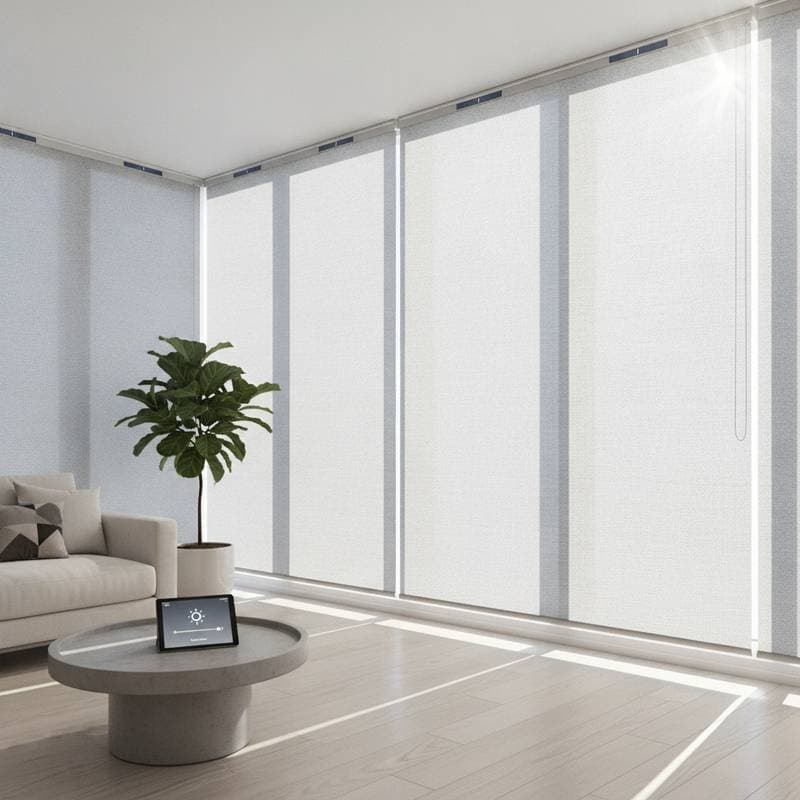
Eliminate Wiring with 2026 Solar-Powered Smart Blinds
Replace tangled cords and constant charging with window blinds that power themselves. Solar-powered smart blinds cut clutter, save energy, and work without any wiring. Automated light control arrives with a cleaner look and lower maintenance.
Wiring limits where motorized blinds can be used. Solar power removes that barrier.
One caveat remains. Solar blinds still need direct light for steady charging, so shaded windows may require a backup battery.
What To Know
Solar-powered smart blinds use a small photovoltaic panel to charge an internal battery that runs the motor. Control occurs through an app, remote, or voice command. The system removes the need for wiring or frequent recharging. Always confirm the blinds fit window depth and receive enough light to charge safely and evenly.
Tools and Materials
- Tape measure
- Level
- Drill with driver bits
- Mounting brackets and screws (included with most blinds)
- Soft cloth and mild cleaner for prep
- Optional: step stool or ladder
- Optional: external solar extension panel for low-light windows
Step By Step
1. Measure each window carefully
Measure the width at the top, middle, and bottom. Note the narrowest number to ensure a snug fit. Measure height from top frame to sill. Record each window exact size before ordering.
2. Choose the right mount
Inside mounts sit within the window frame for a clean look. Outside mounts extend beyond the frame and block more light. Use inside mounts only if frame depth meets the blind minimum clearance.
3. Check sunlight exposure
Solar blinds need at least several hours of daylight to charge. South or west-facing windows charge fastest. For shaded areas, select models with detachable solar panels connected by a thin wire that can sit where sunlight is stronger.
4. Prepare the surface
Clean the top frame area with a damp cloth to remove dust. Let it dry fully. Smooth, clean surfaces help mounting brackets stay level and secure.
5. Install brackets
Hold each bracket at the marked spots. Drill pilot holes, then fasten screws firmly. Confirm both brackets are level before attaching the headrail. Uneven brackets can cause the blind to tilt.
6. Attach the headrail
Slide or snap the headrail into the brackets until it clicks. The solar panel should face outward or upward depending on design. Check that the panel is not shaded by trim or curtains.
7. Connect the solar panel
If the panel is detachable, plug the small cable into the port on the headrail. Mount the panel using the included adhesive strip or brackets. Angle it toward the strongest daylight source.
8. Pair the remote or app
Follow the manufacturer pairing steps. Most systems use Bluetooth or Wi-Fi. Test the blinds up and down to confirm smooth movement. Adjust motor limits if the blinds stop too high or low.
9. Set routines and light sensors
Many models allow scheduling of open and close times or syncing with sunlight levels. Start with simple routines, such as opening at sunrise and closing at bedtime, to reduce glare and heat gain.
Dos and Don’ts
Dos
- Double-check window measurements before ordering.
- Keep solar panels clean to maintain charge efficiency.
- Use the app to monitor battery levels monthly.
- Test motion limits after installation to prevent binding.
Don’ts
- Mount solar panels behind heavy curtains or window screens.
- Spray cleaners directly on the panel. Wipe gently with a damp cloth instead.
- Force the blinds if they stop mid-motion. Check for obstructions instead.
- Expose the motor head to dripping water from condensation or leaks.
When To Call A Pro
Hire a professional if windows are unusually large, high, or recessed. Also call a pro if walls are plaster or stone, since drilling can cause cracks. When blinds connect to a whole-home automation system, certified installers can integrate wiring safely without voiding warranties.
Cost and Time Snapshot
Expect to pay between a few hundred and a little over a thousand dollars per window depending on size, fabric, and smart features. Basic fabric rollers cost less, while wood and cellular shades with integrated sensors cost more. Installation for a standard window takes about half an hour once measured and prepped. Complex multi-window setups can take most of an afternoon.
Maintenance or Upkeep
- Monthly: Wipe the solar panel with a soft microfiber cloth.
- Every three months: Check brackets for looseness and tighten if needed.
- Twice a year: Clean slats or fabric with a dry duster or vacuum brush.
- As needed: Reset motor calibration if the blinds do not close evenly.
Signs you need attention
- Slower movement or lag in response.
- Partial charging or low battery alerts.
- Uneven rolling or sticking fabric.
- Reduced automation accuracy from dirty sensors.
Expert Input
To confirm performance expectations, Laura Chen, energy consultant at Home Efficiency Group, said, “Solar-powered blinds reduce wiring costs and run quietly, but they rely on steady light exposure. Clean panels and proper alignment are what keep them dependable.”
Interior designer Marcus Hill of BrightSpace Interiors added that placement affects more than power. “Where the sun hits changes how your room feels. South-facing solar blinds can warm a space naturally, while north-facing ones need lighter fabrics to reflect brightness.”
Their advice matches the key maintenance and design steps above. Regular cleaning and proper placement are the two habits that extend performance and comfort.
Safety Notes
Solar-powered blinds are safe for most rooms, including nurseries and living areas, since they remove pull cords. Always mount brackets into solid material like wood or drywall anchors, never into loose plaster. Keep small parts like screws and caps away from children during installation. Avoid touching electrical contacts while connecting solar panels. If frayed wires or corrosion appear, replace the panel immediately.
Choosing the Right Model
Look for blinds labeled as self-charging or battery-free. These models have a built-in lithium battery that recharges continuously. For rooms with high humidity, such as kitchens or bathrooms, select moisture-resistant materials like treated polyester or aluminum slats. For bedrooms, choose blackout fabrics that block early light but still charge during the day.
Pay attention to control options. Some models work only with proprietary apps, while others connect to common smart home systems. If voice assistants are already in use, confirm compatibility before purchase.
Color and texture also matter. Lighter hues reflect heat and keep rooms cooler, while darker tones absorb warmth. Match the finish to window trim for a seamless look.
Energy and Comfort Benefits
Solar-powered smart blinds help regulate temperature naturally. In summer, schedule them to close during peak sunlight hours to reduce heat gain. In winter, open them during daylight to let warmth in and lower heating costs. The absence of wiring also saves installation energy and materials.
Enjoy Automated Comfort
Proper installation and routine care deliver reliable performance year after year. Select models that match window conditions and smart home needs to maximize both convenience and energy savings.