
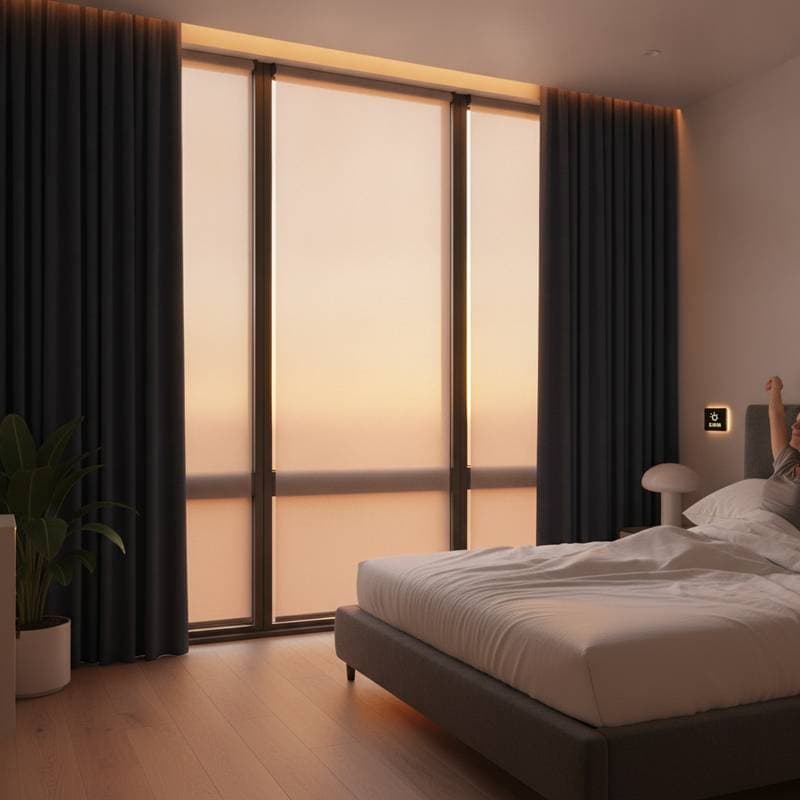
Optimize Sleep with Built-in Circadian Blackout Curtains
Sleep improves when bedroom light aligns with the body's natural rhythm. Proper curtains signal the brain when rest begins and when waking should occur.
Many rooms remain overly bright at night or excessively dark at dawn. This mismatch disrupts the internal clock and reduces rest quality.
The following sections explain how built-in circadian blackout curtains address these issues. Renters can achieve similar effects with layered blackout and sheer panels.
Core Principles of Light and Sleep
The circadian rhythm functions as the body's internal clock and responds directly to light changes. Bright evening light delays melatonin release and complicates falling asleep. Blackout curtains eliminate external light sources completely.
Circadian models incorporate timed dimming or color shifts that replicate sunrise and sunset patterns. Fabrics must carry flame-retardant certification for safe indoor installation.
Required Tools and Materials
- Tape measure
- Level or laser guide
- Drill and wall anchors
- Built-in circadian blackout curtain kit
- Power source or rechargeable battery pack
- Smartphone or remote control hub
- Ladder or step stool
Optional items include sheer panels for daytime filtering and a light meter to verify illumination levels.
Installation Steps
Measure the window accurately
Record exact width and height. Add two inches of overlap on each side to prevent light seepage at the edges. Keep these figures on hand when ordering.
Select an appropriate system
Choose a model that matches the window frame depth. Inside-mount options create a streamlined appearance. Outside or ceiling mounts deliver fuller coverage.
Verify power requirements
Confirm outlet access for motorized units or prepare a battery pack. Route cords away from walkways to reduce tripping hazards.
Mount the brackets
Mark positions with a level. Insert anchors in drywall for stability. Confirm both brackets sit at identical heights.
Secure the housing unit
Slide the main assembly into the brackets. Tighten screws firmly without excessive force to limit vibration noise.
Pair controls
Connect the motor to its remote or application according to manufacturer directions. Run a test cycle before attaching trim pieces.
Set timing and intensity
Program gradual transitions that match your sleep schedule. Use preset sunrise and sunset modes, then fine-tune brightness until changes feel natural.
Balance blackout and circadian functions
Activate full blackout during sleep hours. Switch to gentle morning illumination for waking. Automated cycles maintain the pattern once configured.
Inspect for gaps
Extinguish indoor lights after dark. Check edges for stray light and adjust overlap or add side tracks as needed.
Recommended Practices
Dos
- Clean housing weekly with a microfiber cloth to protect sensors.
- Activate circadian mode each day for steady rhythm support.
- Select neutral fabrics that distribute light evenly.
- Confirm safety certifications on all motorized components.
Don'ts
- Avoid moisture exposure that can damage blackout linings.
- Keep sensor areas free of obstructions.
- Complete calibration to preserve timing accuracy.
- Refrain from abrasive cleaners on coated fabrics.
Situations Requiring Professional Help
Engage specialists when wiring must run inside walls or frames deviate from standard sizes. Electricians should handle hardwired motors. Fragile plaster surfaces or integration with existing smart-home systems also warrant expert assistance.
Budget and Timeline Overview
Manual blackout models start in the low hundreds of dollars. Smart circadian systems often exceed one thousand dollars. Installation spans one to three hours. Motor quality, application compatibility, and custom dimensions determine final cost. Existing smart-home hubs can shorten setup.
Ongoing Care
Dust the housing weekly. Wipe fabric monthly with a dry cloth. Recalibrate timers after power interruptions. Inspect batteries and wiring yearly. Address slow motor response promptly to maintain performance.
Specialist Perspectives
Dr. Lena Ortiz of the Center for Circadian Health notes that light provides the strongest cue for sleep and wake times. Closer alignment with natural shifts improves sleep consistency. She suggests combining controlled evening darkness with morning light exposure.
Interior designer Caleb Nguyen recommends matching curtain color to wall tones. Subtle palettes reduce visual contrast during transitions and promote a calmer nighttime atmosphere.
Sustaining the Routine
Once installed, the system integrates into daily patterns. Maintain consistent timing even during travel through remote or app controls. After several weeks many users notice faster sleep onset and greater morning alertness.
Achieving Consistent Results
Careful measurement, secure installation, and natural light programming deliver reliable benefits. The outcome includes darker nights, gentler mornings, and a stable body clock that supports restorative rest.