
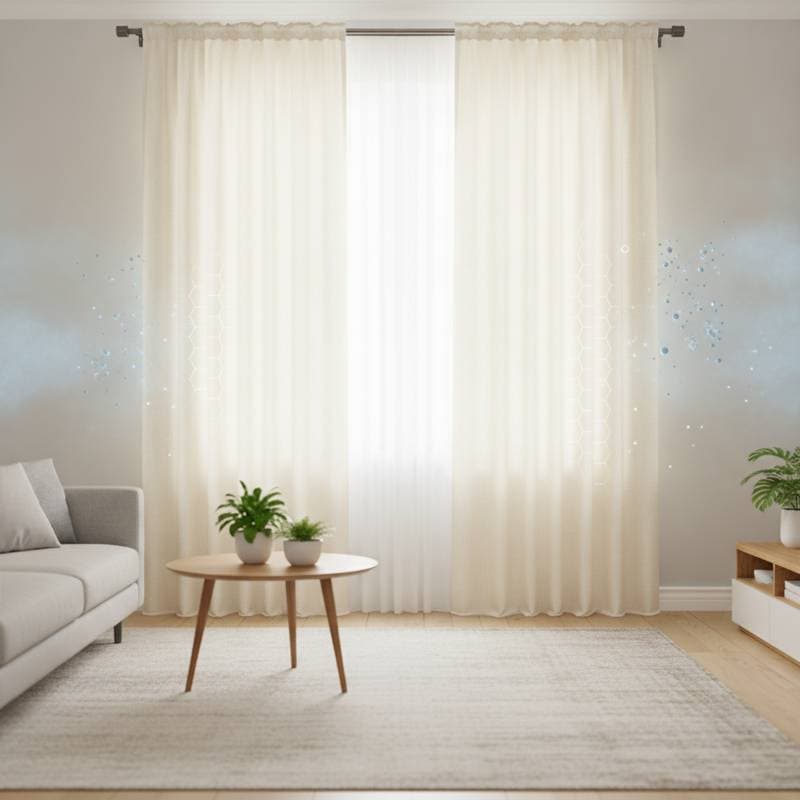
Air-Purifying Curtains Clean Your Home Using Light
The Window Treatment That Filters Air and Blocks Light
A window treatment that cleans the air and blocks unwanted light is becoming an accessible reality for homeowners. Air-purifying curtains do more than decorate a room. They actively improve indoor air quality while controlling sunlight and privacy. Residents in small apartments near traffic or families seeking a healthier environment find meaningful benefits from these functional fabrics.
Why This Matters
Indoor air often contains dust, pollen, and pollutants that settle on surfaces. Traditional window coverings trap these particles. Air-purifying curtains use specially treated fibers that break down airborne pollutants when exposed to natural light. The result is a soft textile that works quietly to keep air cleaner. These curtains also manage glare and heat to stabilize indoor comfort.
How Air-Purifying Curtains Work
Manufacturers apply a mineral-based photocatalytic coating, often titanium dioxide, to the fibers. Sunlight or indoor light triggers a reaction that breaks down formaldehyde, nitrogen oxides, and other pollutants into water vapor and carbon dioxide. This process repeats continuously while the curtain receives light. Many curtains use polyester or cotton blends chosen for durability and easy maintenance. The coating leaves the texture unchanged.
Some models combine the air-filtering effect with blackout or thermal layers for multiple functions in one design.
Choosing the Right Fabric and Style
Begin with the needs of the space. Bedrooms facing the street benefit from fabrics with both blackout lining and photocatalytic properties. A product such as the GUNRID curtain uses a light-activated mineral treatment that neutralizes pollutants while maintaining a clean aesthetic. Semi-sheer options suit open living areas by allowing daylight to flow through while still filtering the air.
Light tones such as soft gray, oatmeal, or pale blue enhance the reflective quality of the coating. Measure panels to reach from ceiling to floor, typically 84 inches, to maximize coverage and create a polished appearance.
Installation Tips
Mount the curtain rod several inches above the window frame to exaggerate height. Extend the rod beyond the window edges by 6 to 8 inches to prevent light gaps. Rental spaces can use tension rods or adhesive hooks that require no drilling. Pair the curtains with a washable sheer or roller shade for layered flexibility. Keep the air-purifying curtain partially drawn during the day to activate the coating.
Maintenance and Longevity
The photocatalytic treatment integrates into the fibers and resists washing off. Vacuum the fabric with a soft brush attachment every few weeks. Machine wash on a gentle cycle with mild detergent when needed, then hang to dry. Avoid bleach or fabric softeners. Most treatments remain effective for several years.
Budget and Accessibility
Expect to pay slightly more than a standard polyester drape. A set for a medium-size window ranges from modest to mid-range pricing. Budget-conscious users can install air-purifying sheers behind existing blackout curtains. Photocatalytic fabric sprays offer a low-cost introduction when applied to plain cotton curtains.
Smart Choices for Function and Style
- Fabric: Polyester-cotton blend treated with titanium dioxide
- Color palette: Pale neutrals that amplify the light reaction
- Mounting: Ceiling-height installation to increase coverage
- Layering: Combine with roller shades for adjustable control
- Maintenance: Gentle washing and air drying to preserve the coating
Daily Advantages of Air-Purifying Curtains
The air feels fresher after installation, and filtered light takes on a softened quality. Families with allergies or urban residents surrounded by traffic pollution notice functional improvements. The curtains also support a more sustainable approach to decorating. A simple textile can quietly support well-being and reduce reliance on mechanical air filters.