
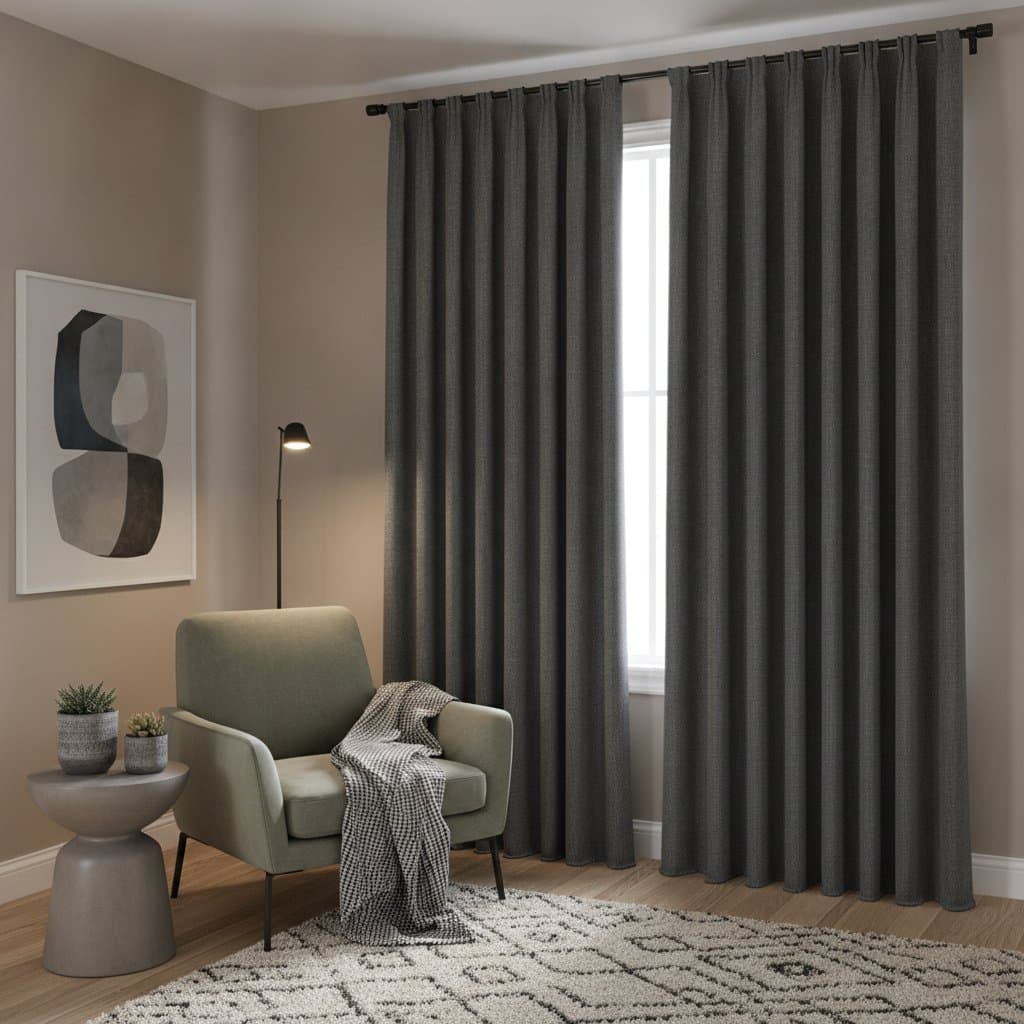
Why Soundproof Blackout Curtains Block Noise and Light
Soundproof blackout curtains offer a practical way to reduce noise and eliminate light in any room. These multi-layer panels address common issues in modern homes where external sounds and bright light disrupt rest or focus.
Noise levels continue to rise in urban and suburban settings. At the same time, larger windows and open layouts allow more light and sound to enter living spaces.
This guide explains the mechanisms behind noise reduction and light blocking. It also covers selection criteria, proper installation methods, and maintenance practices that preserve performance over time.
Address any air leaks or moisture problems around windows before installation. Heavy fabric can otherwise trap humidity against surfaces and promote mold growth.
Essential Tools and Materials
- Measuring tape
- Drill with appropriate bits and screws
- Heavy-duty curtain rod
- Step stool
- Vacuum with soft brush attachment
- Mild detergent and microfiber cloth
Strong adhesive brackets serve as an alternative when drilling is not possible. Screws provide superior long-term support for dense fabrics.
Selection Guidelines
Choose panels with at least three distinct layers to improve sound absorption. Mount the rod several inches above the window frame and extend it beyond the sides to minimize gaps.
Pair the curtains with area rugs or upholstered seating to further dampen room echo. Lift a folded sample of the fabric before purchase to confirm adequate weight and density.
Avoid expecting complete silence. These curtains lower sound transmission but cannot eliminate it entirely. Keep panels away from heat sources to prevent damage to coatings.
Budget and Installation Time
Plan for costs between 60 and 300 dollars per window. Factors include panel size, fabric density, and hardware quality. Custom options increase the total. Basic installation requires one to two hours per window.
Current Design Advantages
These curtains have gained popularity because many households now combine work and rest in the same spaces. They provide adjustable control over both sound and light without structural changes.
Designers value the added texture and visual depth. Thick drapery softens hard architectural lines and contributes to a balanced acoustic environment.
The same dense construction that absorbs sound also limits heat transfer. Interior designer Marina Flores notes that the triple-layer design traps air and reduces temperature fluctuations.
Renters benefit from the non-permanent nature of the solution. Panels install and remove without damage to window frames or walls.
Effective Layering Strategies
A single heavy panel reduces noise noticeably. Adding a sheer inner layer allows daylight control while the outer blackout panel maintains acoustic performance when closed.
Place soft furnishings nearby when walls produce strong reflections. Curtains achieve better results when integrated into a broader acoustic strategy.
Room-Specific Applications
Bedrooms. Select double-wide panels with generous overlap for complete darkness and sound reduction during morning hours.
Living rooms. Favor acoustic-lined fabrics in lighter tones. Combine with interior blinds for adjustable light levels.
Home offices. Position rods inside the window recess when possible to create a tighter seal that minimizes echo on calls.
Nurseries. Use machine-washable materials and confirm rod security. Consistent darkness and quiet support longer rest periods.
Apartments. Tension rods avoid drilling restrictions. Select lighter sound-reducing panels and add draft stoppers along the sill.
Frequent Installation Errors
- Measuring only the window frame instead of allowing side and top extensions.
- Omitting the protective liner that extends fabric life.
- Hanging rods at window height rather than near the ceiling for better coverage.
- Using lightweight rods that sag under dense material.
- Washing panels too frequently and degrading the acoustic coating.
Complementary Sound and Draft Solutions
Apply weatherstripping or acoustic caulk to window frames when external noise persists. A draft stopper along the sill improves both thermal and acoustic performance.
Double-pane inserts combined with curtains can halve incoming noise in high-traffic areas. Soft rugs, wall hangings, and bookshelves absorb internal sound reflections.
Energy and Environmental Considerations
The insulating properties reduce heating and cooling demands throughout the year. Many manufacturers now offer recycled polyester or organic cotton options that avoid strong chemical coatings.
Look for low-emission certifications when sensitive air quality matters. These curtains support efficiency goals without requiring major construction.
Maintenance Practices
Rotate panels periodically to distribute sun exposure evenly. Check hardware for wear and replace components that cause friction.
Allow airflow behind the fabric if odors develop. Use steam to release wrinkles while avoiding direct contact with coated surfaces.
Practical Next Steps
Measure windows accurately and select dense, multi-layer fabric with compatible hardware. Install for full coverage and follow a simple care routine. Combine with basic sealing measures around the frame for optimal results.
The finished installation delivers steadier temperatures, reduced distractions, and improved daily comfort.