
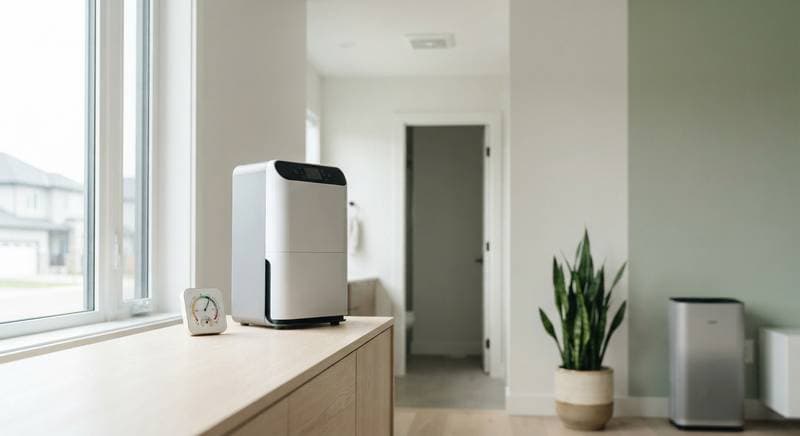
Mold Prevention Begins With Humidity Control
Mold spores exist in nearly every indoor environment. Growth occurs only when moisture levels allow spores to settle and multiply. The Environmental Protection Agency advises keeping relative humidity between 30 and 50 percent to limit conditions that support mold. A simple hygrometer provides accurate readings that replace guesswork.
Humidity control alone cannot correct active leaks or drainage problems. The first step involves locating and repairing the source of moisture. Once the source is addressed, humidity management becomes an effective preventive measure.
Essential Tools for Moisture Management
- Digital hygrometer or thermostat with humidity display
- Bathroom and kitchen exhaust fans that vent to the exterior
- Dehumidifier sized for the specific room or area
- Clean cloths and a flashlight for inspection
- HVAC filter that matches system specifications
Step-by-Step Moisture Control Process
Measure humidity levels throughout the home
Position the hygrometer in living areas, bedrooms, basements, and rooms that feel consistently damp. Avoid locations near windows, direct sunlight, exterior doors, and air supply vents, as these placements produce inaccurate readings. Test multiple locations because a single sensor may miss localized humidity problems in a basement or poorly ventilated bathroom.
Identify moisture sources before visible damage appears
Inspect areas under sinks, around toilets, near washing machines, along basement walls, and beneath windows. Watch for condensation, peeling paint, musty odors, water stains, or swollen trim. Use a flashlight to examine dark corners where moisture accumulates. When water is present, dry the affected area immediately and trace the source. A dehumidifier cannot stop an active leak.
Operate exhaust fans during moisture-generating activities
Run the bathroom exhaust fan during showers and continue operation until the room feels dry. Activate the kitchen exhaust fan when boiling water or cooking with steam. Verify that each fan vents to the outside rather than into an attic or wall cavity. Clean fan grilles regularly and consult the equipment manual before scheduling repairs for weak or noisy units.
Deploy a dehumidifier in persistently humid spaces
Select a unit rated for the room size and follow manufacturer instructions for placement, drainage, and maintenance. Set the humidistat near 50 percent as an initial target. Keep air inlets and outlets unobstructed. Empty the collection tank according to the schedule, or connect a drain hose when the model and location permit continuous operation.
Enhance airflow and reduce indoor moisture production
Maintain clearance between furniture and exterior walls to promote air circulation. Avoid drying laundry indoors unless the room can be ventilated or a vented dryer is available. Cover pots during cooking and repair dripping faucets promptly. If a humidifier is in use, verify its setting and clean the unit according to manufacturer guidelines. Excessive added moisture can undermine other control efforts.
Maintain heating and cooling system performance
Replace or clean the air filter according to system specifications. Keep supply vents and return grilles free from obstruction. Inspect the condensate drain for visible blockage or overflow, but avoid opening electrical panels or reaching into equipment. Persistent dampness, musty odors from vents, or recurring drainage issues require attention from an HVAC technician.
Monitor conditions and respond to changes
Recheck hygrometer readings after operating fans or a dehumidifier. Readings that remain above 60 percent indicate an ongoing moisture source such as a leak, inadequate ventilation, or groundwater infiltration. Maintain a simple log of rooms with recurring dampness and weather-related variations. This record assists contractors in diagnosing persistent problems.
Recommended Practices and Actions to Avoid
- Dry condensation on windows and sills, then determine why moisture forms on these surfaces.
- Keep gutters and downspouts clear so roof water flows away from the foundation.
- Clean and maintain dehumidifiers according to manufacturer instructions, as dirty filters or full tanks reduce effectiveness.
- Avoid sealing damp walls or covering visible mold with paint, because the underlying moisture problem continues.
- Do not combine cleaning products, particularly bleach with ammonia or acids, and always follow product labels while ventilating the area.
Situations Requiring Professional Intervention
Contact qualified professionals when active leaks cannot be located, basement seepage repeats, or mold covers extensive areas. Professional help is also necessary when mold appears in heating and cooling equipment, when water has saturated drywall or insulation, or when sewage is involved. Water that reaches electrical outlets, wiring, or appliances requires immediate attention from an electrician. Individuals with asthma, severe allergies, or compromised immune systems should consult healthcare providers about exposure precautions.
Investment and Time Requirements
A basic hygrometer typically costs between 10 and 30 dollars. Home dehumidifiers generally range from 150 to 500 dollars, with larger capacity units or models equipped with built-in pumps commanding higher prices. Exhaust fan repairs and professional moisture inspections add to the total investment. Checking humidity readings and visible problem areas requires approximately 10 to 20 minutes. Dehumidifier performance varies based on room size, temperature, moisture load, and drainage configuration.
Ongoing Maintenance Schedule
Check humidity levels in damp-prone rooms regularly and whenever condensation or musty odors return. Clean fan grilles and dehumidifier filters according to the respective manuals. Empty or inspect the dehumidifier tank and clear the drain hose if water flow stops. Examine areas under sinks and around appliances for drips during routine cleaning. Reassess repaired areas after drying is complete, because returning stains, odors, or dampness indicate problems that require further investigation.
Establishing a Practical Humidity Monitoring Routine
Position the hygrometer in a room with recurring moisture issues and use its readings to guide responses. When humidity increases, operate exhaust fans, inspect for leaks, and employ a dehumidifier if necessary. Persistent high readings despite these measures indicate the need to investigate building conditions or ventilation rather than increasing equipment capacity.
Smart dehumidifiers offer remote monitoring, automatic humidity settings, and tank-full alerts. These features provide convenience but do not replace regular room inspections and unit maintenance. A basic model paired with a separate hygrometer may suffice for smaller spaces.
Effective humidity control functions as one component of a comprehensive moisture management strategy. Ventilate damp rooms, repair leaks promptly, and direct water away from the foundation. When moisture sources are controlled and conditions are monitored consistently, mold encounters fewer opportunities to establish and spread.