
Understanding Closet Mold and Its Impacts
Mold thrives in dark, humid environments like closets, where poor ventilation traps moisture from laundry or weather changes. This leads to musty odors, fabric damage, and potential health risks from spore inhalation. Antimicrobial linings offer a proactive solution by inhibiting microbial growth directly on surfaces.
These linings integrate agents that disrupt bacteria and fungi at the molecular level, creating a barrier against mold formation. Unlike traditional dehumidifiers, they provide continuous protection without ongoing energy use. Homeowners benefit from preserved clothing quality and reduced cleaning frequency.
Benefits of Antimicrobial Linings for Closet Protection
Antimicrobial linings extend the lifespan of stored items by preventing mildew spots on wool, cotton, and synthetics. They maintain a fresh scent in enclosed spaces, avoiding the need for frequent airing out. In humid climates, these materials reduce allergy triggers by limiting spore proliferation.
Installation proves simple for most users, requiring minimal tools and no professional assistance. Long-term, they contribute to a healthier indoor environment, aligning with modern standards for sustainable home care. Users report noticeable improvements in closet air quality within weeks.
Selecting the Right Antimicrobial Lining Materials
Evaluate linings based on composition, such as silver-ion infused fabrics or copper-based coatings, which target mold effectively. Opt for breathable options like treated canvas or mesh to allow air circulation while blocking contaminants. Consider thickness for durability; aim for at least 0.5 millimeters to withstand regular use.
Check compatibility with closet types, from walk-ins to reach-ins, ensuring adhesive or staple methods suit wooden or metal frames. Prioritize hypoallergenic variants if household members have sensitivities. Reputable suppliers provide certifications for efficacy against common molds like Aspergillus.
Step-by-Step Installation Guide
Prepare the Closet Space
Remove all contents and clean surfaces with a mild vinegar solution to eliminate existing mold residues. Allow the area to dry completely, ideally using a fan for 24 hours. Measure dimensions accurately, adding 10 percent extra material for overlaps and seams.
Cut and Fit the Lining
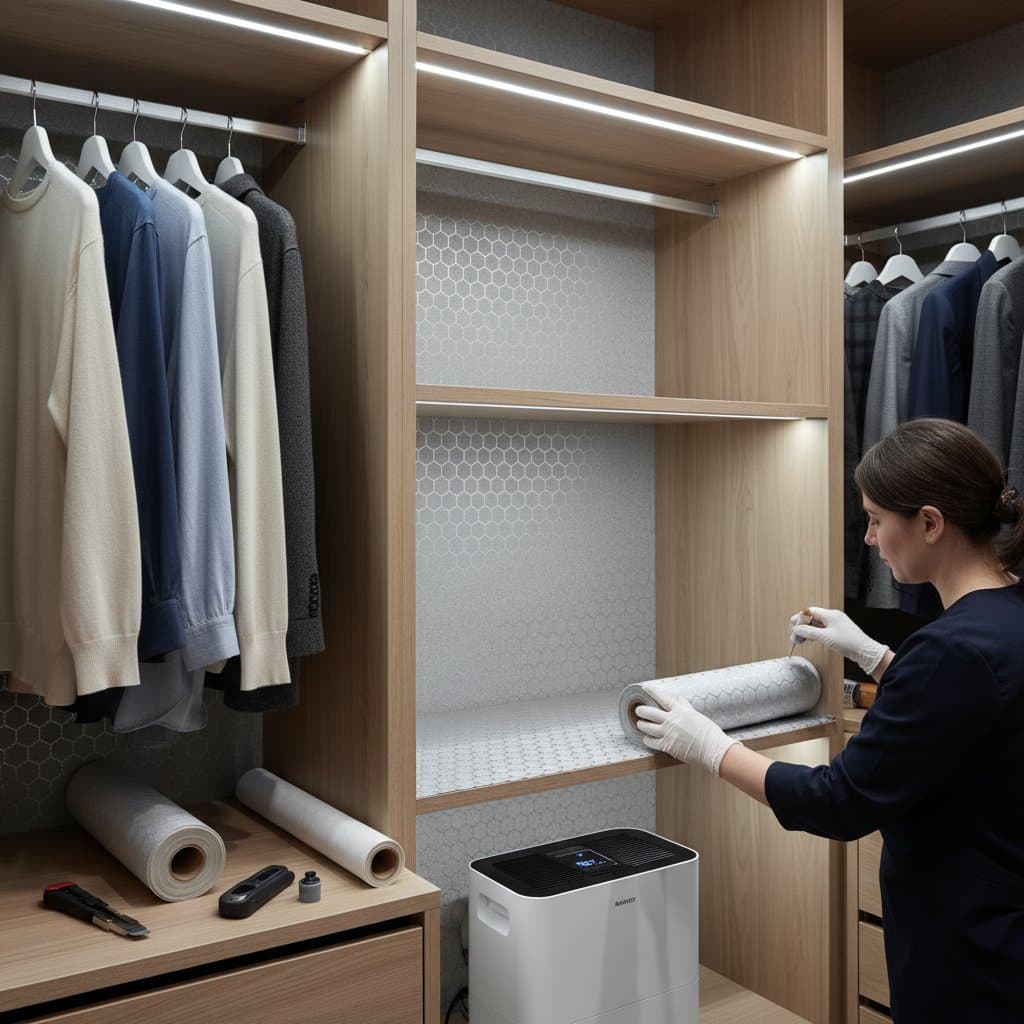
Unroll the antimicrobial material on a flat surface and cut panels to match shelf, wall, and drawer sizes using sharp utility scissors. For curved edges, score lightly rather than forcing cuts to avoid tears. Test fit without adhesive to confirm coverage.
Apply the Lining Securely
Use double-sided tape or fabric glue for non-permanent attachment, applying in thin lines to prevent bubbling. For permanent fixes, staple edges every 4 inches into wooden frames, starting from the center and working outward. Press firmly to ensure full contact and activate antimicrobial properties.
Reassemble and Test
Replace items gradually, monitoring for any adhesive residue. Introduce a small hygrometer to track humidity levels post-installation. Initial airing for a day helps settle the material and disperse any manufacturing scents.
Maintaining Mold-Free Closets Long-Term
Monitor humidity regularly, keeping it below 50 percent with silica gel packs or vents if needed. Vacuum linings quarterly to remove dust that could harbor microbes. Inspect for wear annually, patching small damages promptly with matching material.
Avoid overloading shelves to promote airflow, and use cedar blocks sparingly as they complement rather than replace antimicrobial action. In high-moisture seasons, leave doors ajar periodically. These habits ensure the linings perform optimally for years.
Achieving Lasting Freshness in Your Storage Spaces
Antimicrobial linings transform vulnerable closets into reliable havens for valuables. By addressing moisture at its source, they safeguard health and possessions effectively. Implement these strategies to enjoy a consistently clean, odor-free wardrobe environment.