
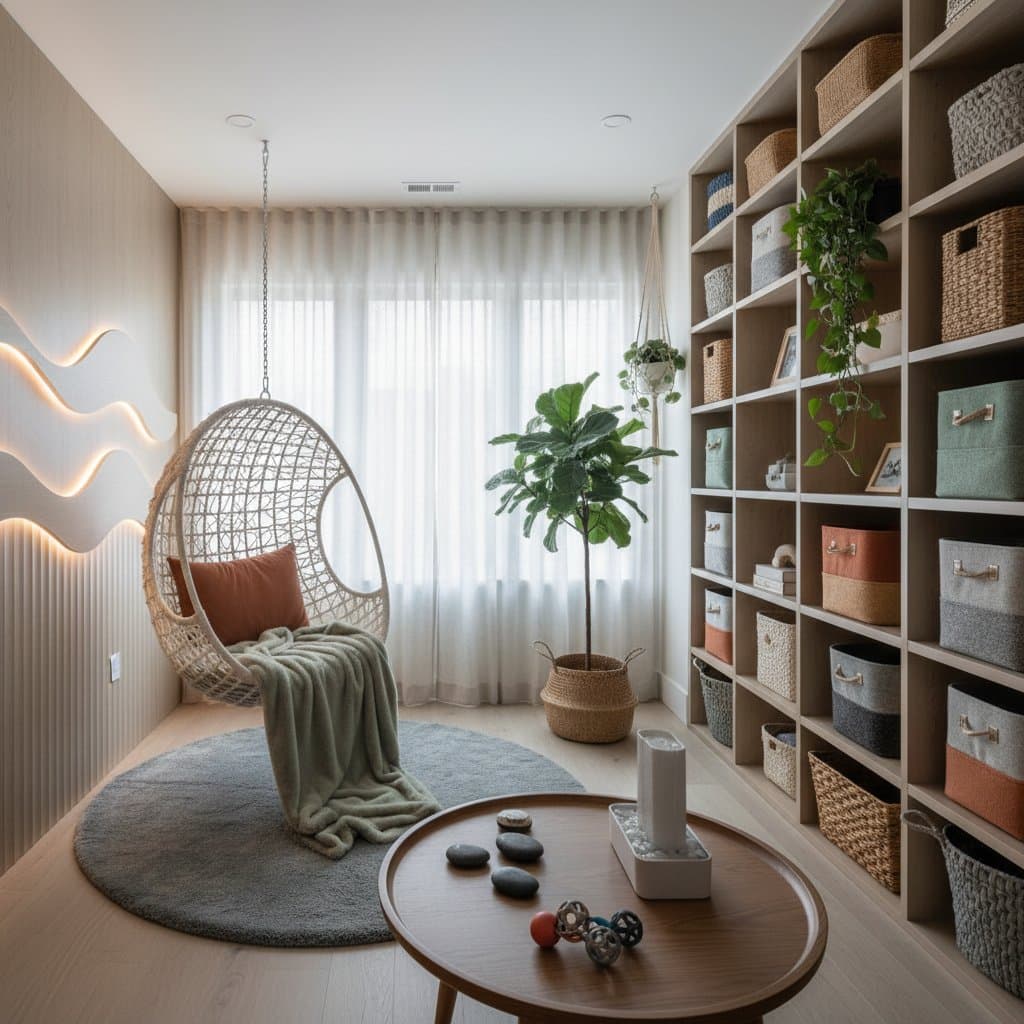
Create a Calming Sensory Room That Regulates Mood
A sensory room serves as a dedicated space designed to engage the senses in ways that promote relaxation and emotional balance. These environments draw from principles of neuroinclusion, making them accessible for individuals with sensory processing needs, anxiety, or simply a desire for daily calm. By carefully curating elements like light, sound, and touch, you can transform an ordinary room or corner into a powerful tool for mood regulation.
Such spaces prove particularly valuable in homes where stress accumulates from work, family demands, or overstimulation. Research in occupational therapy highlights how sensory integration reduces cortisol levels and enhances focus. Whether you seek relief from daily pressures or support for neurodiverse family members, a well-designed sensory room offers immediate and lasting benefits.
Understanding Sensory Rooms and Their Impact
Sensory rooms originated in therapeutic settings for children with autism but have evolved into versatile tools for all ages. They work by providing controlled sensory input that helps the brain shift from fight-or-flight responses to a state of calm. In a home context, this means creating a refuge that counters the chaos of modern life.
The core idea revolves around multisensory balance. Overstimulation from bright lights or loud noises can elevate anxiety, while intentional understimulation fosters tranquility. For mood regulation, focus on elements that soothe rather than overwhelm, allowing users to self-regulate at their own pace.
Benefits extend beyond immediate relaxation. Regular use improves sleep quality, boosts emotional resilience, and even enhances productivity in adjacent spaces. Families report stronger connections when shared sensory experiences replace screen time.
Planning Your Sensory Space
Assess your available area before diving into design. A full room offers maximum flexibility, but a nook in a bedroom or living area works equally well for beginners. Measure the space and consider traffic flow to ensure the area remains inviting yet private.
Budget plays a key role in feasibility. Start with low-cost items like soft fabrics and dimmable lamps, then scale up to specialized equipment if desired. Prioritize modularity so the setup adapts to changing needs, such as seasonal adjustments or growing family dynamics.
Involve potential users in the planning process. Discuss preferences for colors, textures, or sounds to personalize the space. This collaborative approach not only increases buy-in but also ensures the room meets real emotional needs.
Essential Elements for a Calming Sensory Room
Lighting for Serenity
Soft, adjustable lighting forms the foundation of mood regulation. Opt for warm-toned LED bulbs that mimic sunset hues, avoiding harsh fluorescents. Install dimmer switches or smart bulbs controllable via voice or app for seamless adjustments.
Incorporate natural light filters like sheer curtains to diffuse sunlight without blocking it entirely. For darker spaces, consider fiber optic stars on the ceiling to evoke a night sky, promoting deep relaxation. These choices help synchronize circadian rhythms and signal the body to unwind.
Layer lighting options: ambient floor lamps for overall glow, task lights for reading corners, and colored gels for mood-specific shifts, such as blue for cooling anger or lavender for sleep preparation.
Soundscapes for Tranquility
Quiet reigns supreme, but intentional sound enhances the experience. Use white noise machines or fans to mask external disturbances, creating a consistent auditory blanket. Nature recordings, like gentle rain or ocean waves, provide rhythmic comfort without intrusion.
Soundproofing elements, such as wall hangings or rugs, absorb echoes and reduce ambient noise. For active engagement, include low-volume chimes or a small fountain whose trickle soothes frayed nerves. Always provide an option for complete silence to accommodate varying sensitivities.
Test audio levels during setup. Aim for sounds below 40 decibels to prevent overstimulation, ensuring the space supports focus during meditation or light reading.
Textures and Tactile Comfort
Touch invites grounding in the present moment. Select plush rugs, weighted blankets, and bean bags in soft, natural fabrics like cotton or fleece. These items offer deep pressure that calms the nervous system, much like a firm hug.
Variety prevents monotony: smooth stones for hand-held fidgeting, fuzzy pillows for leaning, and gel mats for bare feet. Arrange them accessibly, perhaps in a tactile basket, so users can choose based on their mood. Hypoallergenic materials ensure safety for all.
Incorporate swing seats or hammocks if space allows, as gentle motion regulates vestibular input and eases anxiety. Clean these elements regularly to maintain a hygienic, inviting atmosphere.
Aromas and Visual Calm
Subtle scents elevate the sensory profile without overwhelming. Essential oil diffusers with lavender or chamomile promote relaxation, while eucalyptus clears mental fog. Place them strategically, away from direct airflow to avoid intensity.
Visual elements should harmonize with the palette. Neutral walls in soft grays or blues recede, expanding the sense of space. Wall decals of serene landscapes or abstract patterns provide gentle focal points without clutter.
For added depth, include a small indoor plant or aquarium. The movement of fish or leaves offers hypnotic distraction, further aiding mood stabilization.
Safety and Adaptability Considerations
Safety underpins every design choice. Secure heavy items to walls to prevent tipping, and choose flame-retardant materials for upholstery. Electrical setups require grounding and overload protection, especially with multiple lights or devices.
Accessibility matters for all users. Ensure pathways remain clear, with options for wheelchair navigation if needed. Temperature control, via fans or heaters, keeps the space comfortable year-round.
Adaptability ensures longevity. Use removable panels or modular furniture that rearranges easily. Monitor usage and solicit feedback to refine elements, turning the room into an evolving sanctuary.
Bringing It All Together: Your Path to Daily Calm
Assemble your sensory room in phases: start with lighting and sound, then layer in textures. Test the setup during a trial period, adjusting based on real experiences. This iterative process guarantees a space that truly regulates mood.
Once established, integrate it into routines, such as evening wind-downs or midday breaks. The result is a home that nurtures well-being, fostering resilience against life's stresses. Embrace this creation as an investment in emotional health for yourself and loved ones.