
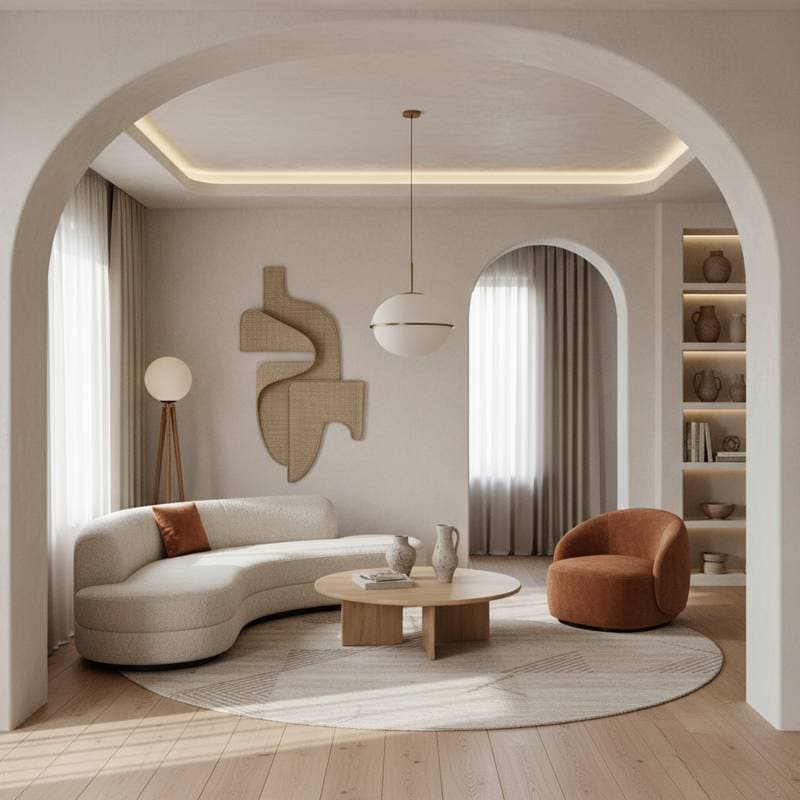
Curves Soften Stark Modern Interiors Effortlessly
Minimalist design celebrates clean lines, sharp angles, and open space. This approach creates elegance, yet without balance, modern interiors risk feeling cold or rigid. Curved furniture and architectural details provide a straightforward solution. These elements introduce movement and warmth, turning hard-edged rooms into inviting spaces that retain a sleek, contemporary feel.
Why Curves Matter
Curves naturally promote comfort. Research in spatial psychology shows that organic shapes attract the human eye because they evoke safety and approachability. A curved sofa or arched doorway disrupts the repetition of straight lines and adds visual rhythm. In a room filled with rectangles and flat planes, a single rounded item serves as a focal point that eases tension across the entire area.
Designers refer to this approach as soft modernism. It preserves the precision of modern aesthetics while incorporating gentle forms, plush textures, and inviting materials. The outcome is a space that feels relevant and considerate.
At a Glance
- Style focus: Soft modernism via curved forms
- Ideal for: Minimalist homes seeking warmth and character
- Budget range: Adaptable, from simple DIY projects to premium custom designs
- Skill level: Beginner to intermediate, based on project scope
- Best results: Pair curves with structured architectural elements
Before: Challenges of Hard Geometry
Contemporary homes frequently include open plans with right-angled walls, large windows, and polished concrete or stone floors. These features highlight accuracy but can make spaces feel hollow or clinical. One homeowner called her living room beautiful yet impossible to relax in. Her angular furniture, including a low sofa, boxy table, and straight shelves, matched perfectly but drained the room of vitality.
This issue resonates widely. A flawlessly arranged space may still repel if it fails to align with daily life. Homes must embrace inhabitants rather than overwhelm them. Curves address this divide by rendering modernism more habitable.
After: Adding Movement and Warmth
The homeowner swapped her sharp sofa for a rounded sectional in cream bouclé. This change drew the seating toward the fireplace, forming a seamless conversation area. A circular jute rug anchored the zone, while a marble coffee table with rounded edges enhanced the flow.
No structural work was needed, just targeted shape adjustments. The curved sofa balanced the room's length visually. The round rug tempered the firm floor, and the table introduced sculpture. Layered lighting sealed the shift: a globe pendant overhead, frosted-glass sconces on walls, and a mushroom-shaped lamp for soft evenings.
Design Details
- Sofa: Custom design drawing from mid-century Italian influences, covered in cream bouclé from Fabricut
- Rug: Handwoven jute, 8 feet in diameter, from a local fair-trade supplier
- Coffee table: White marble top on a rounded triangular base, available at West Elm
- Lighting: Glass globe pendant, matte brass sconces, and ceramic mushroom lamp for varied light
- Accent chair: Bentwood frame with curved lines, a vintage flea-market piece reupholstered in olive velvet
- Budget option: Rearrange IKEA SÖDERHAMN sections into curved seating with slipcovers
Each curve contributes practically. Rounded sofa edges avoid injuries in compact areas. The circular rug delineates space fluidly. Lighting follows the theme, fostering cohesion.
How Curves Enhance Function
Curved pieces go beyond looks. They alter movement patterns. Rounded edges direct flow intuitively, eliminating stagnant spots. In compact apartments, a semicircular banquette accommodates more diners than a square one.
In open plans, curved sectionals divide zones without barriers. Architectural curves like arched doorways or eased corners alter views. They raise perceived ceiling height and smooth transitions. A basic plaster arch linking kitchen and living areas costs far less than a remodel yet adds deliberate character.
Materials That Bolster Soft Modernism
Texture heightens curves' impact. Smooth forms pair well with touchable surfaces. Bouclé, velvet, and suede coverings warm minimalist shapes. Rattan, cork, and raw wood introduce organic tones and patterns.
Contrast matters in material selection. A curved walnut console gains depth against white plaster. A round mirror in matte black metal pops on limewashed walls. Balance hard and soft, light and shadow, matte and gloss.
Color supports subtly. Neutrals emphasize shape, while soft hues like sage or terracotta add nuance without overload. Aim for serenity over abundance.
Lighting Strategies
Lighting defines how curves appear. Indirect sources create smooth gradients, avoiding stark shadows. Consider these methods:
- Wall washing with LED strips behind mirrors or shelves to highlight curved glows.
- Clustered pendants of three or five small globes at different heights to mimic natural motion.
- Arched or domed floor lamps that serve as functional art.
Combine warm bulbs, dimmers, and reflective elements for ease.
Small Spaces, Big Impact
For renters or apartment residents, portable items fit easily. Begin with:
- Curved accent chairs that shift room dynamics quickly.
- Large rounded mirrors over consoles to ease entryways.
- Pill-shaped pillows instead of square ones for gentle updates.
- Table lamps with dome shades to curve accessories.
Select art with arcs or flowing strokes to align with curves.
Designer Insights
Interior designer Carla Nguyen observes, Curves make modern interiors human again. They show comfort and style can align. She suggests anchoring with one key curved item, then layering around it. A rounded sofa or table often sets the room's pace.
Designer Luis Ortega concurs, stressing scale. Too many curves risk whimsy. He pairs them with sharp lines for equilibrium, like round ottomans against straight walls.
Budget-Friendly Paths to Curvature
Custom work suits not all budgets. Explore these alternatives:
- Reupholster vintage barrel chairs or kidney tables for inherent curves.
- Paint half-circle murals as headboards using tape and matte paint.
- Bend plywood for arches or rounded shelves.
- Commission local makers for affordable curved tables or stools.
Prioritize positioning near windows to leverage natural light reflections.
Balancing Curves with Straight Lines
Excess curves evoke playfulness; none breed severity. Contrast achieves harmony. Employ straight elements for framework, like floorboards or shelves, and curves for softness.
Pair a round table with linear chairs or a curved sofa with a rectangular rug. This dialogue prevents dullness. In a compact kitchen, my round bistro table resolved a cramped corner, widening paths and inviting pauses.
Sustainability in Rounded Design
Curves align with eco-friendly practices. Thicker padding and sturdy frames ensure longevity. Sixties and seventies vintage items with fluid lines integrate well into current setups, cutting waste.
Opt for limewash or clay on curved walls for breathability. Choose certified or reclaimed wood for rounded furniture to promote ethical sourcing.
Emotional Benefits
Curves affect well-being subtly. They diffuse light softly, lessen visual strain, and offer enclosure without restriction. In living areas, they promote tranquility; in bedrooms, rest; in workspaces, concentration.
One remodeler noted, I switched to a rounded-corner desk. Tension eases by day's end, despite unchanged size. Such tweaks profoundly influence routines.
Bringing Curves into Your Home
Curves rethink comfort beyond trends. Assess your space's flow. Identify where angles hinder or lines overwhelm, then add one or two curves to test the shift.
For minimalist warmth, select neutrals and textures. For eclectic vibes, blend eras: a mid-century chair, modern rug, handmade vase. Harmony trumps flawlessness.
Design evolves gradually. Curves suit this, feeling enduring across styles like Scandinavian or coastal. They make modern life practical and kind, swapping rigidity for rhythm and ease.