
Tools and Materials
- Neutral paint or limewash for walls
- Vintage furniture or high-quality reproductions
- Modern lighting fixtures with sleek profiles
- Floral or toile-patterned fabrics in cotton or linen
- Wicker baskets, ceramic lamps, or brass hardware accents
- Mild soap and a microfiber cloth for cleaning vintage surfaces
- Measuring tape and painter's tape for precise layout planning
Step-by-Step Guide
1. Establish a Serene Foundation
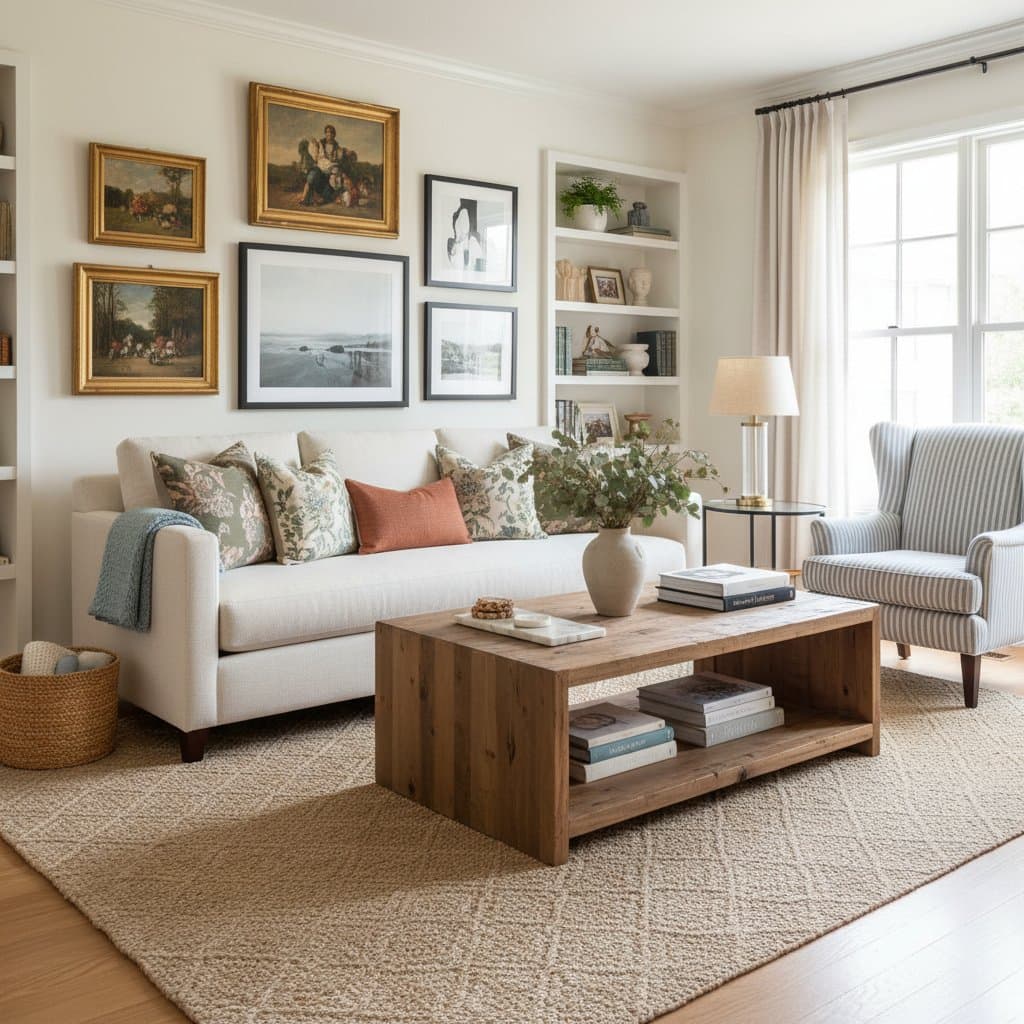
Select soft, neutral wall colors such as ivory, pale gray, or muted sage green. These hues provide a subtle backdrop that allows patterned fabrics and vintage elements to emerge without dominating the space. Apply limewash for a textured, breathable finish that enhances the room's organic feel.
2. Combine Furniture from Different Eras
Pair a intricately carved wooden dresser from the 19th century with a streamlined upholstered armchair. Limit vintage pieces to one or two per room to serve as focal points. Interior designer Claire Henson, founder of Studio Henson, notes that this combination "keeps the eye interested and the room grounded."
3. Incorporate Comfort via Layered Textiles
Introduce floral-patterned curtains, embroidered throw pillows, or a quilted blanket. Opt for cotton or linen materials to ensure breathability and straightforward maintenance. Reserve heavier brocades for formal settings where upkeep poses no challenge.
4. Integrate Contemporary Lighting
Replace traditional crystal chandeliers with minimalist brass pendants or rattan sconces. Focus on fixtures that introduce modern equilibrium to the design. Choose warm-toned LED bulbs that emulate natural daylight and complement the patina of vintage items.
5. Apply Patterns Thoughtfully
Combine small-scale and large-scale prints within a cohesive color palette. For instance, place a floral pillow adjacent to a plaid-upholstered armchair when shades align. Restrict bold patterns to no more than two or three per room to create visual pauses.
6. Curate Accessories Intentionally
Showcase family photographs in brass or wooden frames on a mantel or shelf. Incorporate a modest collection, such as vintage teacups or leather-bound books, to add personality. Refresh the display with seasonal rotations to maintain vitality and prevent accumulation.
7. Restore Vintage Pieces Gently
Clean wooden furniture using mild soap diluted in water, then dry thoroughly with a soft cloth. For dull finishes, apply a thin layer of beeswax polish to revive luster. Test any product on an inconspicuous area to avoid damage.
8. Refine Through Editing
Assess the room from a distance and remove at least one item from each surface. This practice curbs excess and preserves elegance. Grandmillennial design thrives on deliberate sparsity rather than abundance.
9. Anchor with Organic Textures
Incorporate woven wool rugs, jute floor mats, or wicker storage baskets to infuse warmth. These elements bridge ornate vintage details with contemporary minimalism. Select pieces in earthy tones to unify the composition.
Essential Dos and Don'ts
Dos
- Mix antique forms with current silhouettes for dynamic contrast.
- Select natural fabrics and finishes to convey genuine heritage.
- Emphasize artisanal techniques, such as hand-stitched embroidery or woven caning.
- Maintain uniform lighting tones and warmth throughout the space.
- Infuse personal narrative through artwork that resonates with your experiences.
Don'ts
- Overload shelves with an excess of collectibles.
- Apply paint directly over antique wood without assessing its historical or monetary value.
- Employ abrasive cleaners on patinated metals or aged timbers.
- Sacrifice functionality in pursuit of visual appeal alone.
- Adhere rigidly to the motifs of a single historical period.
Situations Requiring Professional Assistance
Engage a restoration specialist or upholstery professional if you detect potential lead-based paint on older finishes or if fabrics fray upon gentle handling. Consult a licensed electrician for rewiring antique lamps or installing new fixtures. Such tasks demand specialized expertise and equipment beyond typical household capabilities.
Budget and Timeline Overview
Expenses fluctuate based on scope and material choices. A basic refresh involving paint, secondhand discoveries, and simple textiles might total under $300. Comprehensive overhauls, incorporating premium antiques and custom upholstery, could exceed $2,000. Allocate a weekend for minor updates or two to four weeks for in-depth transformations. Key expenditures include sourcing fabrics, refinishing surfaces, and hiring experts for preservation work.
Ongoing Care Practices
- Dust surfaces weekly using a dry microfiber cloth to preserve delicate finishes.
- Launder removable slipcovers or curtains every three to six months in cool water.
- Reapply beeswax polish to wooden elements biannually for sustained protection.
- Inspect upholstery seams and cushion interiors once a year for wear.
- Rearrange accessories quarterly to minimize sun exposure and sustain visual appeal.
The Enduring Appeal of Grandmillennial Design
Grandmillennial style fosters emotional security alongside eco-conscious practices. Re-purposing existing furniture and textiles minimizes environmental impact while honoring skilled workmanship. This approach promotes patient curation over impulsive purchases, allowing spaces to evolve organically.
Home historian and design consultant Helen Ruiz observes that the style's draw stems from "reclaiming beauty from everyday life." She explains that for Gen Z, selections prioritize a sense of community over mere sentimentality; heirlooms convey narratives that enrich daily routines. Beyond aesthetics, the trend suits compact living areas, as vintage items often feature compact dimensions ideal for urban apartments. A solitary antique mirror or a painted bureau can elevate a nondescript nook without encroaching on floor space, offering adaptability for frequent relocations.
Building Your Grandmillennial Space
Begin modestly by selecting a single vintage object that sparks personal delight, then develop the surroundings accordingly. Introduce subdued palettes, ample illumination, and airy fabrics to enhance harmony. Regularly assess and curate to ensure every element contributes meaningfully. Ultimately, this method cultivates a residence that matures alongside your life, intertwining reminiscence with innovation in a seamless embrace.