
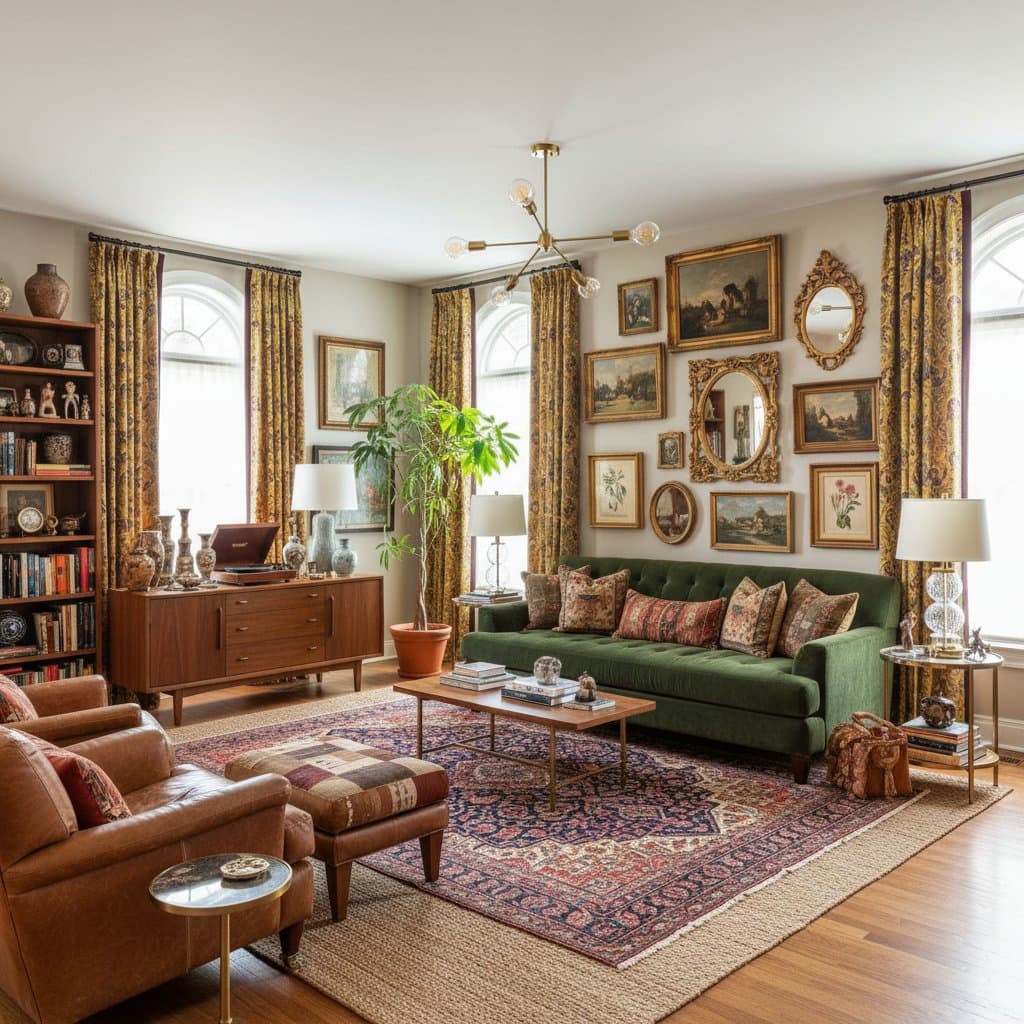
Understanding Vintage Maximalism's Edge Over Minimalism
Minimalism offers simplicity and order, yet it frequently results in spaces that feel impersonal and cold. In contrast, vintage maximalism infuses rooms with character and comfort by layering meaningful objects. This style invites personal history into daily life, creating environments that nurture rather than constrain.
Psychologist Dana Patel, who examines how homes influence well-being, observes, "People tend to relax more in spaces that show traces of identity. A mix of old and new objects signals familiarity and safety." Vintage maximalism achieves this by revealing the lives of its inhabitants through curated collections, while minimalism often conceals them behind uniform surfaces.
Minimalism requires ongoing vigilance to maintain its sparse aesthetic, which can turn maintenance into a burden. Vintage maximalism, however, accommodates evolution. As families change, so do the spaces, allowing for growth without the pressure of constant subtraction.
Building Your Vintage Maximalist Space: A Step-by-Step Guide
Step 1: Select an Anchor Piece
Choose a single item that captures the desired atmosphere, such as a heirloom quilt, an antique mirror, or a colorful ceramic vase. This piece sets the tone for the entire room. Draw inspiration from its palette and motifs to guide subsequent selections, ensuring cohesion from the outset.
Step 2: Establish a Neutral Foundation
Apply paint or wallpaper to major walls and floors in subdued shades that complement the anchor, like muted taupe, sage green, or warm gray. These bases allow vintage elements to stand out without overwhelming the space. Steer clear of stark whites, which can accentuate wear on aged items and create visual discord.
Step 3: Introduce Varied Textures
Incorporate diverse materials such as chenille, cotton, and leather to add tactile interest. Balance coarse weaves with silky finishes for dynamic appeal. Interior designer Clara Reeves of House Kind Studio notes, "Texture is what makes maximalism feel alive. It keeps the eye moving and the hand interested." Employ cushions, rugs, and upholstery to build this sensory depth gradually.
Step 4: Blend Periods with Intention
Pair items from different decades, for instance, a 1970s sideboard with an Art Deco vase or a contemporary shelf holding vintage books. Maintain harmony through consistent scales and shared finishes, like matching oak tones or gold accents. If an element disrupts the flow, relocate it rather than discarding the vision.
Step 5: Create a Thoughtful Gallery Display
Arrange artwork and photos on the floor first to experiment with composition. Position the focal piece at eye level, then surround it with smaller items spaced about two inches apart. Secure the layout with removable tape for previewing; aim for organic flow over rigid alignment to evoke natural rhythm.
Step 6: Unify with a Limited Palette
Select a core trio of colors, such as earthy reds, soft blues, and neutral beiges, and echo them in rugs, vases, and frames. Introduce metallic highlights or deep charcoals for stability. Restrict variety to these choices to prevent overload, preserving the style's charm without descending into disarray.
Step 7: Integrate Practical Storage
Incorporate utilitarian objects like woven bins, wooden crates, or tiered stands to organize essentials stylishly. Position a reclaimed console to hold remotes and mail, or use a brass tray for jewelry. These solutions ensure functionality supports the aesthetic, warding off unintended clutter.
Step 8: Layer Lighting for Ambiance
Combine overhead fixtures for general illumination, floor lamps for reading, and wall-mounted options for accents. Opt for bulbs emitting 2700K warm light to enhance wood patinas and fabric sheens. This setup casts inviting glows that highlight details and soften shadows.
Step 9: Refine Through Review
Allow the arrangement to settle for several days before final adjustments. Eliminate excess from shelves and tables to create negative space. This curation sharpens focus on cherished elements, allowing vintage maximalism to shine through intentional sparsity.
Maintaining Cohesion in Layered Designs
Repetition forms the backbone of unity. Echo forms, hues, or patterns across furnishings, such as curved legs on a chair mirrored in a nearby sculpture. These connections weave disparate pieces into a seamless whole.
Anchor each area with a dominant feature, like a bold area rug or a substantial bookcase, to provide visual stability. Without such elements, abundance risks appearing chaotic. Apply the principle of balance: offset vibrant patterns with subdued solids, ensuring every bold choice has a calming counterpart.
Practical Upkeep for Lasting Appeal
Sustain the vibrancy of your space with routine care. Wipe surfaces gently every few days to safeguard delicate finishes. Vacuum textiles weekly using a soft brush to remove dust without abrasion.
Shift decorative accents with the seasons to refresh perspectives. Examine electrical components and structural joins biannually for wear. Expose fabrics to fresh air periodically to dispel scents and maintain freshness.
When a section loses its spark, clear one item and polish the surroundings. Such targeted renewal often revives energy more effectively than additions.
Harmonizing Vintage and Contemporary Elements
The most compelling rooms fuse historical charm with modern utility. Place a streamlined console beneath an ornate mirror, or position a matte-black fixture atop a weathered chest. This interplay adds contemporary relevance without erasing heritage.
Contemporary substances like acrylic or chrome accentuate the allure of aged brass and linen. Repurpose old fabrics as framed panels or reupholster classic seats with fresh liners. Interior stylist Marco Lin, curator of artifacts for luxury accommodations, explains, "Pairing vintage with modern breathes new life into both. The old item gains focus, the new one gains soul."
Bringing Vintage Maximalism to Life
Begin by inventorying existing possessions; restore overlooked treasures and test their placement under current lighting. Scout flea markets or auctions armed with room dimensions and a defined wishlist to avoid impulse buys.
This approach yields homes that evolve with you, rich in narrative and comfort. Vintage maximalism not only surpasses minimalism's limitations but cultivates spaces that truly reflect and enrich daily existence.