
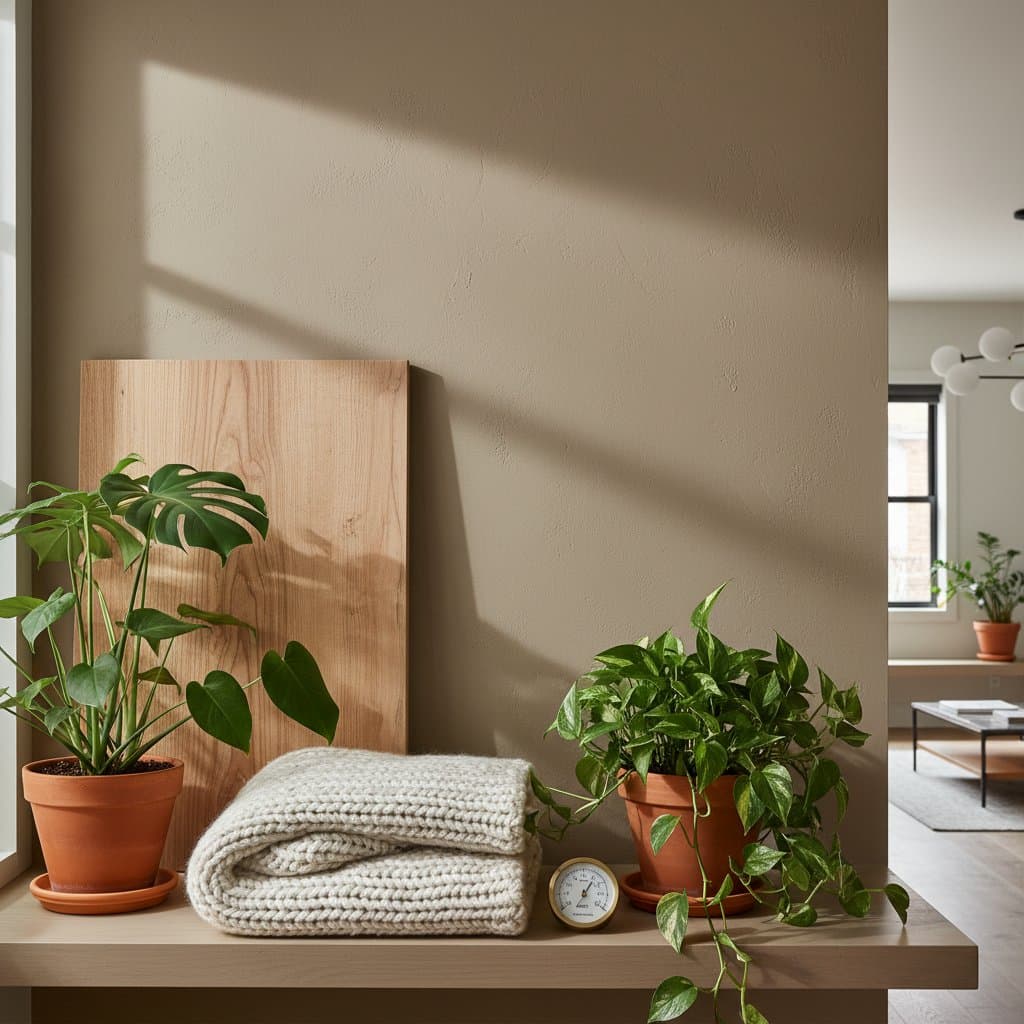
Natural Materials for Balancing Indoor Humidity
Indoor environments often fluctuate between overly dry and excessively damp conditions, affecting comfort and health. Natural materials offer a simple solution by absorbing surplus moisture during humid periods and releasing it when the air grows arid. This process creates a balanced atmosphere without relying on mechanical devices or synthetic chemicals.
Excessive dryness can lead to irritated skin, static electricity, and warped wooden surfaces, while high humidity promotes mold growth and musty odors. By incorporating breathable, porous materials into your home, you stabilize these levels naturally. The following guide details effective options and practical implementation steps.
Address any underlying issues like roof leaks or plumbing problems before applying these methods. Professional remediation ensures that humidity control efforts succeed.
Understanding Humidity Regulation
Effective humidity management extends beyond immediate comfort to long-term preservation of your living space. Stable levels between 40 and 60 percent prevent damage to wooden furniture, wall coverings, and respiratory health. Natural materials function as buffers, capturing water vapor from the air and gradually dispersing it to maintain equilibrium.
Select materials based on the specific demands of each area, such as kitchens prone to steam or bedrooms requiring gentle moisture. Consistent ventilation supports this system by preventing moisture buildup in enclosed spaces. Over time, these choices foster a healthier indoor ecosystem.
Essential Tools and Materials
Gather these items to implement humidity-balancing strategies effectively:
- Digital hygrometer for accurate humidity readings
- Clay-based paint or lime plaster for wall applications
- Solid hardwood planks or untreated cork underlay for floors
- Wool rugs, throws, or cotton draperies for soft furnishings
- Moisture-loving houseplants like peace lilies or Boston ferns
- Unglazed ceramic pots or breathable stone tiles for accents
- Soft microfiber cloths for routine cleaning
Implementation Steps
1. Establish Baseline Measurements
Position a hygrometer in key areas such as the living room, bedroom, and bathroom. Record humidity levels multiple times daily over several days to identify peaks and troughs. Target a consistent range of 40 to 60 percent, adjusting for seasonal variations like winter heating or summer humidity.
2. Assess Problem Areas
Inspect for indicators of imbalance, including dry, cracking woodwork, persistent static on fabrics, or water droplets on windowpanes. Note rooms with poor airflow or direct exposure to outdoor elements. Prioritize interventions in these zones to achieve the most noticeable improvements.
3. Apply Absorbent Wall Finishes
Choose clay paint or lime plaster for interior walls, as these formulations naturally wick away excess moisture while allowing walls to breathe. Prepare surfaces by cleaning thoroughly, then apply two coats using a natural-bristle brush or roller for even coverage. Allow 24 hours of drying time between coats to ensure proper adhesion and functionality.
4. Incorporate Breathable Flooring and Furniture
Opt for solid wood flooring or cork tiles, which inherently regulate moisture through their porous structures. Select furnishings made from untreated woods to maximize this benefit. When sealing surfaces, apply only vapor-permeable finishes that preserve the material's ability to exchange humidity with the air.
5. Integrate Houseplants Strategically
Select plants known for transpiration, such as peace lilies or ferns, and place them in low-humidity corners to introduce gentle moisture. Water sparingly to match soil dryness, using pebble-filled trays beneath pots to enhance evaporation without saturating roots. This method adds both humidity control and aesthetic appeal.
6. Create Balanced Material Combinations
Distribute absorbent and resistant surfaces thoughtfully across spaces. For instance, pair clay-finished walls with ceramic accents in moisture-heavy areas like bathrooms. This layered approach prevents localized dampness while promoting uniform air quality throughout the home.
7. Maintain Textiles for Optimal Performance
Regularly launder wool or cotton items like curtains and area rugs to remove dust and restore their moisture-holding capacity. Hang them to air-dry fully before reinstalling, ensuring fibers remain pliable and effective. This practice sustains the textiles' role in humidity moderation.
8. Establish Ventilation Routines
Introduce fresh air daily by opening windows for cross-breezes, targeting at least 10 to 15 minutes in mild weather. This exchanges stale, moisture-laden air with drier outdoor currents, resetting the natural materials' buffering capacity. Adjust frequency based on local climate and indoor readings.
9. Monitor and Refine Adjustments
Reevaluate humidity with your hygrometer after one to two weeks of changes. If fluctuations persist, reposition plants toward drier spots or add more absorbent textiles to affected areas. Iterative tweaks refine the system's efficiency over time.
Key Practices to Follow
Recommended Actions
- Select breathable, natural finishes for all major surfaces.
- Conduct humidity checks prior to any material updates.
- Combine diverse textures such as clay, wood, and wool for comprehensive regulation.
- Shift furnishings seasonally to address changing moisture patterns in specific zones.
Actions to Avoid
- Apply impermeable coatings like vinyl or heavy polyurethanes to organic materials.
- Depend solely on houseplants for humidity control in expansive or high-traffic rooms.
- Overlook signs of condensation around windows, doors, or plumbing fixtures.
- Position moisture-sensitive items like books or linens directly against exterior walls.
Seeking Professional Assistance
Consult a qualified building inspector or HVAC technician if you encounter ongoing issues such as blistering paint, unexplained wet patches, or lingering mildew scents. These symptoms often indicate hidden structural problems or inadequate ventilation that exceed the scope of material-based solutions. Experts can perform diagnostic tests and recommend tailored fixes for lasting results.
Investment and Timeline Overview
Many households already possess suitable natural elements like wooden pieces or fabric accents, minimizing initial outlays. Clay paint and lime plaster typically cost moderately per gallon, offering coverage comparable to conventional options. Application projects require one to two days per room, factoring in drying intervals, while plants and textiles deliver benefits within the first week. Total expenses depend on scale and material selections, but long-term savings arise from reduced need for powered humidifiers or dehumidifiers.
Ongoing Care Strategies
Perform monthly hygrometer checks to track stability and detect shifts early. Refresh clay or lime surfaces every three to five years if they show signs of wear, such as flaking or discoloration. Wipe down wooden elements and fabrics weekly with a damp cloth to clear debris without clogging pores. Repot houseplants annually to sustain vigorous transpiration, and remain vigilant for imbalance cues like odors or fabric stiffness.
Maximizing Effectiveness
Integrate multiple natural materials for synergistic results rather than isolated applications. As Dr. Lena Vogt, a building physicist at a home ecology lab, explains, porous materials serve as a gentle sponge for your air, stabilizing comfort without constant energy use. Prioritize cleanliness and dryness to preserve their performance.
With consistent effort, these strategies yield a more harmonious indoor environment. Your home gains resilience against humidity extremes, fostering easier upkeep and enhanced daily living.