
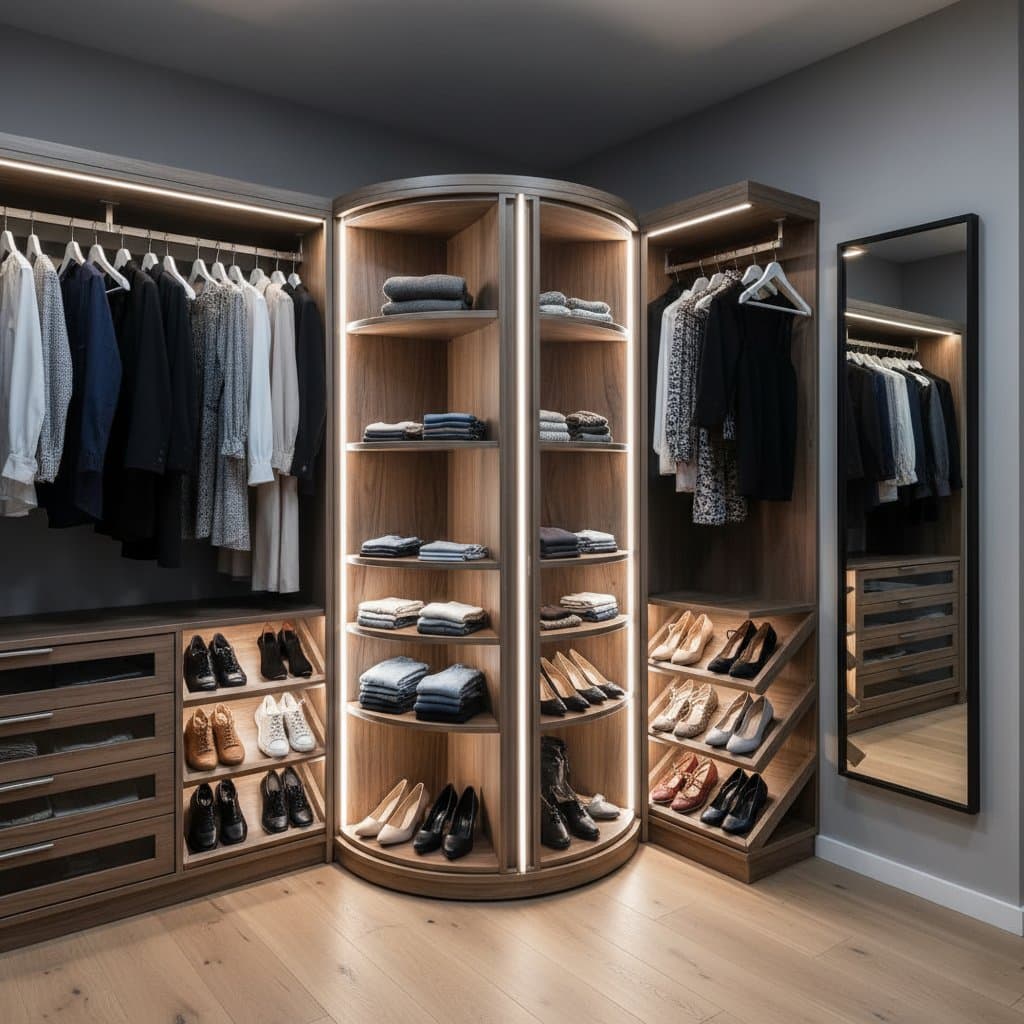
Maximize Your Closet Corners with Rotating Carousels
Unused corners in closets often become repositories for forgotten items, leading to disorganization and inefficiency. A rotating closet carousel addresses this by providing a spinning storage solution that brings every piece within easy reach. This approach eliminates awkward stretching and maximizes vertical and angular space in ways fixed shelving cannot.
Installing a rotating carousel requires careful planning to ensure stability and functionality. The process involves precise measurements, secure mounting, and balanced loading. By following structured steps, homeowners can achieve a seamless integration that enhances daily routines and declutters living spaces.
Proceed with installation only after verifying that the closet structure supports the added weight and motion. Structural limitations, such as load-bearing elements or irregular walls, may necessitate professional evaluation.
Essential Considerations for Rotating Closet Carousels
A rotating closet carousel consists of a central pole supporting circular or semi-circular racks that rotate freely. These units suit corner installations in walk-in or reach-in closets, typically accommodating clothing, shoes, or accessories. Key factors include diameter, height, and load capacity, which vary by model.
Adequate clearance remains critical; maintain a minimum of two inches around the carousel to avoid binding during rotation. Secure the base to the floor and the top to the ceiling or an upper shelf using manufacturer-recommended hardware. This anchoring prevents tipping, especially in households with children or pets.
Select materials based on durability needs: metal frames offer longevity for heavy loads, while plastic components suit lighter, budget-conscious setups. Consider the bearing mechanism, as ball-bearing systems provide smoother operation over time compared to friction-based alternatives.
Required Tools and Materials
Gather these items before starting to streamline the installation:
- Tape measure for accurate dimensions
- Stud finder to identify secure anchoring points
- Level to ensure plumb alignment
- Screwdriver or power drill for fastening
- Adjustable wrench for bolt tightening
- Mounting hardware, often supplied with the unit
- Cleaning cloth for initial setup
- Lubricating spray designed for metal mechanisms
In the absence of a drill, opt for heavy-duty adhesive anchors capable of supporting the carousel's maximum weight rating, typically 50 to 150 pounds depending on the model.
Detailed Installation Guide
1. Assess and Measure the Space
Begin by evaluating the corner's dimensions: record the height from floor to ceiling, the width between adjacent walls, and the depth from the corner to the door or opening. Most carousels require a minimum 18-inch radius to function without obstruction. Verify that the installation will not impede the closet door's full swing, allowing at least three inches of additional clearance if needed.
Sketch a simple diagram to visualize the layout, noting any obstacles like pipes or outlets. This step prevents costly adjustments later and ensures the carousel fits harmoniously within the existing setup.
2. Select the Appropriate Carousel Model
Choose between a full-round carousel for spacious walk-in closets, where 360-degree access proves beneficial, or a half-round design for standard reach-in units to conserve floor area. Consider load capacity and rod spacing; for example, models with adjustable arms accommodate varying garment lengths.
Organizer Laura Chen of Simple Order Interiors advises, "Match the carousel shape to your access point, not the corner shape." Prioritize units with reinforced bases if storing heavier items like coats or boots.
3. Mark Positions for Mounting
With a level, draw a vertical centerline from floor to ceiling at the corner's apex. Use the stud finder to locate wall studs for top bracing, as these provide the strongest support. Pencil-mark drilling spots according to the manufacturer's template, spacing holes evenly to distribute stress.
Double-check marks against the carousel's footprint to confirm alignment. This precision minimizes errors during assembly and promotes even rotation.
4. Assemble and Position the Base
Place the lower platform directly on the floor, ensuring it sits flush without rocking. Follow the included instructions to connect support brackets or legs, then secure with bolts using the adjustable wrench. Tighten until firm, but avoid excessive force that might deform the platform or strip threads.
Test the base's stability by applying gentle pressure; it should remain immobile before proceeding.
5. Erect the Central Pole
Slide the vertical pole into the base socket, extending it to reach just below the intended top mount. Use the level along multiple sides to confirm verticality, adjusting as necessary with built-in set screws. Secure the pole once aligned to form a rigid spine for the rotating elements.
6. Attach Rotating Components
Mount shelves, rods, or arms onto the pole according to the design, positioning heavier elements lower to maintain balance. Space attachments evenly around the circumference for uniform weight distribution. Manually rotate the assembly to inspect for interference with walls or doors, making minor adjustments to arm lengths if available.
7. Fasten the Upper Support
Affix the top bracket to the ceiling joist or an existing shelf, drilling pilot holes into studs for secure hold. Re-level the entire unit after attachment, then test the full rotation range to ensure no contact with surrounding surfaces occurs.
8. Organize and Load Items
Distribute clothing and accessories symmetrically across the racks, starting with lighter items on outer edges. Reserve eye-level positions for daily essentials, such as work attire or frequently worn shoes. This arrangement facilitates quick selection and reduces search time in the morning rush.
9. Final Testing and Fine-Tuning
Rotate the carousel through several complete cycles, observing for smooth motion without hesitation or noise. Address any grinding by slightly loosening the central pivot bolt or applying lubricant sparingly to the bearings. Confirm overall stability by loading it fully and simulating regular use.
Best Practices and Common Pitfalls
Recommended Actions
- Balance loads evenly across all sections to avoid tilting or uneven wear on components.
- Inspect and tighten all fasteners semiannually to maintain structural integrity.
- Clean rotation tracks and bearings using a dry cloth to remove debris without introducing moisture.
- Categorize items by type, such as professional, casual, or seasonal, to enhance retrieval efficiency.
Actions to Avoid
- Never surpass the manufacturer's specified weight limit, which could lead to failure or injury.
- Refrain from applying oil-based lubricants, as they collect dust and impede performance.
- Do not suspend damp clothing, which promotes corrosion on metal parts.
- Install only on level surfaces; use shims under the base if flooring irregularities exist.
Professional Assistance Indicators
Engage a qualified carpenter or closet specialist under these circumstances: visible cracks in walls or ceilings suggest underlying issues requiring reinforcement; absence of studs may demand alternative framing; integration with custom cabinetry involves precise joinery. Additionally, if electrical wiring or built-in lighting occupies the corner, professional handling prevents hazards like short circuits.
Experts can assess load distribution and comply with building codes, particularly in older homes with unique architectures.
Investment and Timeline Overview
Budget 100 to 400 dollars for standard rotating carousels suitable for residential use, with custom variants in wood or premium metals escalating to 600 dollars or more. Factor in expenses for tools if not owned, plus potential delivery fees for larger units. Installation typically spans one to three hours for experienced individuals, extending to a full day for novices due to measurement iterations and adjustments.
Ongoing Care Instructions
Perform monthly wipes on poles, arms, and racks to prevent dust accumulation, which can affect rotation. Semiannual checks of screws and bolts ensure they remain tight amid regular use. If spinning resistance increases, redistribute loads to restore balance.
Apply lubricant to bearings annually or whenever motion stiffens, selecting silicone-based products for longevity. Immediately replace any fractured plastic elements to avert further damage or safety risks.
Achieve Seamless Closet Organization
Implementing a rotating closet carousel transforms overlooked corners into efficient, accessible storage hubs. Precise measurement and methodical installation yield a system that promotes visibility and simplifies garment management. With proper upkeep, this addition delivers lasting utility, fostering a more orderly and stress-free environment.