
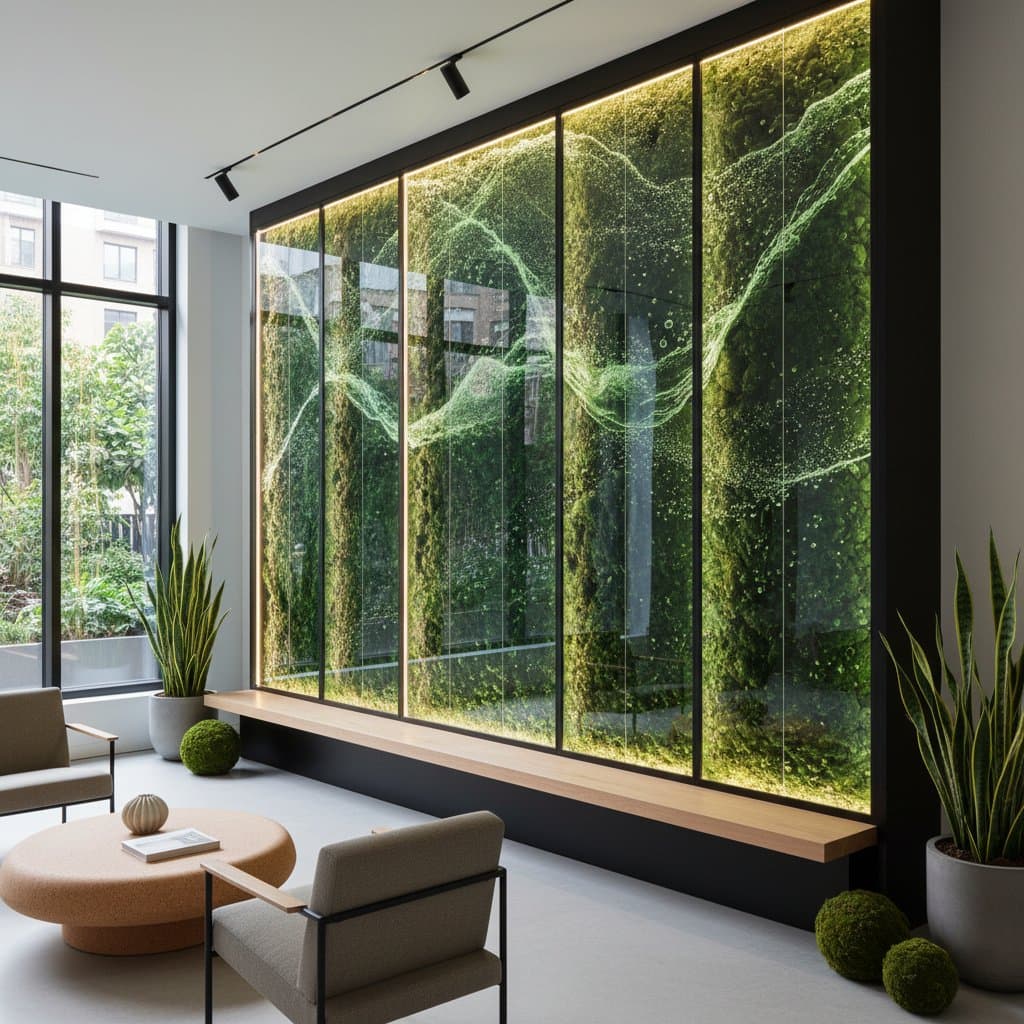
Why Designers Pick Algae Walls for Greener Interiors
Designers turn to algae walls to create interiors that feel cleaner and more sustainable. These living systems go beyond decoration by actively improving air quality and lowering indoor carbon levels. Mechanical filters often increase energy demands. Algae walls provide a natural option that integrates biology with design.
This guide explains how algae walls function, outlines the materials required, and details the installation process. It also covers ongoing care and the measurable benefits these systems deliver.
Algae walls require consistent light and water management. They do not suit completely dark rooms or spaces without access to maintenance.
Core Components of an Algae Wall
An algae wall consists of vertical panels that contain microalgae suspended in water. The organisms absorb carbon dioxide from the air and release oxygen through photosynthesis. Clear tubes or sealed panels hold the culture while allowing light to reach the algae. Systems must include circulation to prevent settling and to support gas exchange.
Select strains such as Chlorella vulgaris for reliable indoor performance and vibrant color. Always verify that panels meet local building codes for liquid containment.
Required Materials
- Transparent panels or tubes rated for continuous water contact
- LED grow lights for locations with insufficient natural light
- Algae-specific nutrient solution
- Small circulation pump or air stone
- pH testing strips
- Filtered water
- Soft cleaning cloth
Small prototypes can use acrylic tubes and aquarium pumps after thorough disinfection.
Installation Steps
Select the Site
Choose a wall that receives indirect sunlight for several hours each day. Keep the area away from heat vents to avoid temperature spikes that stress the culture.
Prepare the Culture
Rinse all containers with a mild vinegar solution followed by clean water. Combine filtered water with the recommended nutrient ratio, typically one teaspoon per quart. Introduce the starter algae and leave a small air gap at the top.
Add Circulation and Light
Install the pump or bubbler to maintain gentle movement. Position LED lights on a twelve-hour timer if natural light falls short. Begin with moderate intensity to prevent bleaching.
Monitor Daily Conditions
Check that the water turns deeper green within several days. Test pH weekly and maintain a range of 7 to 8. Replace one quarter of the volume every few weeks to sustain nutrient levels.
Recommended Practices
- Maintain visible water movement at all times.
- Use only filtered or dechlorinated water.
- Keep temperature and light exposure consistent.
- Inspect seals regularly for leaks.
- Follow nutrient instructions precisely.
Avoid bleach, direct heat sources, complete sealing without air exchange, and introduction of fish or other organisms.
Benefits Reported by Design Professionals
Algae walls produce a living surface that shifts gently throughout the day. The green tones soften architectural lines and create a calming atmosphere. At the same time, the system removes carbon dioxide and generates oxygen, which improves measured indoor air quality.
Sustainable interiors consultant Clara Mendes notes that algae walls function like indoor trees that never shed leaves. They deliver steady air renewal with moderate upkeep. The visible bubble movement also reduces stress in offices and clinics.
Commercial projects often incorporate algae walls to achieve carbon reduction targets. Each square meter absorbs a quantifiable amount of carbon dioxide based on light and density. This data supports certification credits that static plant walls cannot provide.
When Professional Installation Is Advised
Engage specialists for installations larger than a few panels or any system tied to building ventilation. Professionals manage plumbing, sensors, and electrical integration. Permits may apply when water lines or custom controls connect to the structure.
Budget and Timeline Overview
A compact decorative unit ranges from several hundred to a few thousand dollars. Larger architectural systems cost more due to automation and custom fabrication. Assembly of a small panel takes one to three days.
Routine Care Schedule
Inspect pump and lights each week. Test pH on the same schedule and adjust as needed. Refresh a portion of the water monthly. Clean exterior surfaces when film appears. Replace the culture if odor or discoloration develops. Replenish nutrients every few months to sustain steady growth.
Measurable Environmental Impact
Algae walls operate as carbon-negative elements because they sequester more carbon than they emit. The biomass produced can sometimes be harvested for compost or other uses, closing the resource loop. Transparent panels let occupants observe the process, reinforcing the connection between design and natural cycles.
Daily Experience with an Algae Wall
Once established, an algae wall becomes a quiet focal point rather than a mechanical device. Subtle color changes and gentle bubbling offer visual relief in work environments. Adjusting light spectrum allows fine control over tone and density, turning the installation into a lasting design feature.