
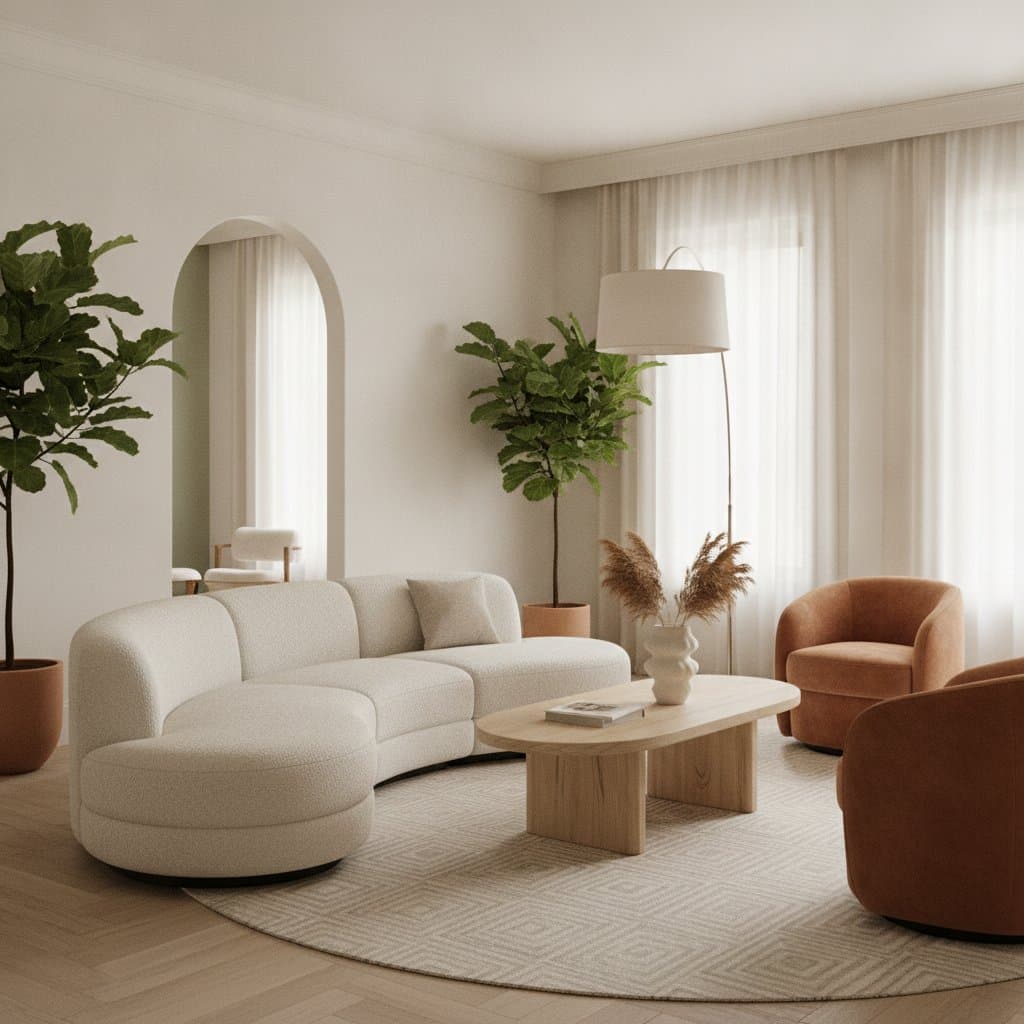
Rounded Furniture to Soften Angular Spaces
Straight lines have long defined modern interiors. Many homeowners now seek comfort, calm, and a sense of flow in their spaces. Rounded furniture delivers these qualities by softening the harsh edges of rectangular rooms. Curved silhouettes create ease that suits both small apartments and open plan homes.
This trend toward organic shapes reflects a deeper desire to make spaces feel more human, welcoming, and balanced.
Why Curves Matter
Hard angles dominate many architectural layouts. Boxy rooms, sharp corners, and rigid furniture can make a space feel structured yet uncomfortable. Rounded furniture introduces movement and approachability. A curved sofa encourages conversation from every seat. An oval dining table allows people to gather without anyone getting stuck at a corner.
Designers note that curves guide the eye more gently. They break up monotony and make compact rooms feel less confined. Pair these shapes with tactile materials such as boucle, soft leather, or matte oak. The result is a space that feels both contemporary and deeply comforting.
How to Introduce Rounded Forms
You do not need to replace everything to embrace this look. Start with one or two key pieces that anchor the room.
-
Choose a curved statement piece. A sofa with an arched back or a circular coffee table can instantly change the mood of a living room. In a small space, a single rounded accent chair can achieve the same effect. Look for options around 36 inches wide if you want a compact seat that still feels sculptural.
-
Balance curves with clean lines. Rounded furniture works best when paired with structure. Keep your shelving, rugs, or window frames straight to preserve visual order. The contrast between curved and angular shapes creates harmony rather than chaos.
-
Layer textures and tones. Soft shapes come alive with tactile finishes. Try a wool rug under a walnut table with rounded edges. Pair a velvet ottoman with a linen sofa. The mix keeps the room grounded and sophisticated.
-
Consider the view from every angle. Because curved furniture rarely sits flush against a wall, think about how it looks from all sides. Floating a semicircular sofa in an open layout can divide zones naturally without blocking sight lines.
Material and Color Choices
Rounded furniture often looks best when the materials feel organic. Light oak, rattan, terrazzo, and clay inspired ceramics bring warmth and depth. For upholstery, boucle in cream or soft gray remains a favorite for its texture and durability. If you prefer color, muted sage, dusty rose, or rich chocolate can make rounded shapes feel even more inviting.
Budget conscious decorators can find affordable curved pieces at mainstream retailers. Many offer molded plywood chairs or resin side tables with smooth edges that mimic designer versions. For a more sustainable route, check thrift stores for vintage mid century pieces. Their gentle curves often blend beautifully with new furnishings.
Lighting That Complements Curves
Lighting should echo the softness of your furniture. Globe shaped pendants, mushroom lamps, and arched floor lamps all reinforce the theme. Try hanging a round pendant above an oval dining table to repeat the shape without feeling matchy. In smaller rooms, wall sconces with frosted glass shades can add glow without taking up space.
Small Details That Make a Difference
Rounded mirrors, pottery, and artwork continue the visual rhythm. Swapping a rectangular mirror for an oval one above a console table can shift the mood from formal to relaxed. Even a simple round tray on a coffee table can tie the look together.
Living with Curves
Over time, curved furniture tends to change how you move through your home. The absence of sharp corners makes pathways smoother and gatherings more natural. Cleaning also becomes easier since there are fewer hard angles where dust collects. Most importantly, these forms encourage a slower, more mindful way of living.
Whether your home is compact or expansive, adding rounded furniture is a simple way to soften its edges and invite warmth. The result is a space that feels intentional, restful, and unmistakably personal.