
Why Grandmillennial Maximalism Is Replacing Minimalism
For years minimalist interiors reigned supreme. White walls, clean lines, and sparse furniture promised calm and clarity. Yet many homeowners discovered that living in a space stripped of personal history feels less like serenity and more like absence. Grandmillennial Maximalism celebrates comfort, nostalgia, and unapologetic individuality. It returns pattern, color, and character layered with intention.
This movement avoids clutter or chaos. It creates warmth and meaning through objects that tell stories. From floral upholstery to heirloom china, Grandmillennial design offers a refreshing alternative to the blankness of minimalism.
The Emotional Shift From Restraint to Expression
Minimalism promised peace through subtraction. Its message was simple. Own less and feel more. Many people began to find the aesthetic emotionally distant. The neutral palette and strict restraint often erased personality. Homes are not galleries. They are living environments filled with memory, texture, and emotion.
Grandmillennial Maximalism emerged as a natural correction. It welcomes imperfection, sentiment, and joy. Instead of hiding collections it encourages display. Where minimalism whispered this style speaks warmly and directly. It says this is who I am through every fabric choice and decorative flourish.
Designer Emily Rhodes explains that people crave connection in their spaces again. They want to see their grandmother teacups next to their favorite art print. It feels human.
What Defines Grandmillennial Style
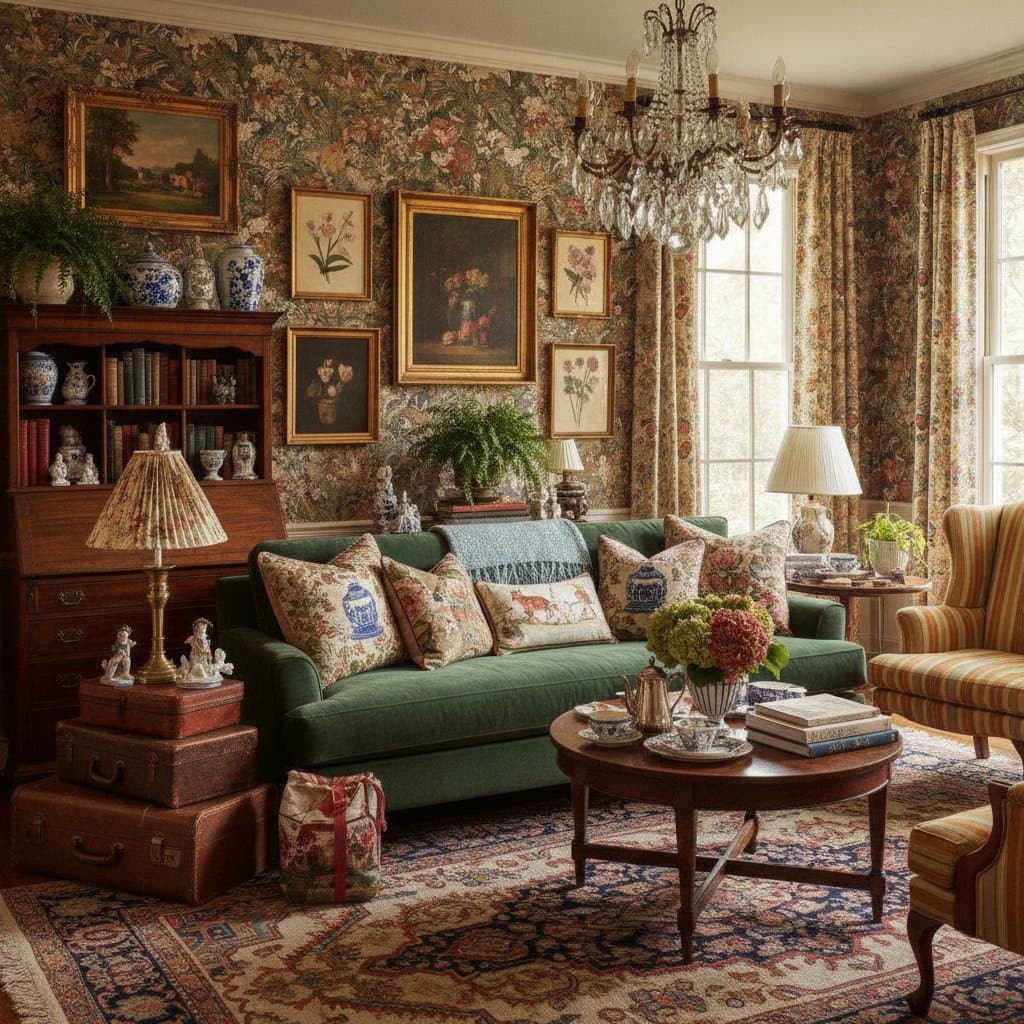
The term Grandmillennial combines grandmother and millennial. Its reach extends to anyone drawn to traditional comfort updated for modern life. The style blends classic motifs with youthful energy. Think of a chintz sofa paired with a graphic rug or an antique dresser painted in deep teal.
Some defining characteristics include the following.
- Pattern on pattern. Florals, plaids, and stripes mixed freely and united by a shared color palette.
- Rich color. Soft pastels meet saturated hues like emerald green, coral, and navy.
- Traditional forms. Wingback chairs, skirted side tables, and pleated lampshades return refreshed with new fabrics or finishes.
- Collected decor. Vintage china, embroidered pillows, and framed botanical prints give depth and personality.
- Layered textures. Velvet, rattan, silk, and linen coexist and each adds tactile warmth.
The result is a home that feels curated over time rather than purchased in one weekend.
Why Minimalism Lost Its Grip
Minimalism appeal was practical. It promised visual calm and easy cleaning. Over time its rigidity began to feel restrictive. Many found that pared down living ignored real world constraints like family life, hobbies, and sentimental attachments.
A family with children quickly learns that less is more can translate to where do we put the toys. Renters realized that sterile white walls do little to express identity. Even those who once embraced minimalism began adding layers back in. First a throw pillow, then a patterned rug, then art clustered gallery style.
Grandmillennial Maximalism gives permission to decorate again without fear of too much. It reminds us that homes can evolve naturally and reflect changing tastes and experiences.
The Return of Comfort and Craft
At its core the new maximalism celebrates craftsmanship. Handmade quilts, embroidered linens, and furniture built to last replace disposable decor. This emphasis on quality over quantity fits a growing desire for sustainability. Instead of constant updates homeowners are restoring, repainting, or reupholstering what they already own.
In my small apartment I swapped a plain linen sofa for one covered in a vintage rose print fabric. At first the pattern felt bold but soon the room came alive. The print connected beautifully with the wood tones of the coffee table and the brass lamp I found secondhand. It taught me that comfort and nostalgia can coexist with modern function.
Designer Amelia Hart notes that people are remembering that craftsmanship and emotion matter. A handmade lampshade or a needlepoint cushion carries a story. Minimalism erased that.
How to Bring Grandmillennial Warmth Home
You do not need a large home or a big budget to embrace this look. Start small and build with intention. Here are some approachable strategies.
- Layer textiles. Add floral or plaid cushions to a neutral sofa. Mix fabrics with different textures like velvet, cotton, and linen.
- Show what you love. Display family heirlooms or thrifted finds instead of hiding them. A cluster of vintage teacups on open shelving can become a charming focal point.
- Mix old and new. Pair a classic skirted side table with a sleek modern lamp. The mix keeps nostalgia from turning stuffy.
- Play with pattern. Combine small scale prints with large ones. For example floral curtains can work beautifully with a geometric rug if the colors connect.
- Use color thoughtfully. Choose one dominant color and two supporting tones. Soft blush walls with navy trim and brass fixtures feel timeless not busy.
- Incorporate personal art. Framed family photos, cross stitch pieces, or children drawings bring authenticity that store bought prints cannot match.
- Shop secondhand first. Thrift stores, estate sales, and online marketplaces often hold the best pieces for this style. Older furniture tends to have the craftsmanship and shape that Grandmillennial rooms need.
The key is curation not clutter. Every item should serve a purpose whether functional or emotional.
Balancing Maximalism and Function
The biggest misconception about maximalism is that it means crowding every surface. True Grandmillennial design balances comfort with practicality. Storage becomes essential and keeps the visual richness from tipping into chaos.
Built in bookcases, skirted tables hiding baskets, and vintage trunks as coffee tables all offer concealed storage that complements the nostalgic feel. Lighting also plays a role. Layered sources such as table lamps, sconces, and candles soften the visual density and create calm within the abundance.
In smaller spaces limit the palette to three or four dominant colors. This keeps the eye moving harmoniously rather than frantically. Even maximalism benefits from restraint when thoughtfully applied.
A Style Rooted in Emotion
What sets Grandmillennial Maximalism apart from other revivals is its sincerity. It is not ironic or purely aesthetic. It comes from a desire to reconnect with warmth and tradition. Many of us grew up in homes with floral drapes, needlepoint pillows, and china cabinets. Bringing those memories forward feels comforting not outdated.
This style also invites slower decorating. Instead of rushing to complete a room homeowners collect pieces gradually. Each addition feels earned. Over time the mix of patterns and textures becomes deeply personal almost like a visual diary.
Budget Friendly Ways to Try It
You can achieve Grandmillennial charm without overspending. Try these practical updates.
- Paint a vintage piece. A secondhand dresser in Benjamin Moore Hale Navy or Farrow and Ball Calke Green adds instant traditional depth.
- Swap lampshades. Replace plain shades with pleated silk or patterned fabric versions.
- Add trim. Glue decorative braid or fringe to curtains and cushions for a custom look.
- Frame fabric. Instead of expensive art stretch floral fabric or wallpaper samples over wooden frames.
- Refresh hardware. Swap simple knobs for brass or ceramic ones with vintage character.
These small details collectively transform a simple room into one filled with warmth.
The Cultural Undercurrent
Grandmillennial Maximalism also speaks to a broader cultural moment. Many people are rethinking consumption and valuing what lasts and what feels personal. Minimalism blankness matched an era focused on efficiency. The new maximalism reflects a shift toward emotional sustainability. Spaces comfort and express rather than impress.
Social media has fueled this transformation too. Platforms that once celebrated stark minimal rooms now overflow with floral wallpapers, patterned sofas, and collected art walls. The pendulum has swung toward abundance but with mindfulness.
Living with Your Design
When you live with pattern and personality everyday life feels more grounded. A floral chair by the window becomes a favorite reading spot. A mix of family photographs and thrifted art tells your story better than any minimalist print ever could.
Grandmillennial Maximalism reminds us that our homes are not just backdrops for productivity. They are living reflections of who we are filled with comfort, humor, and love. Whether you start with a single patterned pillow or commit to full wallpapered glory this style invites joy back into your surroundings.
Minimalism taught us to clear space. Now Grandmillennial design teaches us to fill it meaningfully with beauty, memory, and heart.