
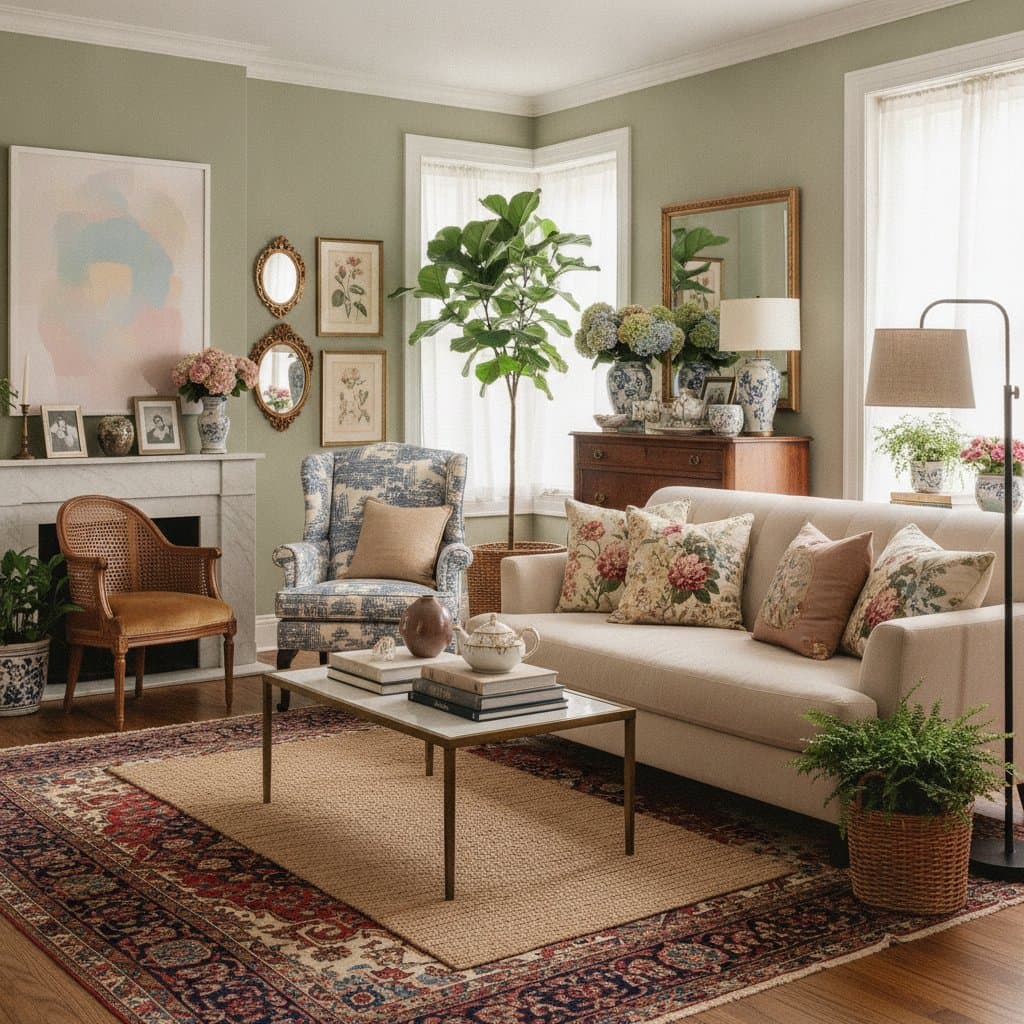
2026 Homes Embrace Grandmillennial Style Comeback
Sleek minimalism once dominated interiors with neutral tones and sparse surfaces. Homes now soften through grandmillennial style. This approach blends nostalgic patterns and heirloom pieces with updated palettes and functional layouts. It creates spaces that feel lived in and personal.
The revival values comfort and craftsmanship over absence. Homeowners reclaim warmth after years of decluttering. Tradition evolves here without losing authenticity.
Reasons for the Shift
Stark rooms leave many seeking grounded environments. Grandmillennial design counters impersonality by surrounding residents with meaningful objects. Vintage furniture and botanical prints suggest continuity.
Designers describe the change as rebalancing rather than reversal. Minimalism emphasized restraint. This style permits pattern mixing and collections that reflect humor and history. Homes become places for daily life instead of display.
Defining Visual Elements
Grandmillennial rooms mix eras with intention. Floral or chinoiserie wallpaper pairs with white trim. Skirted tables sit beside clean lamps. Needlepoint pillows rest on structured sofas. Rattan, brass, and mahogany appear together.
Soft pastels combine with navy or oxblood. Cotton, linen, and velvet build texture. Hand painted ceramics and antique mirrors supply character. New items often echo older forms.
Integration of Eras
Successful rooms avoid museum like stiffness. Begin with a traditional anchor such as a rolled arm sofa. Introduce contrast through a lucite table or abstract art. Designer Emily Serrano observes that a vintage rug under a modern table shows continuity.
Renters achieve the effect with textiles. Floral drapery or pleated shades replace plain versions. These swaps soften any room quickly.
Practical Uses Across Homes
City apartments gain warmth from Benjamin Moore Palladian Blue paint and a brass mirror. Suburban houses benefit from reupholstered armchairs in damask fabric layered with modern throws. Kitchens adopt patterned tile and unlacquered brass.
Collections require storage. Built in shelves with lower cabinets hold keepsakes. Velvet lined drawers protect linens. Skirted consoles conceal baskets.
Lighting and Materials
Layered lighting creates the signature mood. A central pendant combines with sconces and table lamps. Pleated shades diffuse light evenly. Sheer embroidered curtains preserve natural brightness.
Choose wood, brass, linen, and wool for substance. Reclaimed pieces add history and reduce waste. Paint updates dated furniture while retaining shape.
Accessible Entry Points
Secondhand shops yield mirrors and textiles at low cost. Simple sewing projects produce table skirts from remnant fabric. High and low pairings place an antique chair beside an IKEA table. One floral cushion tests the direction without commitment.
Designer Rachel Kim recommends starting with a single sentimental item. Build outward from a teapot or painting until layers feel personal.
Emotional and Cultural Drivers
Warmth returns after periods of sleekness. These rooms invite rest and recall family gatherings. Slower collection fosters connection. Visitors recognize patterns from their pasts.
Designer Thomas Vale notes that clients seek homes that feel like a hug while retaining elegance. The style supports that balance.
Adaptation Strategies
Apartments rely on peel and stick wallpaper and art. Family homes use washable slipcovers over heirlooms. Modern architecture gains softness through antique accessories.
Balance prevents heaviness. Limit dominant colors to blues and greens against cream. Leave negative space for visual rest. Imperfect frames add authenticity.
Lasting Effects
Grandmillennial touches make rooms gentler from the first day. Coffee at a skirted table or evenings near patterned light feel more settled. Materials age with character. Wood darkens and fabrics soften, recording daily use.
The approach suits studios and larger houses alike. It expresses care through memory and personality. Tradition gains new life while keeping its core.