
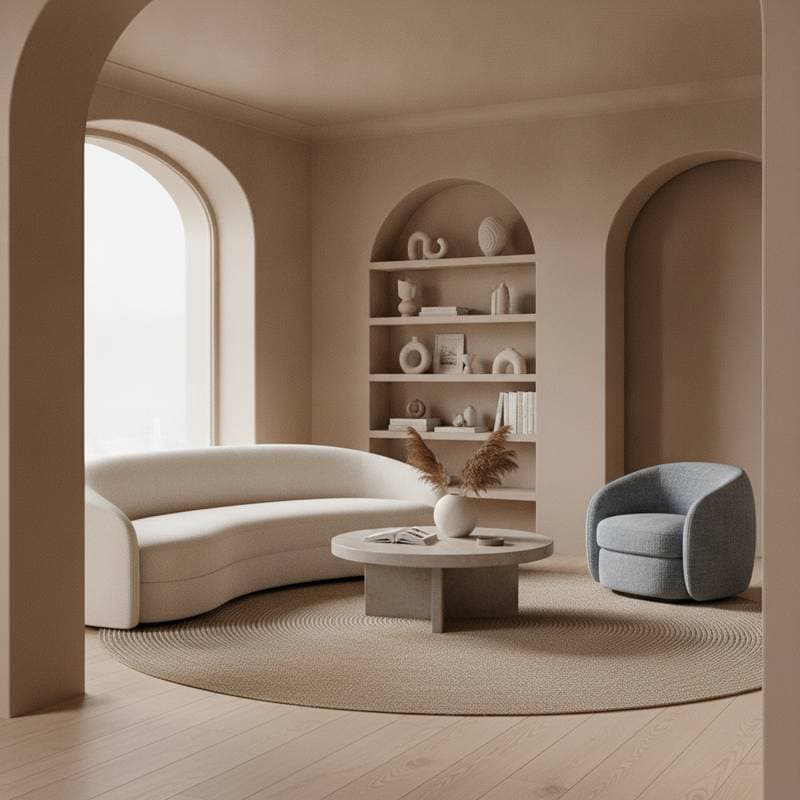
Why Rounded Furniture Edges Are Replacing Sharp Angles
Your home can feel instantly calmer when you swap hard-edged furniture for soft curves. The change is subtle but powerful. It shapes how a space feels and how safe it is to live in.
Straight lines once ruled modern interiors. Rounded edges now take their place. Today you will learn why curved furniture trends again, what it changes in your home, and how to choose pieces that fit your space.
The only exception arises when your home architecture stays strictly geometric. In that case mix curves carefully to avoid visual tension.
Why Curves Feel Better
The human eye naturally follows curves. That movement signals comfort and safety. Sharp angles stop the eye and can feel rigid or cold. Interior designer Lara Kim, founder of Form Studio Interiors, notes that curves create a sense of movement, like the room is breathing with you. That emotional ease explains why designers favor rounded furniture for both small apartments and large open-plan homes.
Curves also reduce cluttered sight lines. When edges soften, furniture pieces appear to merge rather than compete. The effect feels cohesive even when styles differ. For families, rounded corners on tables, sideboards, or ottomans mean fewer bruises and less worry around young children.
Step-by-Step Implementation
Assess Your Layout
Walk through your main living area. Notice where movement feels tight or where corners interrupt flow. Curved furniture works best where people circulate often, such as near coffee tables, dining chairs, or hallway benches.
Start with One Statement Piece
Begin with a single curved item like a round dining table or a sofa with soft edges. This anchors the look without overwhelming the room. Large curved pieces immediately shift the mood, so one may be enough.
Balance with Straight Lines
Keep a few rectangular or square shapes nearby to ground the space. For example, pair a round coffee table with a linear sofa. The mix avoids excess softness and keeps the design structured.
Mind the Scale
Measure before buying. Curved furniture can appear larger because it lacks sharp endpoints. Use painter tape to outline the footprint on the floor. Step around it to confirm walkways remain clear.
Choose the Right Materials
Rounded shapes look best in materials that show depth, like wood, rattan, linen, or matte metal. For glossy finishes, balance with natural textures nearby. Designer Lara Kim advises that a curved piece in a warm texture feels intentional instead of decorative.
Update What You Have
You can round corners on solid wood tables or benches with sandpaper and sealant. Work slowly, smoothing edges evenly. Always wear protective gear and test finishes on a hidden area first.
Layer with Lighting
Soft edges pair well with diffused light. Add a dome lamp or globe pendant to echo the curves. Avoid overly angular fixtures above curved furniture, which can create visual conflict.
Keep Function First
Do not sacrifice usability. Rounded pieces must still offer enough surface or storage. Before purchasing, test how items fit your daily habits, from laptop setup to dining.
Clean and Protect
Use a microfiber cloth and mild cleaner to maintain finishes. Avoid abrasive pads that can flatten or scratch curved surfaces. For upholstered pieces, vacuum seams gently with a brush attachment.
Dos and Donots
Dos
- Mix curved and straight shapes for balance.
- Check scale carefully in small spaces.
- Use warm materials like wood or boucle to highlight the softness.
- Ensure curved edges are sealed or finished to prevent moisture issues.
- Pair rounded forms with soft lighting to enhance the effect.
Donots
- Crowd several bulky curved pieces together.
- Ignore traffic flow or accessibility.
- Use unsealed stone or raw wood in high-moisture areas.
- Assume every curved item matches without checking cohesion.
- Skip protective pads under heavy rounded furniture.
When to Call a Professional
Call a professional when reshaping or refinishing hardwood, veneer, or marble. These materials require precise sanding and sealing to maintain structural integrity. Contact a pro if you notice deep cracks, unsealed joins, or unstable legs, especially on older pieces. For built-in seating or custom cabinetry, a carpenter can ensure curves stay symmetrical and safe.
Cost and Time Considerations
Curved furniture costs vary by size, material, and craftsmanship. Small items like stools or accent tables range from low to moderate prices. Large upholstered sofas or custom woodwork sit at higher levels. Refurbishing an existing piece is usually cheaper than buying new. Assembly or refinishing can take one to three hours for small items and up to a full day for larger ones.
How Curves Change Daily Movement
Curves do more than alter shape. They shift how you move. Rounded furniture creates paths that guide without hard stops. This proves useful in open layouts where rooms blend. Interior ergonomics consultant David Ross explains that curves support natural circulation, keeping movement fluid instead of forcing turns.
Visual comfort also increases. Rounded edges absorb light differently, reducing glare on glossy finishes. Corners that once caught shadows now fade softly. This subtle change can make tight rooms feel broader and calmer.
In bedrooms, curved headboards or oval nightstands echo the body lines. They support rest and reduce visual noise. In kitchens, rounded stools or counters prevent hip-level bumps. Bathrooms benefit too, with arched mirrors that soften tile grids.
Sustainability and Longevity
Rounded furniture often lasts longer because it resists chipping along corners. Chips and cracks typically start at sharp points. Curved surfaces distribute pressure evenly, keeping finishes intact. If you choose solid materials, these pieces can outlive trends and still look current.
For sustainability, seek reclaimed wood or recycled metal bases. The curved design does not affect recyclability, but it can increase lifespan by reducing wear. Simple care, such as regular dusting and re-oiling, maintains their shape and tone.
If updating older furniture, keep the original frame when possible. Sanding and refinishing require fewer resources than full replacement. A curved edge can modernize a vintage piece without losing character.
When Curves Do Not Work
Curves are not ideal everywhere. In rooms designed around strong geometry, like industrial lofts with exposed beams, rounded pieces may feel misplaced. Instead, limit curves to textiles or accessories. A circular rug or cylindrical lamp can soften hard lines without overriding the structure.
Curved furniture also takes more floor space. In narrow rooms, edges need open clearance to show their form. If every inch counts, choose partial curves, such as a rounded tabletop on straight legs. This keeps flow without crowding.
Maintenance Checklist
- Dust weekly with a dry cloth.
- Wipe spills immediately to prevent finish damage.
- Reapply wood oil or sealant every few months if needed.
- Inspect for chips or cracks along curved seams.
- Rotate upholstered pieces occasionally to even wear.
- Tighten screws or joints if movement loosens over time.
Signs you need to refresh
- Finish looks dull or uneven.
- Curves feel sticky or rough to touch.
- Upholstery sags along rounded edges.
- Light reflects sharply instead of softly.
The Psychology Behind the Shift
Design psychology research connects curved shapes with emotional safety. Humans associate smooth lines with natural forms like stones or leaves. Sharp angles can signal caution or threat, even subconsciously. That is why people often describe curved interiors as inviting or soothing.
Bringing Curves into Your Home
Start small with one well-chosen piece and observe how the room responds. Adjust balance and materials as needed. Over time the space gains lasting comfort and practical safety.