
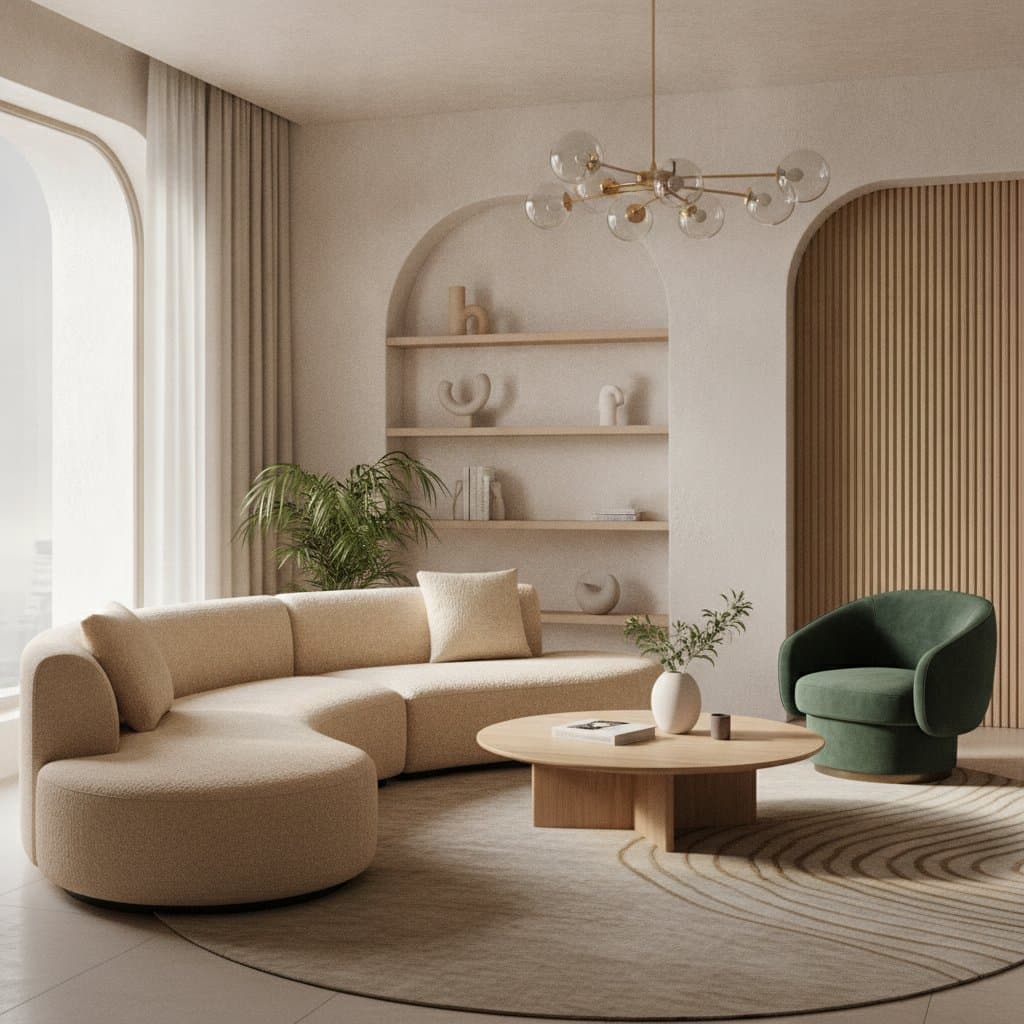
Curved Furniture Softens Rooms Without Losing Structure
Why Curved Furniture Is Replacing Sharp Home Angles
Curved furniture brings calm, flow, and comfort to spaces that once felt rigid. You can create softer, more inviting rooms without losing structure or function.
Straight edges once ruled modern interiors. The shift toward rounded lines changes how rooms feel and how people move through them.
Avoid extremes. A room filled with only curves can lose visual order and make placement tricky.
What To Know
Curved furniture softens a room geometry. It creates motion and ease where straight lines once stopped the eye. The key is proportion. Keep curves balanced with a few straight elements so the room feels grounded. Avoid placing rounded pieces against sharp corners that might chip delicate finishes or fabrics.
Tools and Materials
- Measuring tape
- Painter tape for floor layout
- Level or straight edge for alignment
- Mild cleaner and soft cloth for surface care
- Felt pads for furniture feet
- Optional: small area rug to define curved seating zones
Step By Step
1. Measure and map your space
Start with the room main traffic paths. Use painter tape on the floor to outline where a sofa, chair, or table could sit. Round pieces need breathing room so people can walk around them easily. Leave at least 18 inches between curved edges and walls or other furniture.
2. Choose one main curve
Pick a single hero piece first. A rounded sofa, oval dining table, or circular coffee table is enough to shift the tone. Once you anchor that element, repeat the shape subtly through accessories like lamps, mirrors, or side tables.
3. Balance with straight lines
Add one or two linear items to keep structure. A rectangular rug or a simple shelving unit helps prevent the space from feeling overly fluid. A few straight lines give the room rhythm and direction.
4. Mix materials intentionally
Curves look best when materials contrast slightly. Pair a plush rounded chair with a smooth wood side table or a glass-topped oval coffee table with matte metal legs. The change in surface texture highlights the shape.
5. Mind the height difference
Rounded furniture often has lower backs and edges. If you mix it with taller or boxier pieces, vary the heights gradually. This keeps sightlines smooth and prevents one piece from dominating.
6. Test lighting angles
Curves catch light differently. Try a floor lamp or pendant that grazes the edge of a curved sofa or table. The gentle shadow makes the shape stand out. Avoid harsh overhead lighting that flattens the look.
7. Keep upholstery simple
Rounded furniture already has visual drama. Use solid or softly textured fabrics. Patterns with strong geometry can fight the shape. Neutral tones, muted pastels, or single-color weaves keep focus on the silhouette.
8. Anchor with a rug or wall art
Curves can appear to float without a clear anchor. An oval or round rug pulls seating together. Art with soft lines or organic forms can echo the curve vertically and tie the room together.
9. Adjust placement seasonally
Rotating curved pieces even a few inches can refresh traffic flow and light balance. Rounded forms adapt well to small shifts, unlike boxy ones that must stay squared to walls.
Dos and Don ts
Dos
- Do keep at least one major curved piece in each open living area for visual continuity.
- Do mix textures like wool, velvet, and wood to add depth around soft shapes.
- Do cluster smaller rounded accents, such as stools or planters, to create repetition that feels intentional.
- Do use curves to soften tight corners or awkwardly angled rooms.
- Do test proportions by sketching or taping outlines before buying.
Don ts
- Do not crowd curved furniture against walls or sharp-corner cabinets. It breaks the visual flow.
- Do not pair too many shiny finishes. Reflections distort the curve and make it look uneven.
- Do not ignore ergonomics. Some sculptural pieces look lovely but lack back support.
- Do not forget weight balance. Heavy curved sofas can sink into soft rugs. Use rug pads for stability.
- Do not rely on matching sets. Curved furniture works best when pieces feel collected, not coordinated.
When To Call A Pro
Call a designer or carpenter if you plan to custom-fit curved furniture into built-ins or alcoves. Precision matters when trimming around rounded edges, especially in kitchens or bathrooms. If you have structural pieces like curved banquettes or window seats, a professional can ensure proper framing and support to prevent sagging or cracking.
Cost and Time Snapshot
Curved furniture ranges widely in price. Expect to spend from a few hundred dollars for small rounded chairs up to several thousand for custom pieces. Material, upholstery quality, and craftsmanship drive cost differences.
Time varies too. Off-the-shelf pieces arrive quickly, but custom orders or reupholstery can take several weeks. Plan extra time if you need special fabrics or colors.
Maintenance or Upkeep
- Weekly: Dust or vacuum upholstery with a soft brush to maintain shape and texture.
- Monthly: Check and tighten screws or legs, as curves can stress joints unevenly.
- As Needed: Spot clean with mild detergent and water. Avoid strong solvents that may dull finishes.
- Seasonal: Rotate cushions or swap sides on curved sectionals to even out wear.
Signs you need to refresh the setup include sagging cushions, uneven shine on polished surfaces, or shifting balance in frequently used seating areas.
Why the Shift Toward Soft Shapes
Curved furniture reflects how people want to live. Interiors are moving away from strict geometry toward comfort and connection. Rounded edges make a room feel more social. They invite conversation and motion.
Curves can lower visual stress. Our brains read rounded forms as safe and natural. This explains why curved pieces often make small rooms feel less cramped.
Designers also link the trend to practicality. Rounded tables reduce bumping hazards in tight spaces. Sofas with soft corners fit into open layouts without blocking sightlines. In homes with children or pets, fewer sharp corners mean fewer safety concerns.
The look is not only about softness. Curves can be bold and sculptural too. Think of a crescent-shaped sofa framing a coffee table or a wave-edged console against a plain wall. The shape becomes art while still functional.
How to Blend Curves with Existing Decor
You do not need to start from scratch. Most rectangular rooms benefit from a few arcs to break repetition. Start small. Replace a square ottoman with a round one. Swap a straight-backed dining chair for a rounded version. Gradual changes keep harmony between old and new pieces.
If your home leans industrial or minimalist, curves can warm it up. Choose low-sheen finishes like brushed metal or matte paint. In traditional settings, rounded furniture updates the look without fighting existing patterns. Use tone-on-tone fabrics to keep cohesion.
Putting the Approach Into Practice
Start with comfort as your guide. Choose one curved piece that feels right to sit on or gather around. Build from there with balance in mind.
Rounded furniture is not just a style shift. It changes how a room feels and functions. By mixing curves with structure, you can create spaces that welcome movement, conversation, and calm.