
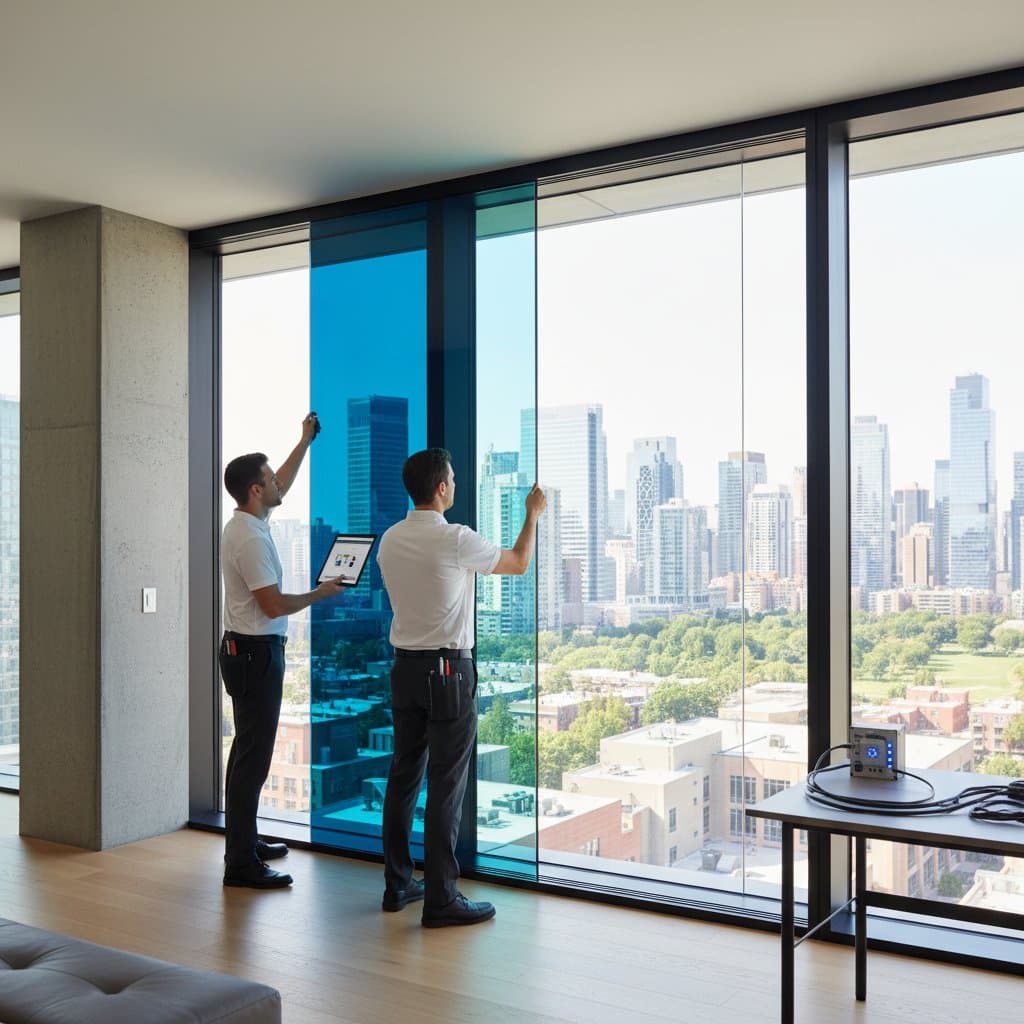
Understanding Color-Changing Smart Glass
Smart glass introduces streamlined aesthetics, precise light management, and reduced upkeep compared to traditional coverings. Users can adjust window tint with a simple touch or voice instruction, achieving instant privacy and optimized energy efficiency.
Curtains and blinds often accumulate dust, impede ventilation, and degrade over time. They demand frequent adjustments to control glare and maintain comfortable temperatures.
This guide explains the functionality of color-changing smart glass, associated expenses, and evaluation criteria for home integration. Note that unsealed historic or custom windows may not accommodate electrical films, requiring retention of conventional shades.
Key Principles of Electrochromic Glass
Electrochromic glass, a form of color-changing smart glass, transitions from transparent to opaque when an electric current shifts ions within thin surface layers. This process modulates light and heat transmission. The technology suits most contemporary window frames and integrates with low-voltage systems. Refrain from application on fractured glass or frames prone to water infiltration.
Required Tools and Materials
- Microfiber cloths for gentle cleaning
- Mild glass cleaner or a water solution with dish soap
- Low-voltage power supply or compatible smart hub
- Silicone sealant for edge protection during retrofits
- Voltage tester or multimeter for safety checks
- Dry towel and gloves for panel handling
Household items suffice for most preparation and maintenance tasks. Steer clear of ammonia-based products, as they may harm the electrochromic coating.
Installation Process
1. Measure Window Dimensions
Assess width and height from frame edge to edge. Precise measurements ensure uniform tinting across smart glass panels. Document dimensions to the nearest eighth of an inch for accurate ordering.
2. Select Tint Options
Available electrochromic glass varies in opacity, ranging from subtle haze to full darkness. Choose levels aligned with room-specific requirements. Living areas might benefit from moderate dimming, whereas bedrooms often demand blackout capabilities.
3. Verify Power Availability
Panels require low-voltage connections. Inspect for accessible outlets or wiring paths. In their absence, consider surface-mounted conduits or engage an electrician for hidden installations. Route wires away from potential water exposure.
4. Prepare Surfaces
Clean glass and frames using mild detergent. Ensure complete dryness before proceeding. Residue or particles can compromise adhesive films or electrical connections.
5. Apply Smart Film for Retrofits
On existing windows, apply electrochromic film by peeling and pressing from top to bottom with a squeegee. Eliminate air bubbles during placement. For new panels, affix them securely using manufacturer-recommended clips or adhesives.
6. Wire to Controls
Connect leads to a smart hub or switch. Use a multimeter to verify voltage levels for safe functionality. Activating the current should initiate a smooth tint transition.
7. Configure Operations
Program schedules via app or panel for automated adjustments based on time or ambient light. Integrate with voice assistants for seamless control. Verify uniform performance across all panels.
8. Seal and Finalize
Apply silicone to exposed edges against moisture. Clean surfaces with microfiber to eliminate smudges.
9. Initial Testing Cycles
Cycle the tint multiple times to settle ionic components. This step promotes balanced shading and confirms connection integrity.
Essential Practices
Recommended Actions
- Clean with soft cloths and mild soap solutions.
- Monthly inspections for consistent tint uniformity.
- Surge protectors for smart hubs.
- Adherence to specified voltage thresholds to avoid damage.
Actions to Avoid
- Sharp implements for residue removal.
- Direct cleaner application near wiring or joints.
- Placement adjacent to intense heat sources like appliances or bright fixtures.
- Neglect of irregular tinting, indicative of electrical faults.
Dr. Lena Ortiz, materials engineer at BrightSurface Labs, notes, "Electrochromic layers endure typical conditions, yet rely on pristine electrical interfaces and steady power supply."
Professional Assistance Indicators
Engage certified installers for double-pane gas-filled windows, intricate frames, or built-in shading systems. Seek experts if condensation appears between panes, seals fail, or wall modifications prove necessary. Alterations impacting warranties or codes demand qualified oversight.
Expense and Timeline Overview
Costs range from moderate to substantial, influenced by panel dimensions and smart features. Retrofitting films proves more economical per square foot than complete panel swaps. Additional labor for wiring or frame work increases totals. Single-panel setups take about one hour, while multi-window projects span a full day. Primary factors include size, automation, and structural demands.
Ongoing Care
- Monthly wiping with mild cleaner and soft cloth.
- Biannual edge and seal examinations.
- Quarterly tint functionality tests.
- Control recalibration for delays beyond seconds.
- Adapter replacement upon signs of overheating or wear.
For uneven tinting, power down for one minute before restarting to reset.
Daily Benefits of Smart Glass
Installed systems enable cord-free daylight regulation, free from fabrics or dust accumulation. Windows adapt to sunlight, preserving brightness while safeguarding interiors from UV damage. Privacy maintains views without obstruction.
Interior designer Rachel Kim of Modern Habitat Studio observes, "Smart glass redefines window integration into architecture, eliminating add-ons like rods or blinds and streamlining interior schemes."
Implementing Your Upgrade
Evaluate your windows' compatibility and budget to proceed. Consult manufacturers for tailored advice, ensuring a seamless transition to energy-efficient, modern living.