
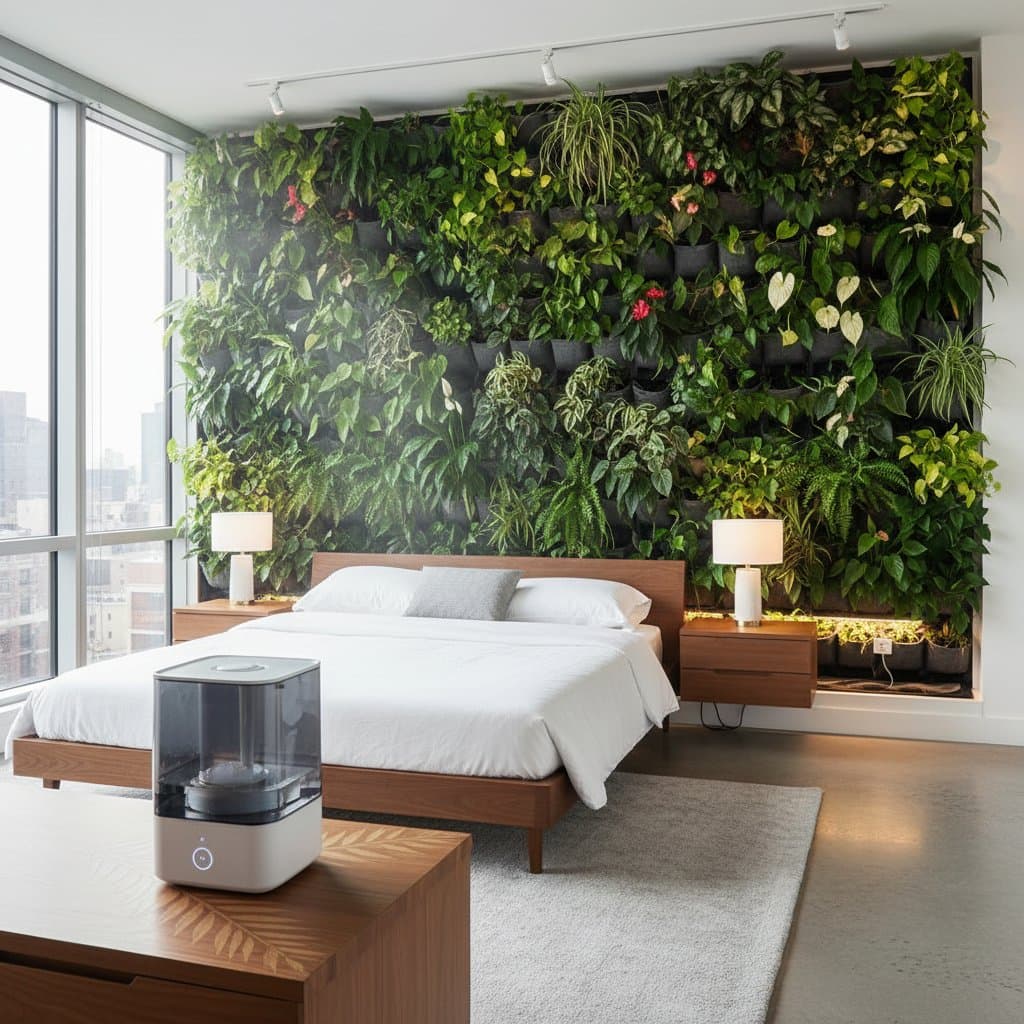
Living Walls: The 2026 Solution for Cleaner Indoor Air
Transform an ordinary wall into a natural air purifier. Living walls employ plants to remove indoor pollutants, stabilize humidity levels, and introduce tranquility to living spaces.
Indoor environments often accumulate dust, chemical residues, and excess moisture, leading to discomfort and health concerns. This guide provides detailed instructions for creating and maintaining a living wall that enhances air quality while integrating seamlessly into your home.
Note that living walls require consistent light and hydration. Consider alternative options if the area receives minimal illumination or experiences extreme aridity.
Essential Knowledge
A living wall consists of a vertical structure populated with plants in soil compartments or modular panels. These plants capture airborne toxins and produce oxygen, contributing to a healthier atmosphere. Key challenges include managing moisture to avoid structural damage; excess water can harm walls or floors. Install a waterproof backing and collection tray to mitigate risks. Select plants free from toxins, particularly in households with children or pets.
Beyond air purification, living walls moderate temperature fluctuations and reduce noise, fostering a more balanced indoor ecosystem. Research from environmental studies highlights their effectiveness in urban settings, where outdoor access to greenery remains limited.
Required Tools and Materials
- Waterproof liner, such as pond material, for protection
- Sturdy mounting frame or prefabricated modular panels
- Well-draining potting mix amended with perlite
- Balanced, indoor-appropriate fertilizer
- Assortment of low-light tolerant, resilient plants
- Precision watering tool, like a spray bottle or fine-spout can
- Neutral pH cleaner for routine upkeep
- Digital moisture meter to monitor soil conditions
Gather these items in advance to streamline the installation process. Opt for high-quality, durable components to ensure longevity.
Installation Guide
1. Select the Ideal Location
Identify a wall exposed to bright, indirect sunlight for a minimum of four to six hours daily. Steer clear of spots with intense direct rays from nearby windows, which can scorch foliage or accelerate soil drying. In low-light scenarios, supplement with energy-efficient LED grow lights positioned to mimic natural diffusion.
Consider the wall's proximity to heat sources or drafts, as these factors influence plant vitality. Measure the space to confirm it accommodates the planned dimensions without obstructing pathways.
2. Safeguard the Surface
Affix a robust waterproof liner to the wall prior to frame attachment. Apply silicone sealant along all seams to create an impermeable shield. This setup diverts any potential leaks away from underlying materials like drywall or flooring.
Test the liner's integrity by simulating water exposure in a controlled area. Proper sealing extends the lifespan of both the wall and the installation.
3. Assemble the Support Structure
Anchor the frame securely to wall studs using appropriate hardware, avoiding reliance on superficial drywall fasteners. Account for the added weight of saturated soil and plants, which can exceed expectations. Adhere strictly to manufacturer specifications regarding maximum loads.
For larger setups, consult structural guidelines to prevent sagging or detachment over time. Level the frame meticulously to promote uniform growth patterns.
4. Prepare the Substrate
Employ a lightweight potting medium blended with perlite or coarse sand in a 2:1 ratio for optimal drainage. Dense soils retain moisture excessively, inviting root rot. Load each compartment or panel to approximately two-thirds capacity prior to introducing plants.
Incorporate slow-release nutrients into the mix for initial support. This foundation sustains root development and prevents compaction during watering cycles.
5. Choose and Position Plants
Assemble a diverse selection sharing compatible requirements for illumination and hydration. Recommended options encompass pothos for trailing coverage, philodendrons for resilience, ferns for humidity tolerance, spider plants for air filtration, and peace lilies for elegance. Position cascading varieties at upper levels and bushier specimens below to achieve visual harmony.
Evaluate plant maturity; smaller specimens establish roots more readily in confined spaces. Aim for a mix that provides year-round interest through varied textures and foliage colors.
6. Plant and Stabilize
Gently tease apart root balls to encourage outward growth before insertion. Surround roots with additional medium, maintaining a one-inch gap at the top to accommodate watering. Firm the soil around bases to support upright positioning without compacting excessively.
Water lightly post-planting to settle the medium and eliminate air pockets. Monitor for immediate settling, adjusting as necessary.
7. Initiate Watering Routine
Employ a spray bottle or narrow-spout can to distribute moisture uniformly without flooding. Allow the surface inch of soil to dry between sessions, typically every three to five days depending on conditions. For automated systems, calibrate drip emitters to deliver measured amounts and inspect for clogs or overflows regularly.
Track environmental humidity with a hygrometer; adjust frequency in drier climates to prevent desiccation.
8. Nourish and Shape
Administer a diluted, balanced fertilizer monthly during spring and summer growth phases. Remove faded foliage and extend shoots promptly to facilitate circulation and deter pests. Regular pruning maintains an airy structure, enhancing overall efficiency.
Rotate the wall quarterly if light distribution proves uneven, promoting balanced development across all sections.
9. Maintain Cleanliness
Dust leaves biweekly using a soft, moist cloth to optimize photosynthetic and filtration functions. Inspect soil surfaces and liner margins for fungal growth or residue accumulation. Introduce gentle air circulation via a low-speed fan if stagnation occurs, and scale back hydration accordingly.
Annual deep cleans involve removing and repotting select plants for root health checks, ensuring sustained performance.
Best Practices and Pitfalls
Recommended Actions
- Align plant selections with prevailing light and humidity profiles.
- Fully line the wall prior to soil introduction.
- Verify total system weight during dry assembly.
- Regularly dust foliage to sustain purification capabilities.
Actions to Avoid
- Select untreated wooden frames prone to decay.
- Combine drought-tolerant succulents with moisture-loving tropicals.
- Overlook minor leaks, as they escalate rapidly.
- Depend on living walls as substitutes for mechanical ventilation systems.
These guidelines minimize common errors and maximize benefits.
Professional Assistance Indicators
Engage a certified landscaper or interior botanist for installations exceeding six feet in width or involving custom irrigation and electrical integrations. Experts ensure compliance with building codes and preserve structural integrity. Seek immediate consultation upon detecting water damage, microbial growth, or concealed utilities in the target area.
Professionals also offer tailored plant palettes and ongoing monitoring contracts for complex environments.
Budget and Timeline Overview
A compact DIY living wall ranges from fifty to two hundred dollars, factoring in basic modular components. Expansive designs with automated features can surpass five hundred dollars. Expect three to six hours for straightforward setups; allocate additional time for electrical or plumbing modifications.
Primary expenses stem from framing durability, specimen quality, and automation sophistication. Long-term savings arise from reduced air quality maintenance needs.
Ongoing Care Essentials
Conduct weekly evaluations focusing on:
- Mid-level soil hydration; irrigate solely upon dryness
- Foliage vitality; discoloration indicates nutritional deficits or drainage issues
- Fungal presence on substrates
- Fastener stability and panel alignment
- Uniform expansion; prune selectively for density
Supplement with monthly fertilization and quarterly thorough cleanings to foster robust health. Adjust routines seasonally to align with natural growth cycles.
Insights from Specialists
Horticultural consultant Erin Blake of Green Habitat Studio observes, "Vertical arrangements demand more from plants due to intensified airflow and transpiration rates." She recommends hardy choices like philodendrons and spider plants, which rebound effectively from inconsistencies.
Plant scientist Dr. Omar Ruiz emphasizes substrate depth for endurance, advocating a minimum of three inches to buffer against rapid drying. He notes that deeper profiles support microbial activity, bolstering nutrient cycling in confined systems.
Implementing Your Living Wall
Beyond aesthetic appeal, a living wall actively renews air, dampens acoustics, and nurtures daily well-being through nature's presence. Begin modestly with a single panel in an illuminated nook, observe adaptation patterns, and scale thoughtfully as proficiency grows.