
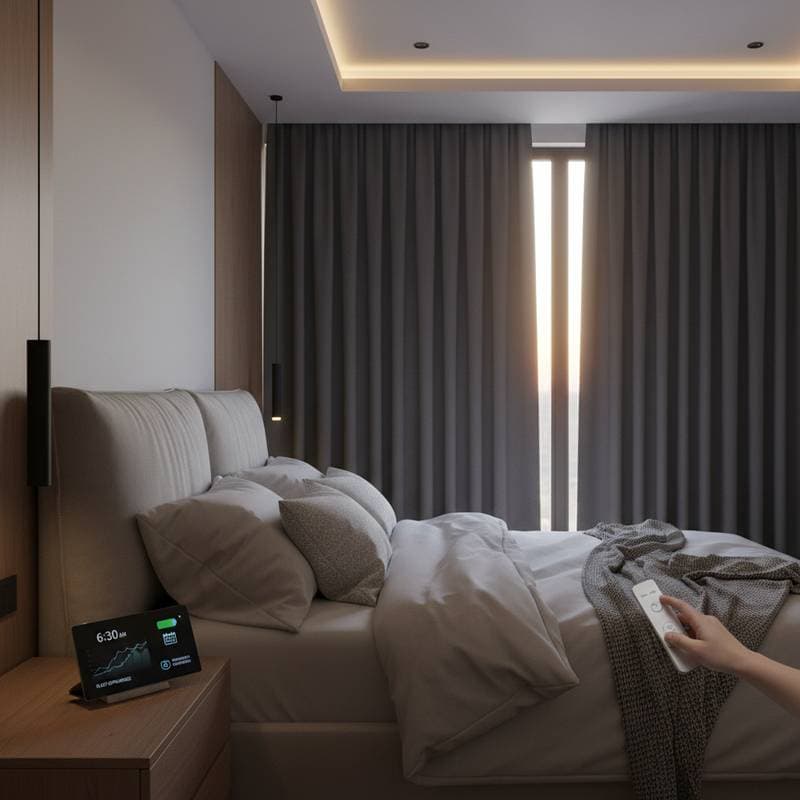
Understanding Smart Blackout Curtains
Smart blackout curtains combine dense, light-repelling fabrics with motorized mechanisms and sensors to regulate room illumination precisely. These systems operate on predefined schedules, detect ambient light or temperature shifts, and integrate with broader smart home ecosystems. The primary benefit lies in fostering a controlled environment that supports melatonin release during sleep hours and gradual light exposure upon waking, thereby strengthening circadian rhythms.
Before installation, verify compatibility with your home's electrical setup. Battery-operated models suit temporary residences, while wired options provide reliability for fixed installations. Professional assessment may be necessary for complex window configurations to ensure seamless functionality.
Essential Tools and Materials
Gather these items to facilitate a smooth setup process:
- Pre-assembled smart blackout curtain panels or roller shades designed for full light occlusion
- Motorized curtain track or rod rated for the selected fabric weight
- Power adapter for wired systems or rechargeable battery pack for cordless operation
- Compatible smart home hub, such as those from major ecosystems, or a dedicated mobile application for scheduling
- Power drill with appropriate bits, wall anchors suited to your surface material, and securing screws
- Bubble level and retractable measuring tape for accurate alignment
For users with existing light-blocking drapes, consider a retrofit smart motor kit. This approach minimizes disruption while adding automation capabilities. Select kits that match your curtain's dimensions and weight to avoid operational strain.
Installation Guide
Follow these steps to install smart blackout curtains effectively. Allocate sufficient time and work in a well-lit area to minimize errors.
1. Measure the Window Precisely
Determine the exact width and height of the window frame using a measuring tape. Extend measurements by four to six inches beyond the frame on all sides to eliminate potential light seepage. Double-check calculations against manufacturer specifications, as precision directly impacts the curtain's light-blocking efficacy.
2. Select an Appropriate Motor System
Opt for a wired motor if proximity to an electrical outlet allows, ensuring stable performance for larger windows. Battery-powered alternatives prove ideal for renter-friendly setups or areas without accessible power sources. Evaluate motor torque ratings to confirm they support your chosen fabric's heft, preventing future mechanical issues.
3. Install the Track or Rod Securely
Position the track or rod at the desired height using a level to maintain straightness. Mark bracket locations on the wall, drill pilot holes to avoid surface damage, and fasten anchors firmly. Perform a dry run by sliding the track into place before finalizing attachments, confirming smooth traversal.
4. Secure the Curtain Panels
Attach panels to the track via sliding hooks or clips, ensuring adjacent edges overlap by at least two inches for complete coverage. Distribute weight evenly to prevent sagging or uneven pulls. Test manual movement at this stage to identify any binding points.
5. Integrate the Motor and Power Supply
Connect the motor unit per the provided manual, routing cables away from moving parts to prevent pinching. Secure the power source discreetly, such as behind furniture. After initial powering, monitor for unusual heat generation, which may indicate improper assembly; disconnect immediately if detected and inspect components.
6. Pair with Control Application or Hub
Install the manufacturer's app on your device and follow pairing protocols, typically involving Bluetooth or Wi-Fi connectivity. Issue test commands to verify open and close functions. Program initial schedules to align with your typical bedtime and wake-up times, allowing for adjustments based on seasonal light variations.
7. Configure Sensors and Automation Modes
Access settings to enable modes like full blackout for evenings or simulated sunrise for mornings, where curtains gradually part to mimic natural dawn. Input preferences for light thresholds or temperature triggers if available. Run cycles over several nights to refine responsiveness, noting how environmental factors influence performance.
8. Verify Manual Operation Features
Confirm the system's ability to disengage the motor for hand-operated control, essential during outages. Practice this override to ensure effortless access. Some models include a clutch mechanism; familiarize yourself with its engagement to maintain usability.
9. Optimize Settings Through Observation
Monitor room conditions for the first week, adjusting timings or positions to address minor light intrusions. Log sleep quality improvements to guide further tweaks. Periodic recalibration ensures sustained alignment with evolving routines.
Best Practices and Common Pitfalls
Adopt these habits to maximize longevity and efficiency:
Recommended Actions
- Vacuum the fabric surface monthly using a soft brush attachment to remove accumulated dust without abrasion.
- Inspect the motor housing regularly for obstructions that might impede smooth operation.
- Update firmware promptly through the app to access performance enhancements and security patches.
- Layer additional blackout liners behind semi-opaque panels for enhanced light rejection in high-exposure areas.
Actions to Avoid
- Position units away from humid zones like bathrooms, as moisture can corrode electronics.
- Exceed the manufacturer's weight limits for tracks, which risks structural failure.
- Apply liquid cleaners near motorized components; opt for dry methods instead.
- Disregard unusual sounds like grinding, which often indicate the need for realignment or lubrication.
Professional Installation Considerations
Engage a specialist for windows exceeding eight feet in width, scenarios requiring in-wall wiring, or integrations with comprehensive smart home networks. Certified installers handle electrical routing compliantly and preserve warranty terms. This service proves valuable for non-standard frames or multi-panel arrays, ensuring professional-grade results.
Investment and Timeline Overview
Budget ranges from $150 for a simple motor retrofit to $500 or more for custom sensor-equipped panels, influenced by fabric durability, motor power, and connectivity features. Professional labor incurs additional costs for wiring or complex mounts. Expect one to three hours for DIY installation, scaling with window dimensions and technical familiarity; factor in testing time for full optimization.
Ongoing Care and Maintenance
Preserve functionality with routine upkeep:
- Dust panels monthly using a dry microfiber cloth to maintain fabric integrity.
- Recharge batteries quarterly or replace as indicated by the system alerts.
- Examine mounting hardware biannually, tightening any loose fasteners.
- Recalibrate automation if closures become incomplete, often due to minor shifts.
- Renew panels upon noticing color fade or edge wear that compromises opacity.
Address issues promptly to extend the system's lifespan, typically five to ten years with diligent care.
Integrating Smart Curtains into Daily Life
Smart blackout curtains transform rest routines by automating environmental cues, promoting deeper sleep without disruptive interventions. They eliminate the need for harsh alarms, instead leveraging light to signal wakefulness naturally. As sleep consultant Laila Ford of Rest Metrics notes, "Light control is one of the simplest ways to anchor your circadian rhythm."
Begin implementation in a primary sleep space to gauge benefits, such as enhanced energy levels and mood stability. Over time, expand to additional areas for comprehensive home optimization, yielding measurable improvements in overall well-being.