
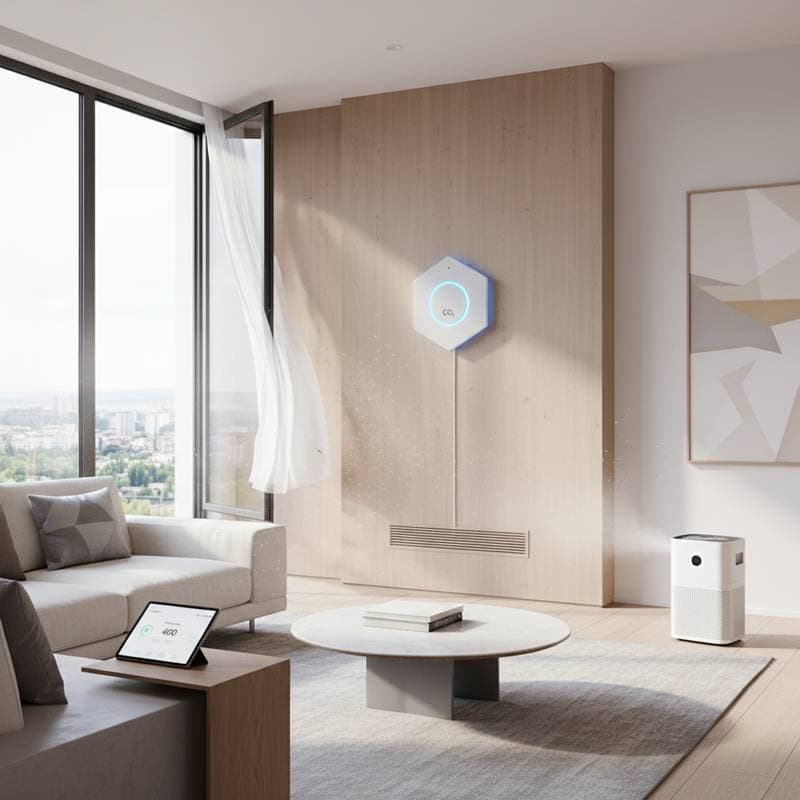
Smart CO2 Sensors Enhance Indoor Air Quality
Fresh, clear air contributes to comfort in every home. Indoor spaces often accumulate stale air from closed windows, cooking activities, or gatherings in confined areas, elevating carbon dioxide levels beyond healthy thresholds. Smart CO2 sensors address this issue through continuous monitoring and automated responses, integrating with ventilation systems to restore balance without user intervention.
The Impact of Indoor Air Quality on Daily Life
Individuals spend a significant portion of time indoors, where air quality directly affects physical and mental performance. Elevated carbon dioxide concentrations lead to symptoms such as fatigue, reduced focus, and mild headaches, while also creating a stuffy atmosphere despite surface cleanliness. CO2 sensors mitigate these effects by detecting changes early and initiating ventilation, window adjustments, or purifier activation to maintain an optimal environment.
Principles of CO2 Sensor Operation
CO2 sensors quantify carbon dioxide in parts per million using non-dispersive infrared technology, which employs a light beam to identify gas particles. Upon exceeding a designated threshold, the sensor transmits signals to a smart home hub or connected devices, prompting actions like engaging exhaust fans or modifying HVAC settings to introduce fresh outdoor air.
Homeowners can establish targets, such as 800 parts per million, for comfort. The system then boosts airflow as needed until levels normalize, operating seamlessly to sustain a refreshing indoor climate.
Integration with Smart Home Ecosystems
CO2 sensors achieve maximum effectiveness through connections with complementary devices. Possible integrations include:
-
Smart thermostats that synchronize heating, cooling, and air exchange.
-
Motorized windows that crack open to alleviate heavy indoor air.
-
Air purifiers that increase filtration intensity on demand.
-
Exhaust fans in kitchens or bathrooms that operate selectively.
Platforms such as Home Assistant or Apple HomeKit enable custom automations. For instance, configure a rule where levels above 900 parts per million trigger a ten-minute window opening in the living room alongside high-speed purifier operation. These setups execute without oversight, optimizing energy use and comfort.
Practical Application in a Home Setting
Consider a small apartment with a shared home office for two occupants. Air quality deteriorates by midday due to prolonged occupancy. A compact CO2 sensor positioned on the desk monitors conditions discreetly. As levels increase, it activates a window motor for slight ventilation and a circulation fan. The room refreshes within minutes, allowing uninterrupted work, and the system seals the window upon stabilization. This demonstrates automated air management: unobtrusive and efficient.
Optimal Sensor Placement and Maintenance
Position sensors at breathing level, approximately 4 feet or 1.2 meters high, avoiding proximity to windows or direct drafts. Steer clear of corners or areas behind furniture prone to stagnant air. App-based calibration features on many units ensure precision; perform recalibration every few months, particularly after relocation.
Renters benefit from portable models that connect via standard outlets, batteries, or Wi-Fi, functioning standalone or networked for easy transport.
Complementary Materials for Air Quality
Effective air management extends beyond sensors to surrounding elements. Select low-VOC paints for walls to minimize chemical emissions, natural fiber rugs that resist dust accumulation, and adjustable window treatments for airflow control. During renovations, incorporate materials like lime plaster, which regulates humidity and deters mold growth. Such choices amplify sensor performance, fostering a naturally ventilated space.
Affordable Entry Points for CO2 Monitoring
Access to CO2 technology requires no substantial investment. Basic models, priced comparably to a casual meal, provide accurate readings and Bluetooth pairing. Intermediate options connect to smart hubs and voice controls, whereas advanced units track temperature, humidity, and volatile organic compounds comprehensively.
Begin with a single sensor in high-use areas like bedrooms or offices to identify usage patterns and refine habits, such as strategic window opening or fan scheduling. Gradual expansion covers the full home over time.
Aesthetic and Functional Design
Contemporary CO2 sensors feature sleek designs that harmonize with interiors, mimicking small speakers or subtle wall fixtures. Mount them near light switches or on shelves alongside other gadgets for seamless incorporation. Intentional placement transforms technology into an organic home element.
Ensuring Long-Term Performance
Minimal maintenance suffices for CO2 sensors: clear dust from vents, inspect power sources, and confirm calibrations regularly. For hub-integrated systems, audit automation rules quarterly to align with evolving routines, such as increased ventilation during meals or social events. Adjustments refine the technology's role in daily comfort.
Benefits of Automated Regulation
Consistency defines automated systems, surpassing variable human routines. Sensors respond promptly to fluctuations, preventing overlooked ventilation needs during hectic periods. This reliability promotes improved sleep, sharper cognition, and reduced allergen exposure, alongside energy conservation through targeted operation.
Aligning with Sustainable Practices
Automated air quality control advances sustainability by activating appliances only as required, conserving electricity and extending equipment lifespan. This data-driven efficiency aligns with mindful consumption, emphasizing quality over excess in home management.
Embracing Automated Home Ventilation
Automated air balance elevates living spaces, adapting subtly to occupancy. Crisp morning air arrives without manual effort, and evenings remain inviting amid gatherings. For newcomers to smart systems, initiate with a basic sensor, smart plug, and fan to explore automation. Progress to broader integrations like thermostats or purifiers, prioritizing simplicity for enhanced daily life.