
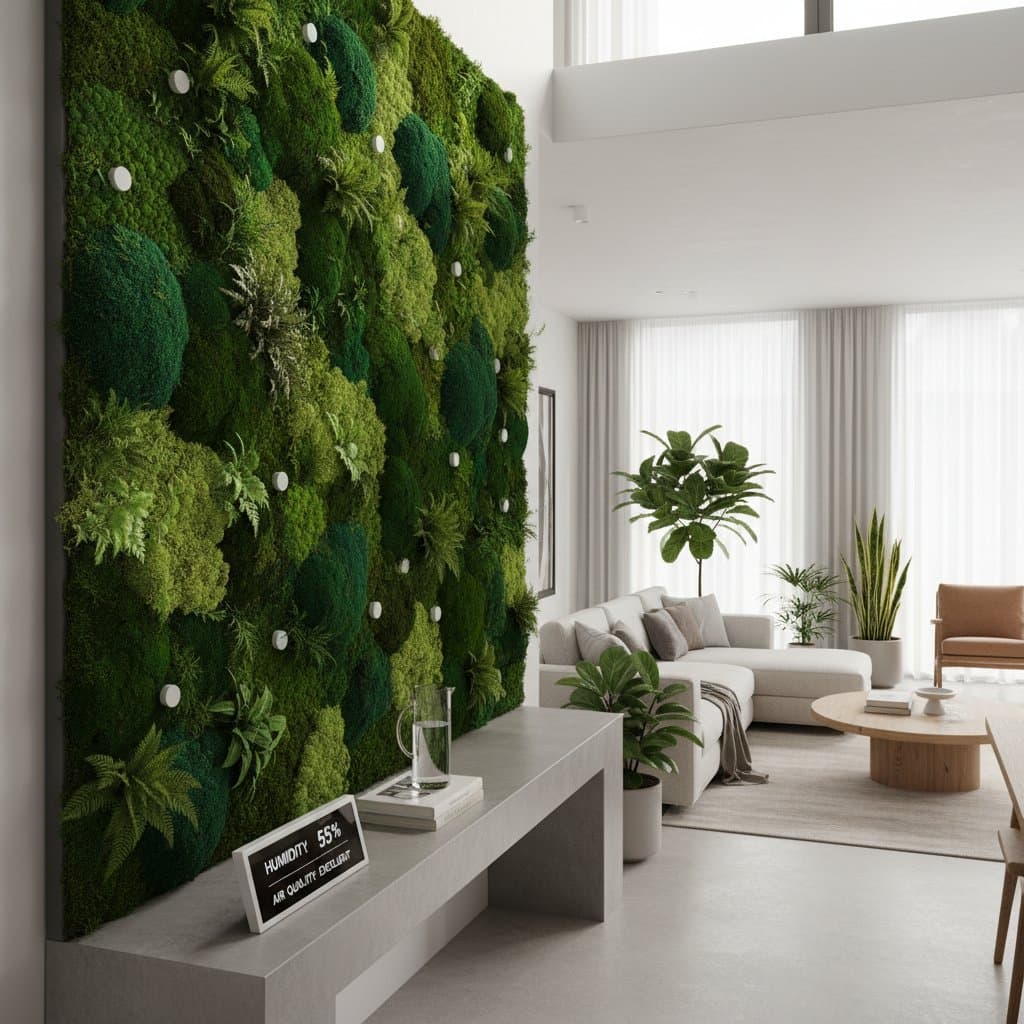
Moss Walls: Enhancing Indoor Air Quality with Minimal Effort
Preserved moss walls provide an effective solution for improving indoor environments by capturing dust particles and moderating humidity levels, all without the need for regular watering or extensive care. These installations introduce a tactile, natural element that contributes to a sense of tranquility while addressing common air quality challenges. Indoor spaces frequently accumulate dust, volatile organic compounds, and excess moisture, which can compromise both comfort and well-being.
This article explains the mechanisms behind preserved moss walls for air purification and outlines safe installation and maintenance procedures. Although preserved moss does not photosynthesize or absorb carbon dioxide like living plants, its structure excels at passive filtration, making it a practical alternative for urban or low-light settings.
Essential Information on Moss Walls
Preserved moss walls consist of real moss that undergoes a stabilization process to retain its vibrant color and form indefinitely, without requiring soil, nutrients, or moisture. The moss's porous surface naturally traps airborne particulates, including dust and allergens, while its hygroscopic properties help balance room humidity by absorbing excess moisture and releasing it gradually. To maximize longevity, position the wall in indirect light and at least three feet from air vents or heat sources, which could accelerate drying or discoloration.
Select high-quality preserved moss from reputable suppliers to ensure durability. Reindeer moss, known for its soft, branching form, offers excellent coverage, while sheet moss provides a denser, carpet-like texture. Both types undergo glycerin-based preservation, rendering them lightweight and non-toxic for indoor use.
Required Tools and Materials
Gather these items before starting your project to streamline the process:
- Preserved moss tiles or loose pieces (reindeer or sheet varieties, sourced from certified indoor decor suppliers)
- Non-toxic, low-VOC adhesive or construction glue compatible with porous surfaces
- Sturdy backing such as plywood, MDF board, or foam core, cut to desired dimensions
- Precision cutting tools including scissors and a utility knife
- Protective gear: nitrile gloves and a particulate mask to avoid irritation during handling
- Mounting hardware: wall anchors, screws, or heavy-duty adhesive strips, plus a spirit level for alignment
If local availability is limited, order freeze-dried preserved moss online, ensuring it carries labels confirming suitability for enclosed spaces. Avoid harvesting wild moss, as this practice disrupts ecosystems and may violate environmental regulations in many regions.
Detailed Installation Guide
Follow these steps to create a professional-looking moss wall that integrates seamlessly into your space.
-
Select the installation location. Identify a wall area with moderate ambient humidity, ideally between 40 and 60 percent, and avoid direct exposure to sunlight, radiators, or high-traffic zones where physical contact might occur.
-
Prepare the backing board. Measure the chosen space precisely, adding a one-inch border for mounting. Cut the board using a straightedge and utility knife for clean edges, or employ a handsaw for thicker materials.
-
Design the moss arrangement. Lay out moss pieces on a flat surface to visualize the composition. Incorporate varied sizes and shapes—cluster denser sheets at the base and add airy reindeer moss accents—to mimic natural growth patterns and enhance visual depth.
-
Apply the adhesive. Opt for a spray adhesive or hot glue gun for even distribution. Work in manageable sections, applying a thin layer to the backing to minimize excess and ensure strong bonding without visible glue lines.
-
Secure the moss to the backing. Press each piece firmly into the adhesive, holding for 10 to 15 seconds to set. Build in overlapping layers, starting from the center and moving outward, to achieve uniform thickness and eliminate voids.
-
Refine the coverage. Insert smaller moss fragments into any gaps for complete opacity. Use scissors to trim protruding edges, creating a smooth perimeter that aligns with the board's boundaries.
-
Install the panel on the wall. Locate studs if possible for secure attachment, then fasten using appropriate screws or strips rated for the panel's weight—typically under 10 pounds for a standard 2x3-foot size. Employ a level to ensure the installation remains plumb.
-
Monitor initial conditions. After installation, assess the moss's texture; if it appears brittle, introduce humidity via a room diffuser for several hours. Refrain from direct wetting, as this can promote bacterial growth in preserved materials.
Best Practices and Common Pitfalls
Recommended Actions
- Install moss walls exclusively in controlled indoor environments with consistent temperature and humidity.
- Perform light dusting monthly using a soft-bristled brush or compressed air canister held at a distance.
- Illuminate with ambient or LED lighting to highlight textures without generating heat.
Actions to Avoid
- Never apply water, mists, or liquid cleaners to preserved moss, as these can cause discoloration or structural breakdown.
- Steer clear of abrasive tools, chemical wipes, or alcohol solutions during cleaning.
- Position away from airflow sources like HVAC vents, fireplaces, or kitchens to prevent uneven drying or particulate buildup.
Professional Assistance Considerations
For expansive installations exceeding 10 square feet or those incorporating integrated features such as backlighting or custom frames, consult a certified interior designer or moss wall specialist. Professionals can assess structural integrity and ensure compliance with building codes. Seek expert help immediately if the target wall shows signs of water damage or mold, as concealed issues could lead to secondary problems like panel detachment or health hazards.
Budget and Timeline Overview
A compact moss wall panel, measuring approximately 2x2 feet, typically ranges from $80 to $300 in materials, influenced by moss density and backing quality. Custom larger formats or premium varieties may surpass $500. With materials on hand, complete the DIY assembly in 2 to 4 hours, allowing additional time for adhesive curing—usually 24 hours—before final mounting.
Ongoing Care Strategies
Sustain your moss wall's performance through routine checks:
- Gently remove surface dust each month with a dry, soft brush, directing strokes downward to avoid dislodging pieces.
- Inspect biannually for color shifts or stiffness, particularly in low-humidity seasons.
- Renew affected areas by replacing discolored sections with matching preserved moss, secured via touch-up adhesive.
- Regulate ambient humidity within 40 to 60 percent using a hygrometer; employ a whole-room humidifier if levels drop below this range.
Integrating Moss Walls into Daily Life
A well-placed moss wall operates subtly, absorbing minor pollutants and diffusing acoustics for a more serene atmosphere. Its enduring form and tactile appeal blend functionality with design, requiring only occasional oversight to preserve efficacy. By prioritizing optimal placement and humidity management, you secure sustained benefits in air quality and aesthetic enhancement, transforming ordinary walls into vibrant, low-maintenance features.