
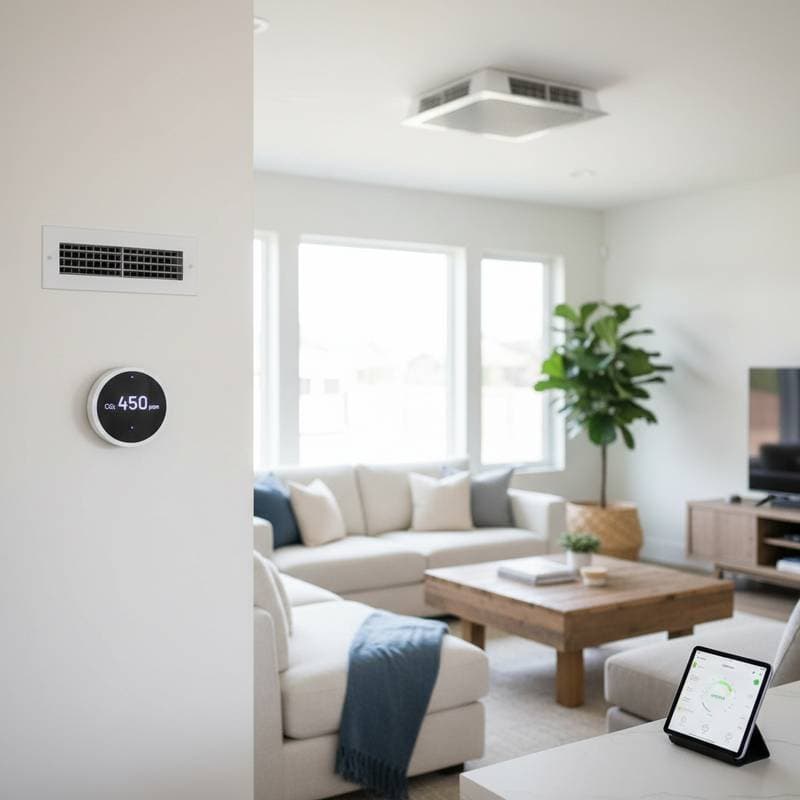
New Homes Standardize CO2 Sensors for Better Air
A home should not only look beautiful, it should also feel good to live in. Comfort depends as much on air quality as on color palettes or furniture layout. That is why more new homes now include built-in CO2 sensors that continuously monitor indoor air. These small devices are quietly reshaping how people understand ventilation, comfort, and health inside their walls.
Why Air Quality Matters at Home
We spend much of our time indoors, breathing air that can easily become stale. Everyday activities such as cooking, cleaning, and simply exhaling all release carbon dioxide. When levels climb above about 1,000 parts per million, people often notice fatigue, headaches, or reduced focus. Yet most households have no way to know when that threshold is reached. CO2 sensors solve that gap by providing clear data that guides better ventilation choices.
At a Glance
- Who benefits: Homeowners, renters, and builders focused on health and efficiency
- Main feature: Integrated CO2 sensors linked to ventilation systems
- Goal: Consistent fresh air and lower energy waste
- Budget range: From low-cost plug-in units to full smart home integration
- Maintenance: Occasional sensor calibration and filter replacement
Before: Guessing About Air Quality
Before built-in sensors, people relied on how a room felt. A heavy or musty atmosphere might prompt someone to open a window, but by that point CO2 levels were already high. Mechanical ventilation often ran on timers, not real conditions. Builders and designers rarely discussed air quality unless allergies or moisture problems appeared. As one homeowner said after installing a monitor, “I thought my home was fine until I saw the numbers. Then I realized how little fresh air we really had.”
After: Smart Ventilation That Responds Automatically
Modern systems now use CO2 readings to adjust airflow automatically. When several people gather in a living room, sensors detect the rising carbon dioxide and signal the ventilation unit to increase intake. When the space empties, airflow scales back to save energy. The result is cleaner, more consistent air without constant manual adjustment. Builders report that this technology helps them meet stricter energy and comfort standards while giving residents visible proof of performance.
Lighting and layout also influence air circulation. Designers often position vents near windows or along shared walls so that fresh air moves evenly through each room. In compact apartments, one wall-mounted sensor can control several connected fans. In larger houses, individual sensors in bedrooms and living areas provide more precise control.
Design Details
- Sensor types: NDIR (non-dispersive infrared) sensors are the most common choice for accuracy and longevity.
- Integration: Many systems connect to smart thermostats or building management apps.
- Brands to know: Airthings, Netatmo, and Awair provide consumer models, while Zehnder and Lunos supply integrated units for new construction.
- Budget-friendly options: Portable monitors start around the cost of a dinner out, while wired systems add only a small percentage to total construction costs.
- Maintenance tips: Clean nearby vents every few months and check calibration annually for reliable readings.
Why It Works
The key advantage of CO2 sensors is feedback. Instead of relying on guesswork, homeowners can see real numbers. A display showing 800 ppm means the space is well ventilated. Readings above 1,200 ppm signal that windows or fans should run longer. This data-driven awareness encourages small daily actions that add up to a healthier home. Over time, residents often notice fewer headaches and better sleep because oxygen levels stay balanced.
For designers, these sensors support a more holistic approach. They pair technical performance with livability, much like choosing natural fabrics for comfort or layered lighting for mood. Ventilation is no longer an invisible utility, it becomes part of the design language of a home.
Living with the Changes
The best part of this shift is how quietly it improves daily life. Fresh air feels effortless when the system does the thinking for you. Families no longer argue over stuffy rooms. Guests comment on how pleasant the air feels without knowing why. And because ventilation adjusts only when needed, energy bills often drop slightly over time.
Whether you live in a compact studio or a newly built house, adding a CO2 sensor is a small step with lasting benefits. It turns invisible comfort into something you can measure, manage, and trust. A home that smells fresh and feels clear-headed invites you to breathe easier and truly love where you live.