
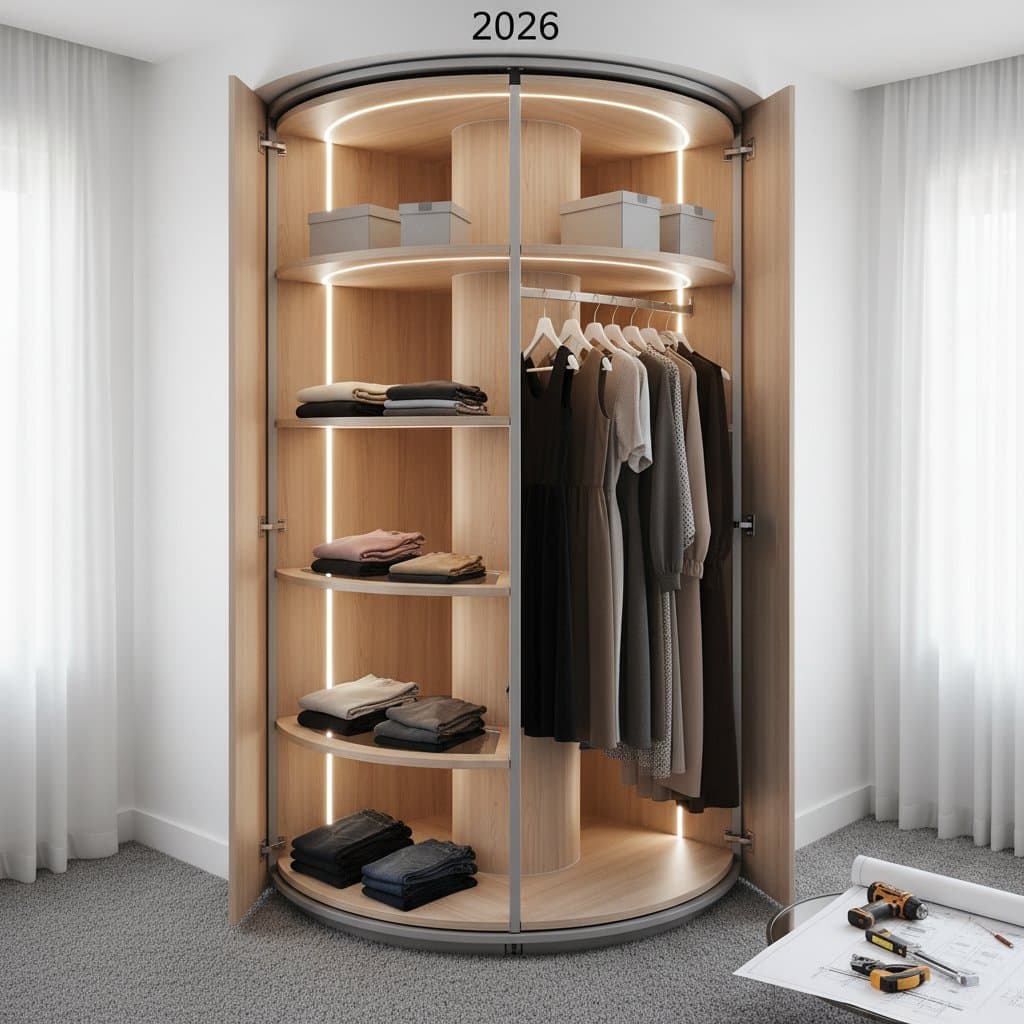
Carousel Closets Unlock Hidden Corner Space in 2026
Maximize every inch of closet space with a rotating carousel system. This innovative solution converts forgotten corners into organized, accessible storage areas.
Corners often represent wasted potential in storage design. Carousel closets address this issue effectively.
This guide provides comprehensive instructions on planning, installing, and maintaining a rotating closet system suited to your specific layout and budget.
Note one important consideration: avoid this upgrade on walls with structural weaknesses or unsealed floors until necessary repairs or sealing occur.
What To Know
A carousel closet features a circular or semi-circular turntable installed within a corner cabinet or closet bay. Shelving units or hanging rods rotate around a central pole, allowing users to access items easily without excessive bending or stretching into tight spaces. The primary constraint involves load capacity, so always verify the manufacturer's specified maximum weight before adding contents. Secure the base firmly to a stable surface to eliminate any risk of tipping.
Tools and Materials
Gather these essentials for a successful installation:
- Tape measure and level
- Stud finder
- Drill with appropriate bits and screw set
- Adjustable wrench
- Wood screws or wall anchors matched to your surface type
- Cleaning cloth and mild detergent
- Optional: complete rotating kit or prebuilt carousel unit
For lighter wardrobes, a lazy Susan kit designed for pantries serves as a viable alternative if a dedicated system proves unavailable.
Step By Step
Step 1: Measure the Corner
Begin by measuring the two walls where the closet intersects. Identify the maximum depth available without obstructing doors, drawers, or pathways. A circular base requires a minimum of 24 inches in width to allow free rotation; account for any existing fixtures that might interfere.
Step 2: Choose the Carousel Type
Select a system based on your storage needs. Opt for a hanging pole configuration to accommodate clothing, or a tiered shelf setup for shoes, handbags, or folded linens. Metal constructions handle heavier loads reliably, whereas plastic or wooden options suit lighter, everyday applications.
Step 3: Secure the Base and Top Mount
Position a level at the corner's center to ensure accuracy. Mark and drill pilot holes for the base plate and corresponding ceiling mount. Whenever feasible, anchor these components directly into wall studs for maximum stability. Such securement minimizes wobble and promotes fluid rotation.
Step 4: Assemble the Pole and Shelves
Attach the shelves or hangers to the central pole following the provided instructions. Position them in the recommended sequence and secure with locking collars using an adjustable wrench. Maintain sufficient clearance between levels to accommodate taller items, such as boots or long garments. Verify that each component rotates smoothly before finalizing all connections.
Step 5: Test the Rotation
Rotate the carousel multiple times to assess balance and operation. If resistance occurs, adjust the top collar slightly to reduce friction. Remove any dust or debris from the base area. Perform tests with gentle motions to preserve the integrity of the bearings.
Step 6: Load Items Evenly
Distribute contents uniformly around the central pole to maintain equilibrium. Position heavier objects closer to the base for stability. Group similar items together to facilitate quick retrieval. Avoid uneven distribution, which may lead to tilting or operational noise.
Step 7: Add Lighting
Incorporate a battery-operated LED puck light onto the ceiling mount or adjacent wall. This addition illuminates deeper areas and improves overall visibility. Choose models with adhesive backing to simplify installation without electrical modifications.
Step 8: Check Safety Clearance
Confirm that the carousel rotates fully without contacting walls, doors, or other elements. Maintain at least one inch of clearance on all sides. Reposition components as necessary to achieve compliance.
Step 9: Clean and Finish
Clean all surfaces using a mild detergent and soft cloth. Apply labels to shelves if multiple users access the space. Inspect the entire assembly from various angles and perform minor adjustments to ensure perfect alignment prior to regular use.
Dos and Don’ts
Dos
- Anchor all mounts into studs or solid framing for durability.
- Balance loads evenly to ensure smooth rotation.
- Clean bearings and tracks every few months to prevent buildup.
- Apply non-slip liners to shelves when storing items like shoes or bags.
Don’ts
- Exceed the manufacturer's stated weight limit under any circumstances.
- Apply corrosive cleaners to metal components.
- Install on warped or unsealed flooring surfaces.
- Force rotation when resistance is detected; investigate the cause instead.
When To Call A Pro
Engage a professional carpenter or closet specialist if the corner conceals plumbing, electrical wiring, or other utilities. Similarly, seek expert assistance for installations involving motorized components. Professionals reinforce framing, verify clearances, and guarantee safety. In homes with unsealed hardwood or tile floors, they install protective moisture barriers prior to mounting.
Cost and Time Snapshot
Manual carousel kits range from fifty to two hundred dollars, varying by size, material, and features. Motorized versions command higher prices due to added complexity. A basic installation typically requires one to three hours. Key factors influencing total cost include material durability, load capacity, and aesthetic finishes.
Maintenance or Upkeep
Perform routine care to extend the system's lifespan:
- Dust shelves monthly to remove surface particles.
- Inspect screws and collars seasonally for looseness and tighten as needed.
- Wipe bearings with a dry cloth twice annually.
- Apply a light coat of silicone spray to joints if rotation becomes sluggish.
- Rebalance contents promptly if tilting or irregular motion develops.
Expert Insight
Interior designer Carla Nguyen of Spacewise Interiors emphasizes the value of carousel systems in compact living spaces. They promote organization without extensive renovations. "You use corners that normally hide clutter. The rotation feature keeps everything visible, which reduces overbuying," she said. Nguyen recommends beginning with a simple two-tier manual unit before considering advanced upgrades.
Home organization consultant Marco Ellis highlights the importance of precise measurements. "If the base is even half an inch off-center, the motion suffers," he notes. Accurate setup ensures long-term performance and user satisfaction.
Pro Tips for Success
Select finishes in neutral tones to harmonize with existing closet elements and maintain a serene atmosphere. For shared closets, allocate space by vertical sections rather than individual shelves to provide equitable access. Incorporate a shallow basket at the base for small accessories like scarves or jewelry. Extend the concept beyond closets; install corner carousels in kitchen pantries or craft areas for unified storage strategies.
Making It Happen
Implementing a carousel closet converts an overlooked corner into an efficient, accessible storage solution. Through precise measurements and even loading, users can increase usable space by up to thirty percent without altering the room's footprint. This upgrade delivers lasting organization and convenience tailored to modern lifestyles.