
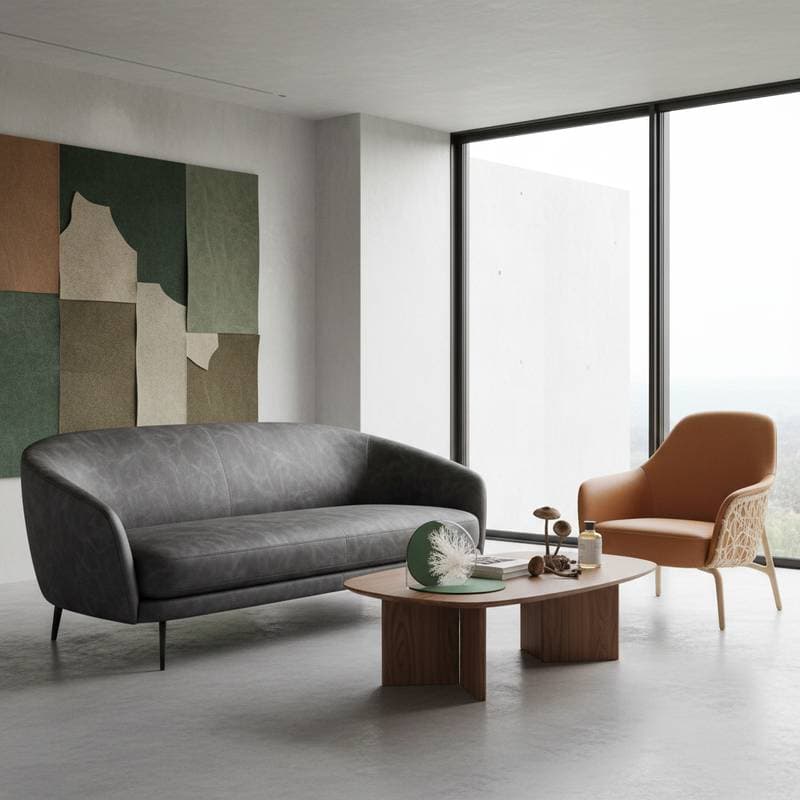
Mycelium Leather: Revolutionizing Vegan Upholstery
Mycelium leather emerges as a groundbreaking material in furniture design. Grown from the root-like structures of fungi, it delivers the aesthetic and tactile qualities of traditional animal hide while eliminating reliance on livestock or harsh chemical processes. Designers and homeowners increasingly adopt this innovation for its blend of style, durability, and sustainability.
Conventional leather production contributes significantly to environmental degradation through water consumption, deforestation, and chemical pollution. Synthetic vegan alternatives, though animal-free, frequently lack longevity and introduce microplastics into ecosystems. Mycelium leather addresses these challenges by offering a natural, biodegradable substitute that aligns with modern ethical standards.
This guide covers the essentials of mycelium leather, from its composition and manufacturing to practical care instructions. Variations exist among producers, so attention to specific product guidelines ensures optimal performance.
Understanding Mycelium Leather
Mycelium leather derives from the mycelium, the underground network of fungal threads that forms a sturdy, web-like matrix. Producers cultivate this network on organic substrates, such as agricultural byproducts, allowing it to expand into flat sheets. After harvesting, the material undergoes pressing, drying, and finishing treatments to achieve a leather-like texture and appearance.
The primary benefits include reduced environmental footprint and enhanced biocompatibility. Unlike animal hides, mycelium avoids tanning agents that release toxins into waterways. Its natural composition resists many allergens, making it suitable for sensitive users. However, proper sealing protects against moisture, which could otherwise lead to warping or discoloration in unsealed sections.
The Production Process
Manufacturing mycelium leather begins with inoculating a nutrient-rich medium, like sawdust or hemp fibers, with fungal spores. Over several days, the mycelium colonizes the substrate, forming a dense, flexible sheet within custom molds. Workers then remove the material, compress it under heat and pressure, and apply bio-based finishes for added resilience.
This method requires minimal energy and water compared to traditional leather tanning. Producers often source waste materials locally, minimizing transportation emissions. The resulting product boasts breathability, allowing air circulation that prevents odor buildup in upholstered items. Many variants achieve compostability at end-of-life, further supporting circular economy principles.
Dr. Alana Ruiz, a materials scientist at Green Surface Lab, explains the science behind its strength: mycelium structures develop naturally strong and flexible fibers in interlocking patterns that mimic collagen in animal hides. This provides comparable tensile strength without tanning. She notes that most mycelium leathers remain compostable when free of synthetic treatments.
Essential Tools and Materials for Care
Maintaining mycelium leather preserves its appearance and extends its lifespan. Gather these items for routine upkeep:
- Soft microfiber cloth or towel for gentle wiping
- Mild, plant-based soap or cleaner formulated for natural surfaces
- Warm water for diluting solutions
- Natural oils or waxes designed for bio-leathers to condition
- Soft-bristle brush for light scrubbing
- Diluted white vinegar solution for neutralizing odors
These supplies mirror those used for other natural fabrics, ensuring accessibility for most households.
Step-by-Step Guide to Cleaning and Conditioning
Regular care keeps mycelium leather looking pristine. Follow these steps methodically to avoid damage.
1. Perform a Patch Test
Select an inconspicuous area and apply a small amount of cleaner using a cloth. Observe for several minutes to confirm no discoloration or adverse reactions occur. Proceed only if the test yields positive results.
2. Remove Surface Dust
Gently sweep a dry microfiber towel over the surface to eliminate dust and debris. This initial step prevents abrasive particles from causing scratches during deeper cleaning.
3. Prepare a Mild Cleaning Solution
Mix one teaspoon of mild soap into one quart of warm water. Stir carefully to prevent excessive suds, as harsh chemicals might erode protective coatings.
4. Apply Cleaner in Circular Motions
Soak a cloth in the solution, then wring it thoroughly. Wipe the surface in small, circular patterns, tackling one section at a time. Limit moisture exposure to safeguard the material's integrity.
5. Rinse and Dry Thoroughly
Wipe residue with a clean, damp cloth. Follow with patting using a dry towel, then allow natural air drying in a shaded, well-ventilated area.
6. Apply Conditioner Lightly
After drying, rub a thin layer of approved natural oil or wax onto the surface. This restores suppleness and wards off cracks from environmental exposure.
7. Address Odors with Vinegar
For lingering smells, prepare a 1:1 mixture of water and white vinegar. Mist lightly, wait one minute, then wipe and dry completely to neutralize without residue.
8. Treat Stains Promptly
Blot fresh spills immediately with an absorbent cloth, avoiding rubbing that could embed particles. Apply a mild soap solution for stubborn marks, repeating as necessary.
9. Restore Finish Periodically
Buff the surface every few months with a soft cloth to revive luster. Consistent attention diminishes minor scuffs over time.
Dos and Don'ts for Longevity
Adhering to best practices maximizes the material's durability.
Dos
- Position furniture away from direct sunlight to minimize fading.
- Employ breathable covers during extended storage.
- Address spills without delay to avert permanent stains.
- Review manufacturer labels for guidance on water resistance and compatible products.
Don'ts
- Avoid alcohol, bleach, or solvent-based cleaners that degrade fibers.
- Refrain from abrasive scrubbing tools that scratch the finish.
- Prevent prolonged wetness or enclosure in non-breathable materials.
- Overlook brand-specific differences in coatings and care requirements.
Professional Assistance When Needed
Consult a specialist for severe issues like deep cracks, mold growth, or delamination. Experts in natural fiber restoration possess tools for precise repairs on large upholstered pieces. They apply targeted treatments to maintain texture uniformity and prevent further deterioration. Always entrust panel replacements or advanced coatings to qualified professionals.
Cost and Time Considerations
Mycelium leather upholstery commands prices from moderate to high-end, often comparable to premium animal hides due to boutique-scale production. Factors influencing cost include brand reputation, material thickness, and custom finishes. Cleaning a single chair requires approximately 30 minutes, while a sofa demands about one hour; conditioning adds 10 minutes per session.
Long-term value shines through extended durability, outlasting many synthetic options. Initial investment yields savings via reduced replacement frequency and eco-friendly disposal.
Ongoing Maintenance Routine
Incorporate these habits for sustained performance:
- Weekly dry wiping to control dust accumulation.
- Quarterly deep cleaning for thorough refresh.
- Biannual light conditioning to maintain flexibility.
- Monitor for signs of dullness or rigidity, prompting immediate action.
- Regulate indoor humidity to avoid material brittleness.
Selecting High-Quality Mycelium Leather
In-store evaluation enhances decision-making. Feel for a soft, warm texture distinct from plastic synthetics. Inspect for even coloration and a subtle sheen. Steer clear of items emitting strong chemical odors, indicative of excessive additives.
Inquire about sealing methods and care protocols from producers. Opt for designs with detachable components for simplified maintenance. This material complements wooden frames, upcycled metals, and natural textiles, adapting seamlessly to diverse interior schemes while developing a patina through use.
Environmental Advantages
Animal leather industries strain resources with vast water usage and chemical runoff. Mycelium leather, conversely, repurposes organic waste with low-energy cultivation. Local growth cuts shipping-related carbon emissions, and closed-loop operations recycle substrates for continuous production.
This approach fosters sustainability by diminishing landfill contributions and promoting biodegradable end-products. Homeowners contribute to broader goals of resource conservation and ethical consumption through adoption.
Enhancing Your Home with Mycelium Leather
Integrate mycelium leather to elevate living spaces with conscious design. Its versatility suits sofas, chairs, and accents, infusing warmth without compromise. Proper care ensures pieces remain inviting for years, reflecting a commitment to planetary health and personal style.