
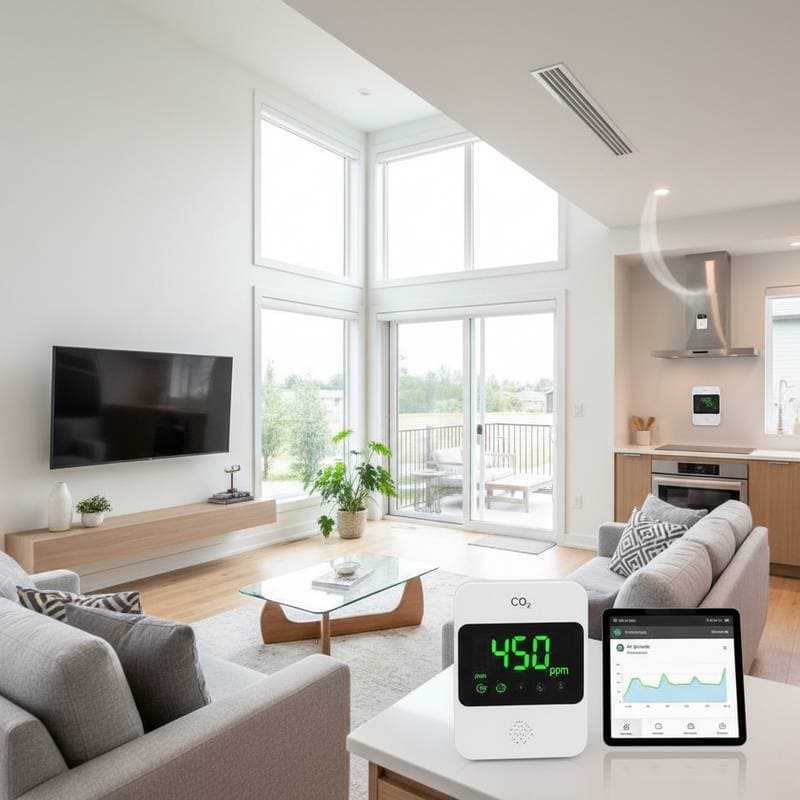
Understanding CO2 Sensors in Modern Home Design
Fresh indoor air contributes significantly to overall health and productivity. CO2 sensors, previously confined to commercial or scientific settings, now play a vital role in residential spaces. These devices measure carbon dioxide concentrations, offering a direct indicator of ventilation effectiveness and occupancy-related air stagnation.
Elevated CO2 levels often result from inadequate fresh air exchange, leading to symptoms such as fatigue, headaches, and reduced focus. By monitoring these levels, homeowners gain the ability to intervene promptly, fostering environments that promote clear thinking and restorative sleep. This section explores the mechanics of CO2 sensors, their placement, and their integration into daily routines.
CO2 sensors primarily detect carbon dioxide through technologies like non-dispersive infrared (NDIR) sensing, which identifies CO2 molecules by their unique light absorption properties. Readings typically range from 400 parts per million (ppm) in outdoor air to over 1,000 ppm in poorly ventilated rooms. Levels above 800 ppm signal the need for increased airflow to maintain occupant comfort and cognitive performance.
Important consideration: CO2 sensors focus solely on carbon dioxide and do not address other contaminants like volatile organic compounds or particulate matter. Incorporate them within a comprehensive air quality strategy that includes additional monitors for humidity, temperature, and pollutants.
Essential Tools and Materials for Installation
Selecting the right equipment ensures accurate and reliable CO2 monitoring. Begin with a residential-grade CO2 sensor featuring clear digital displays and alarm thresholds. Battery-operated models offer flexibility, while plug-in versions provide continuous power for always-on functionality.
Gather these items for a straightforward setup:
- Residential CO2 monitor with NDIR technology for precision
- Rechargeable batteries or a compatible power adapter
- Adhesive mounting strips or wall screws for secure placement
- A small bubble level to ensure even installation
- Microfiber cloth and compressed air for periodic sensor cleaning
Pro tip: Multifunction air quality devices often combine CO2 detection with humidity and temperature readings, providing a holistic view of indoor conditions without multiple purchases.
Best Practices and Common Pitfalls
Effective use of CO2 sensors requires attention to placement and interpretation. Follow these guidelines to maximize their benefits and avoid misleading data.
Recommended Actions
- Position sensors in high-occupancy areas like living rooms or bedrooms to capture real-time air dynamics.
- Respond to readings above 800 ppm by opening windows or activating exhaust fans to introduce fresh air.
- Pair CO2 data with humidity monitoring to prevent excess moisture, which can encourage mold growth.
- Log readings daily for a week to identify patterns, such as peak levels during evening hours.
Actions to Avoid
- Install sensors near combustion sources like gas stoves or fireplaces, as these can inflate CO2 readings with unrelated gases.
- Dismiss persistent high levels, which indicate insufficient overall ventilation and potential health risks.
- Obstruct sensor intakes with nearby objects, compromising airflow and accuracy.
- Rely on CO2 sensors alone for safety; they do not detect hazards like carbon monoxide or smoke.
Dr. Liu noted, "People often think a CO2 monitor replaces all other detectors. It does not. It tells you how much fresh air your room gets, not whether the air is toxic."
Investment and Implementation Overview
CO2 sensors represent an accessible entry point to improved air management. Entry-level models start at $30 for basic handheld units, while advanced versions with app connectivity reach $400. Factors influencing price include sensor sensitivity, data logging capabilities, and integration with smart home ecosystems.
Installation typically requires 15 to 30 minutes per device, involving simple mounting and initial calibration. For broader upgrades, such as installing automated vents, expenses may climb to several hundred dollars depending on existing infrastructure. Maintenance involves dusting the sensor monthly and replacing batteries annually, keeping long-term costs low.
Return on investment appears through enhanced comfort and potential energy savings, as targeted ventilation reduces unnecessary heating or cooling.
Strategic Placement for Optimal Monitoring
Placement directly impacts the sensor's ability to reflect true air quality. Focus on zones aligned with daily activities to gather meaningful data.
- Bedrooms: Overnight CO2 buildup occurs as occupants exhale in enclosed spaces. A sensor near the bed provides morning insights, guiding decisions on pre-sleep ventilation.
- Living Rooms: During social gatherings, CO2 levels can spike quickly. Monitoring helps adjust airflow to accommodate multiple people without discomfort.
- Home Offices: Studies link CO2 above 1,000 ppm to diminished alertness. Place a sensor on the desk to prompt breaks for fresh air intake.
- Basements or Lower Levels: These areas often suffer from stagnant air due to limited natural circulation. Sensors verify the impact of added vents or dehumidifiers.
Steer clear of high-moisture zones like kitchens and bathrooms, where cooking vapors or showers can skew results. Aim for heights between 3 and 5 feet from the floor, away from direct drafts or heat sources.
Integrating CO2 Data into Home Design
Forward-thinking design incorporates CO2 awareness to create inherently breathable spaces. Architects and homeowners alike benefit from data-driven adjustments.
- Ventilation Planning: Analyze sensor data from existing homes to optimize window sizes and orientations for natural cross-breezes.
- Building Materials: Modern airtight constructions improve efficiency but demand intentional air renewal systems. CO2 feedback ensures these balance energy use with freshness.
- Automation Features: Link sensors to smart thermostats or HVAC controls for automatic responses, such as fan activation at set thresholds.
- Room Zoning: Use readings to customize ventilation in multi-room setups, directing more air to high-use areas like playrooms or gyms.
Such integrations not only enhance air quality but also support certifications for sustainable, health-oriented homes.
Steps to Implement CO2 Monitoring Today
Begin your journey toward fresher air with targeted actions. Select a sensor suited to your needs, install it in a primary living space, and observe readings over the first few days. Adjust ventilation habits based on trends, such as scheduling short airing sessions during peak times.
As familiarity grows, expand to additional rooms or connect to home automation for hands-free management. This approach reveals your home's unique airflow characteristics, empowering informed choices that sustain health and harmony indoors.