
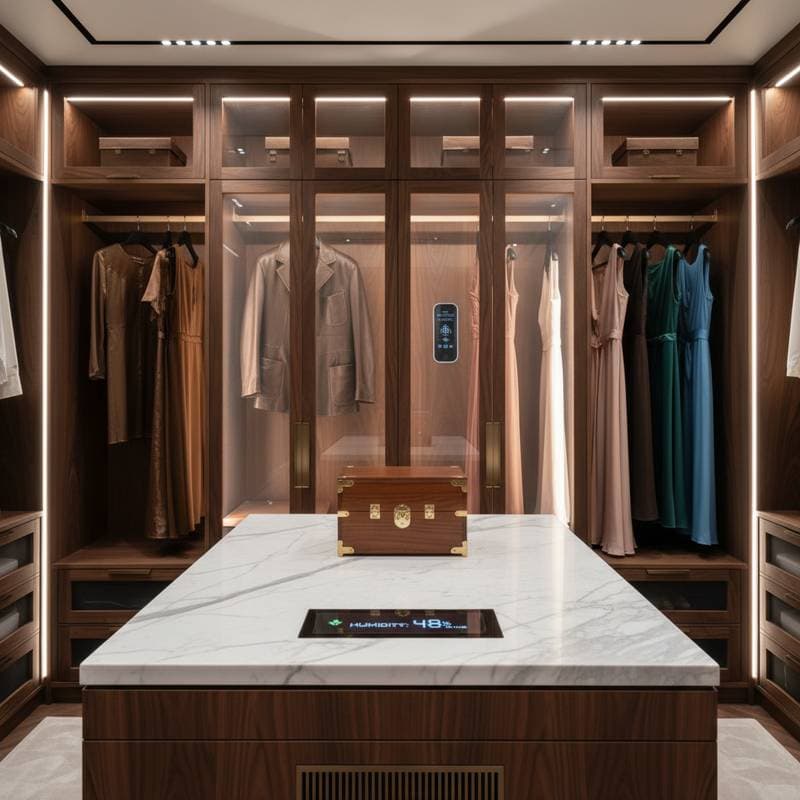
Humidity Control Shields Luxury Items in Smart Closets
A perfectly tailored suit, a silk scarf passed down from family, or a pair of Italian leather shoes deserves more than a crowded corner of a standard closet. Luxury pieces, whether heirlooms or investments, require careful preservation to maintain their beauty and value. Yet even in pristine homes, one invisible culprit often causes irreversible damage. Humidity quietly warps leather, dulls metal finishes, and encourages mold growth on delicate fabrics. Smart closets with humidity control systems change that narrative, turning storage into true care.
Why Humidity Control Matters
Humidity affects more than comfort levels. It directly influences the lifespan of textiles, leather, and wood. When air grows too moist, organic materials absorb water vapor, which expands and weakens fibers. When conditions turn too dry, those same materials shrink, crack, or lose suppleness. The ideal range for most luxury items lies between 45 and 55 percent relative humidity. This narrow window preserves elasticity in leather, prevents mildew on cotton or wool, and keeps metal hardware from oxidizing.
Homeowners frequently invest in air conditioning or dehumidifiers for overall comfort, but closets pose a unique challenge. These spaces remain small, enclosed, and susceptible to fluctuations from seasonal shifts or proximity to exterior walls. A well-designed humidity control system stabilizes this microclimate. It creates consistent conditions that extend the life of cherished possessions.
How Smart Closets Work
Smart closets integrate technology into traditional storage design. At the core, sensors monitor temperature and humidity in real time. Some models connect to a central home automation hub, while others operate independently with built-in displays. When readings drift outside the target range, the system activates a humidifier or dehumidifier. It adjusts airflow until balance returns.
Many systems incorporate activated carbon filters to neutralize odors and HEPA filters to reduce dust. LED lighting, often set to a warm white around 2700 Kelvin, minimizes UV exposure that could fade fabrics. High-end versions may include motion-activated lighting and smart locks for added security.
For smaller budgets, modular dehumidifiers and smart hygrometers provide comparable benefits. Place a compact unit, such as the Eva-Dry E-333 or Midea Cube, discreetly on a shelf. It maintains stable conditions without requiring major renovations. Regular monitoring remains essential, along with adherence to the target humidity range.
Designing for Protection and Beauty
A smart closet must feel like a sanctuary, not a science lab. Technology supports the design without dominating it. Designers blend function and luxury by concealing vents, integrating sensors into shelving, and selecting materials that perform well under controlled humidity while looking elegant.
White oak shelving, sealed with a matte polyurethane finish, resists moisture absorption and retains warmth. Brass hanging rods with a brushed finish age gracefully under managed humidity. Drawer linings of cork or linen naturally regulate minor fluctuations, complementing the primary system.
Lighting plays a crucial role as well. Install LED strips along the upper edges of shelves to illuminate garments evenly without generating excess heat. A color temperature around 3000 Kelvin enhances fabric richness while remaining gentle on surfaces. Paired with humidity control, this setup fosters a calm, gallery-like environment where luxury pieces thrive.
Real-World Example: A Compact Walk-In That Protects an Investment
At a glance:
- Who lives here: A fashion collector and stylist
- Location: Coastal apartment
- Square footage: 60 square feet (about 5.6 square meters)
- Design approach: Homeowner-led with consultation from a local cabinetmaker
- Project timeline: Two months
- Approximate budget range: Mid to high four figures
Before: The closet featured typical reach-in design with wire shelving and poor lighting. Humidity from the adjacent bathroom caused leather handbags to lose shape. Silk scarves developed faint musty odors. The owner noted, “It broke my heart to see favorite pieces deteriorate even though I was being careful. I realized the air itself was the problem.”
After: Workers expanded the space slightly and enclosed it fully with a solid-core door and weatherstripping. This created a sealed environment. A compact humidity control system from Meaco installed in the upper cabinet connected to a smart sensor near the floor for accurate readings. Temperature now holds around 70 degrees Fahrenheit, with humidity steady near 50 percent. Custom cabinetry in maple veneer conceals the system components, preserving a clean and calm aesthetic.
Design Details
- Finishes and fixtures: Matte maple cabinetry, brushed brass rods from Rejuvenation, recessed LED strips from Philips Hue
- Organization features: Adjustable shelving for handbags, pull-out trays for jewelry, and a felt-lined drawer for watches
- Budget-friendly alternatives: Portable dehumidifiers and a smart hygrometer achieve similar stability in smaller or rental spaces
- Small details: A louvered vent at the base of the door maintains subtle airflow without visible hardware
The homeowner observed immediate improvements. “The leather on my vintage bags feels supple again, and I no longer worry when the weather changes,” she said. She checks humidity through an app once a week, allowing the system to manage the rest.
Expanding the Concept Beyond Luxury Homes
Climate-controlled closets grow more accessible each year. Compact plug-in systems and smart sensors appear in mainstream retailers. Renters and homeowners with modest spaces can protect valued items this way. Even a single cabinet benefits from humidity management if it stores heirlooms, documents, or fine fabrics.
In apartments, portable units with water reservoirs prove effective. They require periodic emptying but demand no permanent installation. Larger homes benefit from integrated systems routed through HVAC ducts. These serve multiple closets, ensuring consistent humidity across wardrobes, linen storage, and accessory rooms.
Match the approach to the scale of the collection and available space. Begin with a single monitored cabinet. Expand as needs evolve. Good design adapts to changing lifestyles.
Balancing Technology with Sustainability
Smart systems depend on electricity, yet they promote sustainable practices. Preserving garments, accessories, and furniture extends their use and reduces waste. Quality pieces last longer when stored properly, justifying the initial investment.
Select systems with energy-efficient ratings and auto-shutoff features. Clean filters regularly to sustain performance. Pair humidity control with natural ventilation or fans to lower energy consumption. Simple actions, such as opening closet doors periodically to equalize airflow, also contribute to balance.
Adapting to Your Space
Every home contains microclimates. Basements, attics, and rooms near exterior walls often vary in temperature and humidity from main living areas. Measure these differences with a digital hygrometer over several days before installing a system. The data informs placement and scale.
In humid coastal areas, emphasize dehumidification and sealed cabinetry. Dry climates may call for a small ultrasonic humidifier. Stability matters more than perfection. Most luxury materials handle minor fluctuations if they occur gradually.
Some homeowners incorporate humidity control into multifunctional furniture. A wardrobe with built-in sensors or a display cabinet with a mini dehumidifier protects items discreetly. These solutions suit renters unable to alter existing closets.
Living with the Changes
Once installed, a climate-controlled closet operates effortlessly. Rotate items seasonally no longer. Unpredictable weather ceases to cause concern. Clothes stay fresh, leather remains flexible, and accessories retain their luster. The difference proves subtle yet profoundly satisfying. Prevention replaces reaction to damage.
Humidity control offers quiet reliability. It elevates closets from mere storage to dynamic systems that nurture valued possessions. Caring for these items reflects a deeper commitment to the spaces and stories they inhabit.