
Why 3D Scanning Outperforms Tape Measures in Design Precision
Discover 3D Scanning's Edge Over Tape Measures in Design
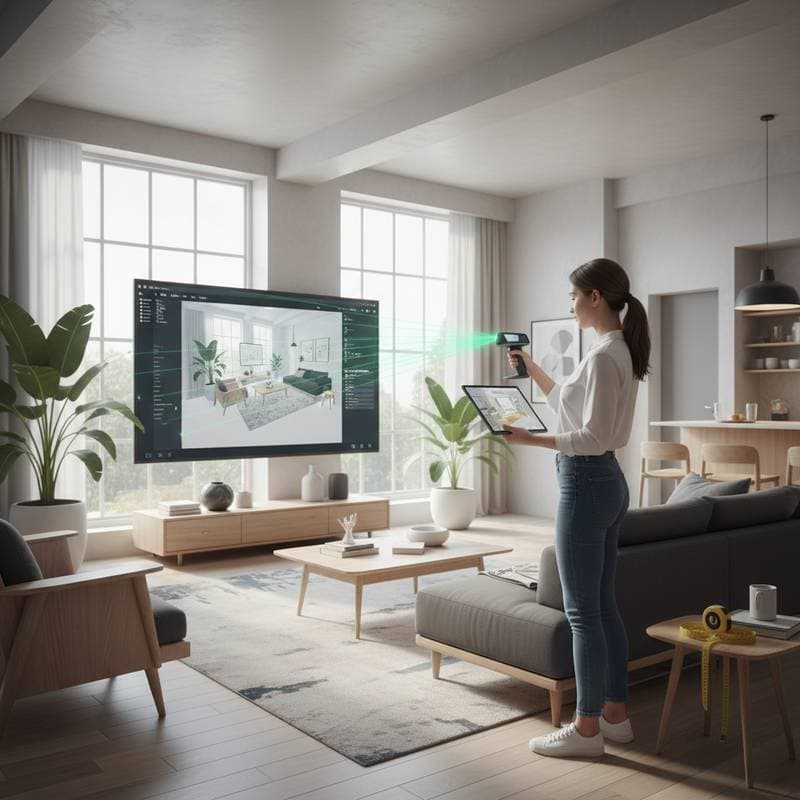
Every design project starts with measurements. Whether planning a kitchen renovation or mapping furniture placement in a studio apartment, accuracy proves essential. For decades, the tape measure dominated this process, yet technology now offers a faster, more precise alternative: 3D scanning. Through LiDAR and related tools, designers, builders, and renters generate detailed digital models that transform physical spaces into accurate, editable blueprints.
The Importance of Measurement Accuracy
A discrepancy of one inch can misalign cabinetry or make a sofa appear oversized. Tape measures depend on human steadiness and consistent angles, challenges in irregular or confined areas. Corners often curve subtly, walls lean, and older structures seldom form perfect right angles. Traditional approaches frequently overlook these nuances. In contrast, a 3D scanner captures every contour and surface with millimeter-level precision. This accuracy conserves time, materials, and effort.
Understanding 3D Scanning Technology
LiDAR stands for light detection and ranging. The system employs laser light to gauge distances. It emits rapid pulses that reflect off nearby surfaces, forming a dense point cloud that depicts the room's geometry. Software processes this data into a 3D model within minutes. Users navigate the model virtually, measure walls or windows, and identify issues prior to construction. Many smartphones integrate LiDAR sensors, extending this capability beyond professional use.
Comparing Tape Measures and 3D Scanners
Speed
Manual measurement of a room requires multiple passes for verification. A 3D scan completes the task in under two minutes.
Detail
A tape measure captures one line at a time. A scanner records thousands of points across all directions, including ceiling heights, window recesses, and outlet locations.
Collaboration
Sharing a scanned model ensures all team members access identical data. Manual notes often introduce inconsistencies.
Cost
Scanners once carried high costs, but portable LiDAR devices and apps now provide accessibility. For small design studios or dedicated DIY homeowners, the initial investment yields returns through minimized errors and accelerated planning.
Applications in Design Projects
Designers apply scans to evaluate furniture layouts, lighting positions, and cabinetry integration before material procurement. In a compact apartment renovation, one designer scanned the space to customize built-in shelving that conformed to existing walls. The digital model exposed a slight slope, which manual measurement would have missed, potentially causing gaps. Virtual adjustments ensured a seamless final installation without revisions.
Renters benefit by scanning new spaces to assess furniture compatibility. Import the model into design software, place items like sofas or beds at actual scale, and eliminate uncertainty. Contractors document projects with scans at each construction phase, tracking progress accurately.
Steps to Integrate 3D Scanning
To begin with 3D scanning, select a smartphone with LiDAR or an affordable handheld device. Move steadily through the room as the tool maps surfaces. After scanning, examine the digital model and verify critical dimensions using a tape measure. This hybrid method builds trust in the technology. Gradually shift reliance to digital outputs as familiarity grows.
Enhancing Design Outcomes with Precise Data
Adopting scanning technology complements craftsmanship and intuition. It shifts focus from error correction to creative exploration. Precise measurements reduce unexpected issues, ensure optimal fits, and streamline workflows. For custom kitchens or accent walls, a dependable digital model clarifies opportunities and supports informed decisions.