
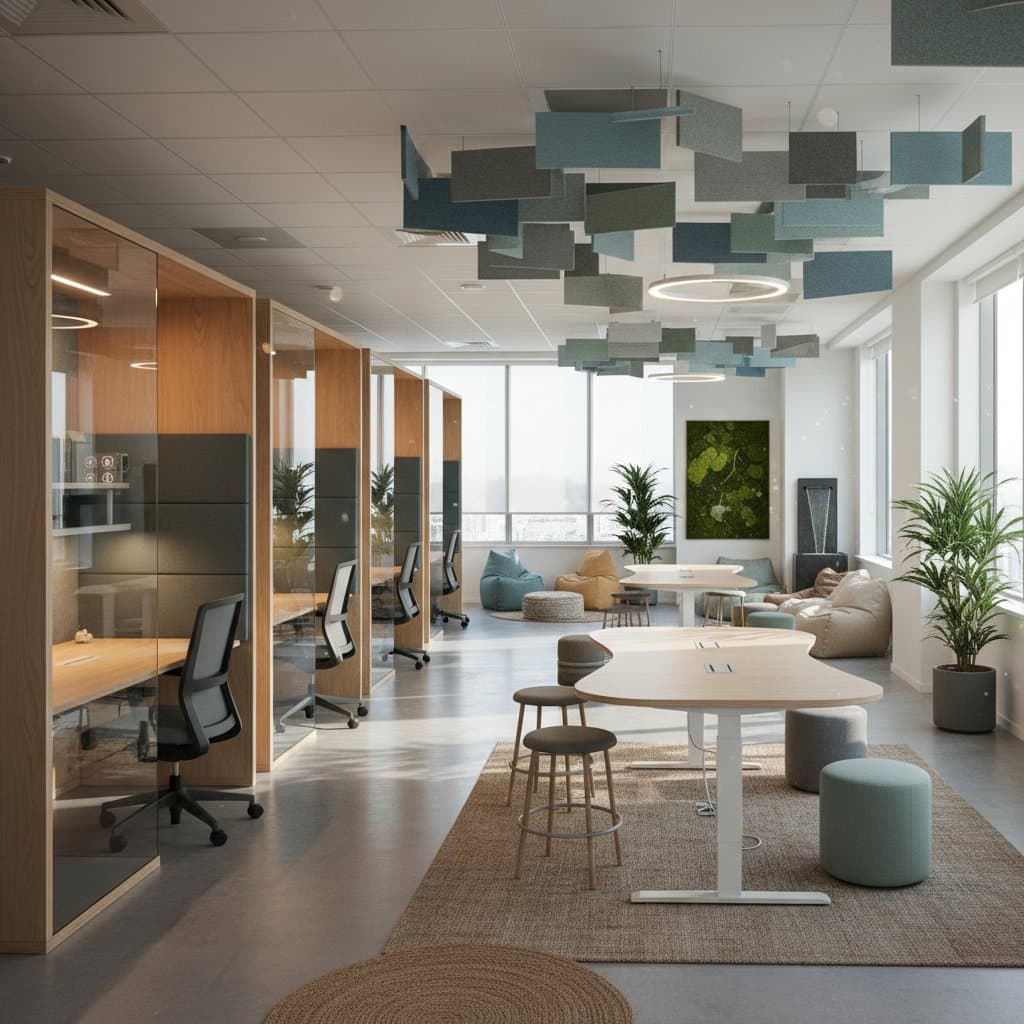
Neuroinclusive Design: Revolutionizing Workspaces
Workplaces evolve beyond open layouts and ergonomic furniture. The most significant advancement involves neuroinclusive design, which addresses the spectrum of human sensory and cognitive variations. This method acknowledges differences in processing light, sound, and social cues, fostering environments where individuals perform at their peak.
Neuroinclusive design responds to daily experiences in work settings. For those overwhelmed by noise or sensitive to glare, these spaces prioritize responsiveness and empathy.
Why Neuroinclusion Matters
Conventional offices emphasized sameness. Uniform desks under stark fluorescents, rigid seating, and persistent hum created an illusion of efficiency. Yet such setups often led to exhaustion, tension, or overload for many.
Neuroinclusive design rethinks this model by honoring neurological diversity. Some individuals concentrate in silence, others amid gentle activity. Some require steady illumination, while others benefit from adjustable levels. Tailoring spaces to these variations minimizes strain and enhances concentration, innovation, and health across the board.
The Core Principles of Neuroinclusive Workspaces
Neuroinclusive design integrates accessibility, adaptability, and sensory consideration. These environments not only tolerate differences but actively promote them.
1. Sensory Zoning
Inclusive offices feature distinct zones over uniform arrangements. Dedicated quiet enclaves support intense focus, collaborative hubs facilitate teamwork, and communal areas encourage exchange. Employees select spaces matching their current demands and vitality. As designer Hannah Martinez notes, "We aim to harmonize stimulation and serenity, providing choices instead of imposing uniformity."
2. Lighting Variety
Intense overhead lights often provoke discomfort like migraines or unease. Neuroinclusive setups employ layered illumination: natural sources, tunable desk lights, and diffused overheads. Dimmable LED systems or warm-toned lamps enable user adjustments. One implementation used app-controlled Philips Hue lights, allowing seamless customization of intensity and hue without extensive renovations.
3. Acoustic Control
Noise influences engagement or interruption. Recycled felt panels, suspended baffles, and absorbent rugs dampen reverberations and stray sounds. In communal areas, noise-canceling headsets or enclosed pods offer refuge. Practical additions, such as chair glides or textile wall treatments, mitigate clatter affordably.
4. Material and Color Choices
Surfaces and hues shape emotional states and attention. Sleek metals or glass invigorate, whereas soft woods and subdued finishes soothe. Calming palettes of sage, azure, and earth tones sustain alertness, with subtle contrasts aiding visibility. Professionals frequently select Benjamin Moore’s “Pale Oak” or Sherwin-Williams “Sea Salt” for serene, non-distracting walls.
5. Movement and Choice
These spaces promote mobility to manage sensory load. Height-adjustable stations, varied seating options, and circulation paths support posture shifts. Designated spots for standing discussions or swaying loungers allow dynamic positioning, empowering users to adapt throughout the workday.
Real-World Application: A Case Study
At a Glance
- Organization: Digital design agency employing 30 staff
- Setting: Converted urban loft serving as hybrid office
- Area: 3,200 square feet (297 square meters)
- Methodology: Joint effort with interior specialist and team input
- Funding: Moderate, emphasizing repurposing and incremental enhancements
Before the Redesign:
The initial layout dazzled with exposed brick and high ceilings, yet acoustics amplified every conversation, complicating calls. Extended tables offered scant seclusion, and the lone conference area stored supplies. Staff experienced midday drain and scattered attention. The creative director recalled, “The aesthetic appealed, but it hindered peak performance.”
After the Redesign:
The process started with sensory audits, pinpointing issues like reflections, clamor, and confinement. The layout segmented into perimeter quiet zones, central teamwork tables, and a verdant window lounge.
Illumination shifted to multifaceted systems: diffused track lights for broad coverage and personal RANARP lamps from IKEA at workstations. FeltRight panels and cork underfoot curbed echoes. Existing pieces received fresh coats of tranquil green-gray hues.
Control emerged as the key transformation. Team members now dictate their daily setups, transitioning from solitary work to group ideation. Outcomes include heightened output and attentiveness, grounded in sensory equity.
Design Details
- Surfaces and Hardware: FeltRight panels for sound, cork for floors, glare-free matte coatings
- Storage Solutions: Mobile trolleys, integrated shelves, marked compartments for communal items
- Illumination Options: Adjustable LED tracks, IKEA RANARP task lights
- Cost-Effective Choices: Adhesive sound barriers for enclosures, refurbished secondhand items with eco-friendly paints
- Subtle Enhancements: Light-filtering films, foliage for eye relief, multifunctional drapes for acoustics
Implementing Neuroinclusive Design in Your Space
Full overhauls prove unnecessary for neuroinclusion. Initiate with targeted sensory adjustments.
1. Assess Current Conditions
Poll colleagues or evaluate personal responses to elements like audio, brightness, tactility, and scents. Pinpointing irritants guides targeted fixes.
2. Establish Zones Using Existing Elements
Partition with partitions, dividers, or drapery to carve serene niches. Rearranging furnishings alone can isolate bustling from thoughtful areas.
3. Introduce User Autonomy
Permit personal additions such as adjustable lights, audio blockers, or tactile aids like weighted blankets. Autonomy in sensory management builds confidence.
4. Pursue Inexpensive Refinements
Replace harsh bulbs with dimmable alternatives. Incorporate foliage for aesthetic equilibrium. Deploy mats to muffle footsteps and enrich feel.
5. Promote Mobility and Pauses
Outline paths for strolls or reserve alcoves for rejuvenation. Brief shifts in activity alleviate excess input and sharpen cognition.
Sustaining Neuroinclusive Environments
Effective neuroinclusive spaces adapt continuously. Solicit ongoing input to refine as preferences evolve. Adaptability forms the foundation of success.
When users shape their surroundings, they gain assurance and poise. This fosters community over contention.
Organizations reap tangible gains: clearer cognition drives efficiency, while personalized respect aids retention. Culture transforms, embedding equity in tangible form.
From large firms to solo setups, neuroinclusive principles blend compassion with utility. Workplaces attuned to sensory realities nurture optimal cognition, serenity, and capability—one deliberate adaptation at a time.