
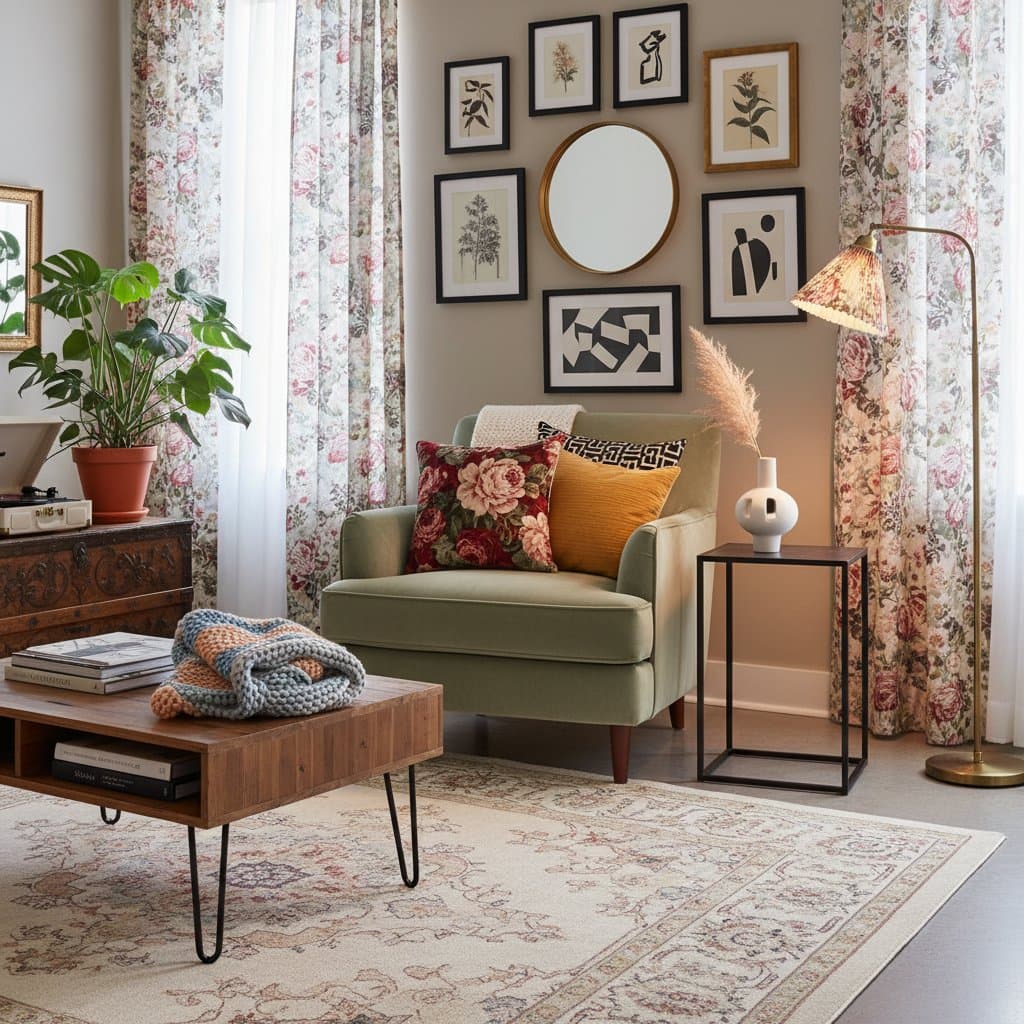
Gen Z Revitalizes Grandmillennial Style with Fresh Energy
Grandmillennial style traditionally appealed to enthusiasts of chintz fabrics, needlepoint cushions, and inherited china sets. Today, Gen Z designers infuse this aesthetic with innovative touches. They layer floral wallpaper alongside matte black fixtures and fluid modular seating, yielding spaces that blend playfulness, sentiment, and sleek modernity.
Reasons This Aesthetic Resonates with Gen Z
Young renters and new homeowners often experienced minimalist environments dominated by neutral tones during their formative years. Such designs offered serenity through clean lines and sparse furnishings, yet many now seek deeper warmth and tactile depth. Gen Z adapts grandmillennial elements to fulfill this desire, combining cozy details like ruffled lamp covers with precise metal accents or vintage pillows on tailored boucle seating.
Designer Elise Romero notes that her younger clients desire spaces that appear gathered over time rather than meticulously arranged. This preference highlights a move toward designs rich in personal narrative over flawless uniformity. Through these choices, Gen Z fosters environments that reflect heritage, recollection, and self-expression.
Essential Components of the Aesthetic
Grandmillennial design centers on bold patterns, skilled workmanship, and multidimensional layering. Gen Z refines these foundations with refined contours and striking juxtapositions.
Core features encompass:
- Pattern integration: Traditional florals paired with bold stripes or geometric checks.
- Timeless forms: Wingback armchairs, slatted bedframes, and gathered lamp shades.
- Contemporary highlights: Understated side tables, geometric vases, and minimalist prints.
- Vibrant yet subdued colors: Soft greens, muted pinks, warm yellows, and deep blues against pale backdrops.
- Varied textures: Plush velvets, crisp linens, rich woods, and woven fibers offset by glossy metals or clear plastics.
Gen Z achieves harmony by tempering nostalgic excess with streamlined restraint, avoiding direct replication of past interiors.
Transforming Thrifted Finds into Focal Points
Sourcing from secondhand markets forms the backbone of Gen Z decoration practices. Unlike past trends that favored cohesive, store-bought ensembles, this approach embraces discovery as both economical and inventive.
Consider a rescued oak cabinet acquired at minimal cost. Apply a vibrant interior paint, add adhesive-backed lining to compartments, and repurpose it for kitchenware alongside creative tools. Such modifications embody the style's appeal: individualized, eco-conscious, and discovery-driven over mass-produced alternatives.
Designer Julia Tran advocates for deliberate accumulation in client projects. She recommends anchoring with a single vintage highlight, such as an embroidered settee or ornate frame, then integrating current basics. Tran advises allowing legacy items space to stand out, noting that crisp neutral surroundings enhance traditional weaves through thoughtful interplay.
Practical Adaptations for Everyday Spaces
Classic grandmillennial setups relied on substantial curtains and rigid arrangements, but Gen Z prioritizes versatility for compact or leased dwellings.
Adaptable modifications feature:
- Adhesive-backed wall coverings or stickers in place of permanent applications.
- Durable, low-pile area rugs suited for high-traffic zones.
- Attaching heritage shades to efficient LED bases.
- Merging affordable modular units with salvaged decor.
- Displaying family textiles or stitched works in frames on walls rather than in storage.
These shifts render the style accessible across budgets. A recovered lounge chair refreshed with patterned upholstery serves as a room's centerpiece comparably to high-end imports.
The Comfort of Sentimental Design
This aesthetic's allure stems from its inherent warmth and relatability. Following eras of glossy finishes and limited palettes, individuals now gravitate toward gentle forms and historical echoes. An arranged floral saucer on accessible shelving evokes unhurried routines, while a woven blanket encourages lingering.
Psychologist and interiors expert Maya Greene observes that evocative surroundings provide stability via recognition. She explains that evoking prior eras helps navigate modern flux, particularly for those shaped by rapid shifts. Thus, elements like a sheltered seating area with gathered lighting and botanical drapes extend beyond visuals to support well-being through soothing familiarity.
Strategies for Harmonizing Heritage and Innovation
Maintaining vitality requires intentional opposition to prevent overcrowding. Gen Z draws from sparse design tenets to afford vintage selections adequate prominence.
Effective harmonization techniques:
- Restrict dominant designs to three per area.
- Counter elaborate seating with unadorned storage.
- Maintain subtle wall shades to elevate inherited shades.
- Employ duplicates, such as paired fixtures, for cohesive flow.
- Incorporate current illumination for defined edges.
A heritage-patterned lounge gains freshness beside narrow metallic stands. Similarly, a classic floor covering appears updated against a streamlined, low-slung seat.
Embracing Eco-Conscious Practices
The inherent reuse in grandmillennial approaches aligns with environmental priorities. Opting for pre-owned goods, restoring worn items, and valuing durable creation challenge transient furnishing cycles. Gen Z regards these habits as ethical commitments alongside visual preferences.
Vintage outlets, digital platforms, and auctions offer abundant selections. Restoration services and craft specialists revive dated furnishings. Simple actions, such as selecting enduring woods or natural fibers over fleeting options, minimize environmental impact while cultivating evolving interiors.
Incorporating the Style into Your Home
To experiment without overwhelm, target a single zone like a sleeping alcove or foyer threshold. Allow this focal point to influence broader arrangements gradually.
Guided implementation steps:
- Select a meaningful anchor. Begin with a cherished vessel, snapshot enclosure, or stitched accent as the core influence.
- Define hues. Extract tones from the anchor and echo them in linens or accents.
- Build dimension. Alternate yielding materials with firm ones, such as a cushioned pad near a braided seat.
- Incorporate a neutral base. A plain timber stool or linear pendant ensures purpose.
- Refine selectively. Preserve open areas to highlight chosen details.
This methodical pace supports organic development, mirroring personal growth.
Perspectives from Design Experts
Industry leaders adapt these concepts for modern contexts.
- Elise Romero Interiors integrates archival patterns from historic collections with molded translucent fixtures.
- Studio Tran merges recovered wooden workstations with refined natural-fiber seating.
- Home stylist Ben Ortiz develops lease-safe enhancements via temporary panels and market-sourced legacy graphics.
Their common approach emphasizes retaining resonant elements while discarding obligatory ones.
Realizing Deeper Value in Design Choices
Gen Z's reinterpretation of grandmillennial style transcends surface appeal through genuine sentiment. It links tech-savvy youth with tactile legacies, reimagining affluence as intimate ease over expense.
Environments woven with narratives surpass those staged for optics in depth. An eclectic dish assortment, though less polished than stone surfaces, conveys profound character. This cohort recognizes allure in asymmetry and uniqueness, fostering homes that nurture lasting fulfillment.