
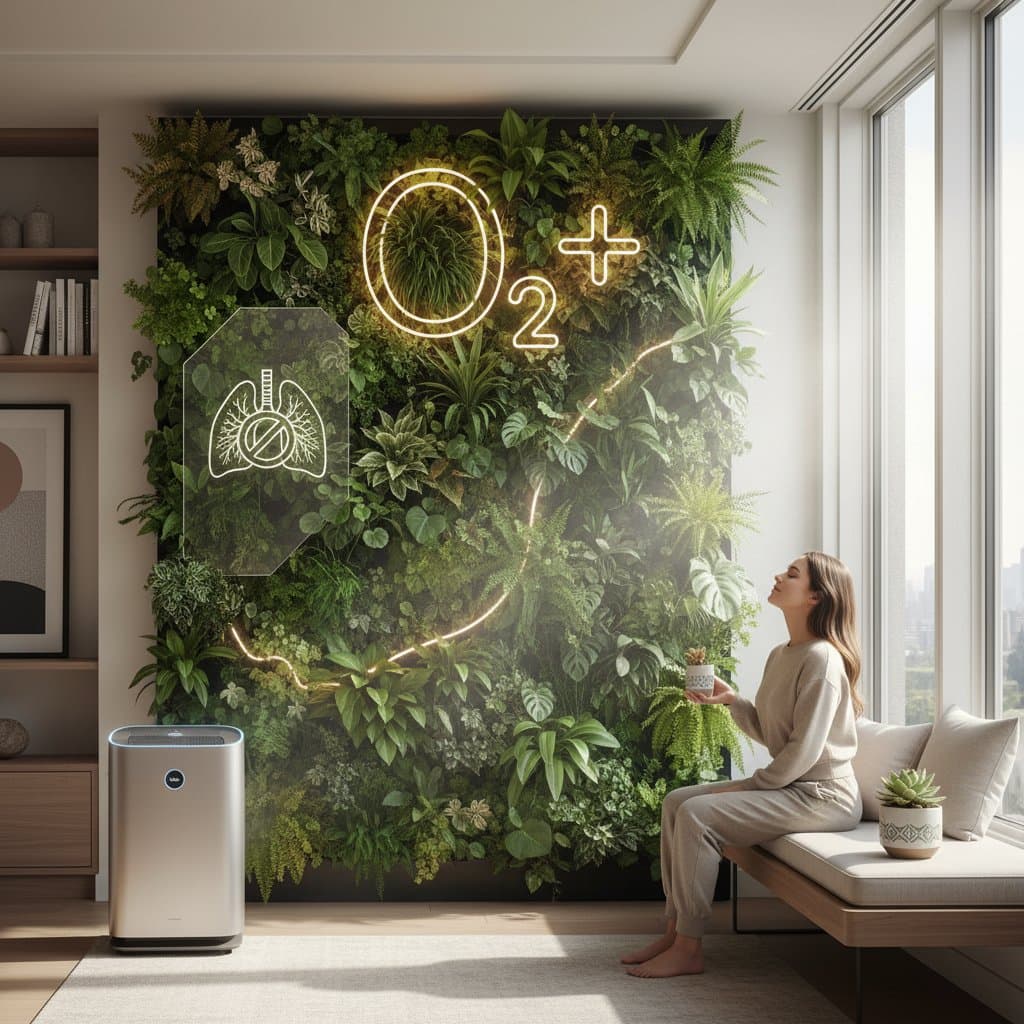
Why Plant Walls Outshine Traditional Air Purifiers
Every home deserves air that feels alive, not just clean. While sleek air purifiers have become staples in living rooms and offices, a growing number of homeowners turn to plant wall systems to refresh their air and their mood. These lush, vertical gardens do more than filter pollutants. They anchor spaces, soften acoustics, and invite a sense of calm that no machine can replicate.
If you have ever wondered whether those green installations you see in design magazines actually work, the answer is yes. The science, along with daily experience, shows why botanical filtration often outperforms mechanical purifiers in both function and feeling.
The Challenge with Traditional Purifiers
Air purifiers, even high-end models, have limits. They rely on filters, usually HEPA or activated carbon, to trap particles and odors. They perform this task effectively, but only within a finite range. As soon as you move beyond that radius, the benefit drops sharply.
Most units also need regular filter replacements, which add cost and waste over time. Purifiers treat air as a technical problem rather than a living system. They remove harmful elements, but they do not improve humidity balance or oxygen content. The result is clean air that can still feel stale. In a home environment, that sterility can make a space feel less welcoming, especially when paired with hard surfaces or artificial lighting.
Enter the Living Wall
A plant wall, sometimes called a living wall system, integrates greenery vertically across a wall or partition. The plants, soil, and irrigation work together as an active filtration system. Through natural processes like photosynthesis and microbial breakdown, these systems absorb volatile organic compounds, reduce carbon dioxide, and release oxygen.
Unlike a purifier that sits in a corner humming quietly, a plant wall becomes part of the architecture. It interacts with light, moisture, and daily activity. The result is a self-sustaining rhythm of purification and restoration that feels organic rather than mechanical.
How Botanical Filtration Works
The science is elegantly simple. Each plant leaf acts as a biological filter, drawing in airborne toxins and converting them into harmless compounds. Meanwhile, the root zone, supported by a specialized substrate or hydroponic base, hosts beneficial microbes that break down pollutants further.
Commonly used species like philodendrons, pothos, ferns, and peace lilies excel at removing formaldehyde, benzene, and trichloroethylene, all common in household materials. When arranged vertically, their combined surface area multiplies the filtering power.
A modest wall of 20 square feet can host over 100 plants, creating an active green surface that exchanges air continuously. The effect is measurable: steadier humidity, lower particulate levels, and a subtle but noticeable freshness that feels different from mechanically filtered air. To maximize this, position the wall in a high-traffic area where air circulates naturally, such as near doorways or central rooms.
Beyond Air Quality: The Emotional Benefit
Designers often say that a plant wall changes how a space feels before it changes how it functions. There is truth in that. The visual presence of living texture immediately softens hard interiors.
In small apartments or windowless offices, greenery reconnects occupants to natural cycles of growth and renewal. Psychological studies link indoor plants to lower stress, improved focus, and faster recovery from fatigue. That matters in real life.
Whether you balance remote work, parenting, or creative projects, having a living wall nearby creates a sense of calm continuity. It acts almost like a slow-moving clock, reminding you to breathe and pause. Start small by adding a few trailing plants to test the impact on your daily mood.
Practical Considerations and Installation
Many people assume plant walls require professional maintenance or expensive systems, but options now exist for every budget. Modular wall panels, like those from WallyGro or LiveWall, can mount on simple tracks and connect to a drip irrigation line or manual watering setup.
For renters or smaller homes, felt pocket systems are lightweight and easy to install without permanent alterations. Each pocket can hold a 4 to 6 inch pot, allowing you to swap plants easily as they grow.
If humidity control is a concern, a small reservoir at the base of the wall can collect excess water, reducing mess and maintaining balance. A good rule is to allow at least six inches between the wall and furniture for airflow. Begin installation by measuring your space and selecting plants suited to the available light.
Costs and Maintenance
Initial installation ranges widely depending on scale. A DIY pocket wall might cost under a few hundred dollars, while custom hydroponic panels with automated irrigation can reach several thousand.
Maintenance is straightforward once established. Most walls need pruning and refilling every few months, plus a nutrient boost during active growth periods. LED grow lights can be added where natural light is limited.
These lights should run at least 12 inches from the foliage to prevent leaf burn. Compared with traditional purifiers that require regular filter replacements, electricity, and occasional repairs, a living wall's operating costs are often lower over time. Track your maintenance schedule with a simple calendar to keep the system thriving.
Real Homes, Real Results
In a compact city apartment, designer Leah Porter replaced a noisy purifier with a three-column plant wall behind her dining table. The wall covers 18 square feet and holds 72 plants, including pothos, spider plants, and ferns. Leah noted that within weeks, the air felt lighter and the room smelled fresher. Her humidity monitor showed a consistent 45 percent, ideal for both humans and houseplants.
In a suburban family home, the homeowners installed a larger wall system in the entryway. They used modular troughs with built-in irrigation and sensors. The plants include ferns, orchids, and philodendrons. The family noticed fewer dust particles on surfaces, and their children's allergies decreased noticeably, according to their physician.
Design Integration
Plant walls adapt easily to different aesthetics. In minimalist interiors, species with uniform leaves create a calm, structured look. For bohemian or eclectic spaces, mixing trailing vines with textured foliage adds movement and visual depth.
Material choices matter too. A black metal frame emphasizes contrast, while a light wood base adds warmth. In bathrooms or kitchens, waterproof back panels protect the wall, and moisture-loving plants like ferns thrive naturally.
Lighting is key. If your wall receives less than four hours of daylight, supplement with full-spectrum LEDs. A narrow beam aimed at the center of the wall can enhance color and encourage growth without overwhelming the room. Experiment with plant arrangements to match your style, starting with a sketch on paper.
Sustainability and Long-Term Value
Plant walls align naturally with sustainable living principles. They improve insulation, reduce noise, and support biodiversity even in urban environments. Choosing durable components like stainless hardware and recycled felt minimizes waste.
Traditional purifiers, by contrast, rely on disposable filters and energy-intensive fans. Their lifespan is finite, while a plant wall continues to evolve. Over time, plants mature, creating a richer texture and stronger filtration capacity.
If a plant dies, it can be replaced within minutes, keeping the system regenerative instead of extractive. That adaptability makes plant walls a long-term investment in both air quality and emotional well-being. Consider the wall's role in your home's overall eco-footprint when planning.
Integrating Greenery into Daily Life
The best part of a plant wall is how it transforms daily routines. Watering becomes a mindful ritual rather than a chore. Watching new leaves unfurl connects you to the quiet pace of growth.
In my own home, a modest vertical garden near the kitchen keeps herbs within reach and fills the space with gentle fragrance. It has replaced the mechanical hum of a purifier with the soft rustle of leaves.
Whether you live in a small apartment or a spacious house, integrating living greenery can make your air cleaner, your space calmer, and your days a bit more grounded. A machine can purify air, but a plant wall invites you to breathe with it.