
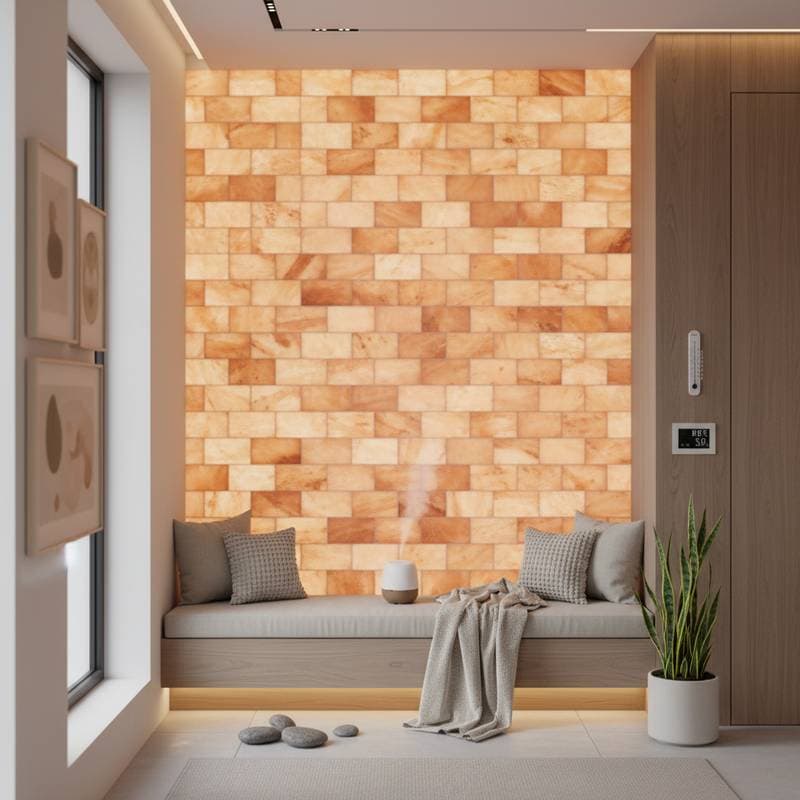
Salt Therapy Walls: Revolutionize Your Indoor Wellness
Imagine a dedicated area in your home that delivers the purity of mountain air. A salt therapy wall achieves this by converting a standard room into a tranquil sanctuary, where respiration improves and tension eases.
Indoor environments frequently harbor stagnant air that aggravates respiratory or dermal sensitivities.
This guide equips you with the knowledge to plan, install, and maintain a salt therapy wall in your residence, emphasizing safety and cost-effectiveness.
Note that salt therapy serves as a complementary practice, not a substitute for medical care. Consult a healthcare professional for any respiratory or skin concerns.
Essential Background
A salt therapy wall, also known as a halotherapy wall, disperses microscopic salt particles to replicate the atmosphere of subterranean salt caverns. These particles assist in clearing respiratory passages and fostering a sense of calm. Successful implementation hinges on precise installation and humidity regulation, as excess moisture erodes salt structures. Maintain humidity levels under 60 percent to sustain efficacy.
Required Tools and Materials
Gather these items for a reliable setup:
- Food-grade bricks or tiles from Himalayan or Dead Sea salt sources
- Adhesive resistant to corrosion, formulated for salt or natural stone applications
- Digital hygrometer to track humidity fluctuations
- Dehumidifier unit or exhaust fan for moisture control
- Soft-bristled brush and lint-free microfiber cloths for maintenance
- Low-heat LED lighting strips (optional, to accentuate visual warmth)
- Disposable masks and protective gloves during handling
In cases where bricks prove unavailable, framed panels filled with granular salt offer an alternative. Ensure seals remain intact to prevent moisture ingress.
Installation Guide
Follow these steps to construct your salt therapy wall methodically.
1. Select an Appropriate Location
Identify a serene, enclosed area with low moisture exposure, such as a guest room or study. Steer clear of high-humidity zones like restrooms or lower levels, where condensation accelerates salt deterioration.
2. Measure and Design the Layout
Determine the desired dimensions for optimal impact. Homeowners often opt for a single feature wall to balance aesthetics and functionality. Draft a precise diagram, accounting for fixtures like electrical outlets or air ducts.
3. Prepare the Base Surface
Thoroughly cleanse and desiccate the wall. If prior humidity exposure exists, apply a specialized primer to inhibit future discoloration or material breakdown.
4. Affix the Salt Elements
Distribute the corrosion-resistant adhesive uniformly on each brick's back. Position them securely, progressing upward from the floor to ensure level alignment. Incorporate spacers between pieces for uniform gaps. Allow a minimum of 24 hours for the adhesive to set fully before activating lights or airflow systems.
5. Incorporate Subtle Illumination
For enhanced ambiance, embed LED strips behind semi-transparent salt tiles. Select warm-toned bulbs to highlight the natural rose and golden shades of Himalayan salt, producing a gentle radiance. Refrain from heat-generating options like halogen, which risk fracturing the material.
6. Regulate Environmental Humidity
Position a hygrometer in proximity to monitor conditions. Activate the dehumidifier or fan whenever levels surpass 60 percent. This vigilance prevents salt aggregation or surface condensation.
7. Establish Cleaning Protocols
Every two to four weeks, employ a soft brush to dislodge surface dust. Avoid any liquid contact; a dry microfiber cloth suffices for minor accumulations.
8. Optimize Particle Distribution
To amplify therapeutic benefits, integrate a quiet fan on low setting adjacent to the wall. This promotes even dispersal of salt microparticles while minimizing airborne particulates.
9. Engage with the Space
Position yourself nearby for sessions lasting 20 to 40 minutes, engaging in activities like contemplation or repose. Inhale steadily; anticipate a subtle arid quality in the atmosphere without discomfort.
Best Practices and Precautions
Recommended Actions
- Monitor humidity on a weekly basis using the hygrometer.
- Select adhesives specifically engineered for salt or mineral surfaces.
- Seal all electrical elements and position them above potential moisture sources.
- Introduce mild ventilation to prevent air stagnation.
Actions to Avoid
- Position the installation near water sources, cooking areas, or unsealed openings.
- Apply abrasive cleaners or liquid sprays to the salt facade.
- Obstruct airflow with bulky furnishings that retain dampness.
- Rely on the setup for clinical outcomes absent expert oversight.
Professional Assistance Indicators
Seek expert intervention if moisture signs appear, such as salt dissolution or unstable fixtures, or if lighting exhibits inconsistencies. Engage a qualified electrician for embedded illumination systems. For advanced features like aerosol-dispersing halogenerators, collaborate with a licensed halotherapy specialist to calibrate ventilation precisely.
Investment and Timeline Overview
A compact residential salt wall utilizing premium Himalayan bricks typically ranges from $400 to $1,200. Expansive designs or illuminated variants may escalate to $2,500 or beyond. Professional services incur additional fees for expertise and specialized sealants. DIY projects generally span one to three days, influenced by curing periods and customization.
Primary expenses stem from salt purity, surface area, and illumination selections.
Ongoing Care Schedule
- Remove dust biweekly using a dry microfiber cloth.
- Evaluate humidity weekly, targeting below 60 percent.
- Examine seams quarterly for separation or damage.
- Swap LED bulbs upon dimming, adhering to cool-spectrum types.
- Service fan components every three months by cleaning filters.
Address salt shedding or fading by reducing moisture exposure or reinforcing bonds immediately.
Perspectives from Specialists
Environmental health expert Dr. Maya Green emphasizes air purification dynamics. She states, "Dry salt atmospheres neutralize certain aerial pollutants, yet efficacy demands a pristine, arid setting."
Halotherapy specialist Leo Varga from SaltSpace Studio highlights scalability. He notes that modest configurations generate beneficial microenvironments, promoting measured respiration and mental clarity.
Build Your Wellness Feature
A salt therapy wall merges therapeutic utility with architectural charm. It redefines a home nook as an anchor of tranquility and renewal. Begin with a modest panel to assess compatibility, then scale up while mastering upkeep essentials. Through diligent humidity oversight and routine care, this installation provides enduring access to cavernous peace daily.