
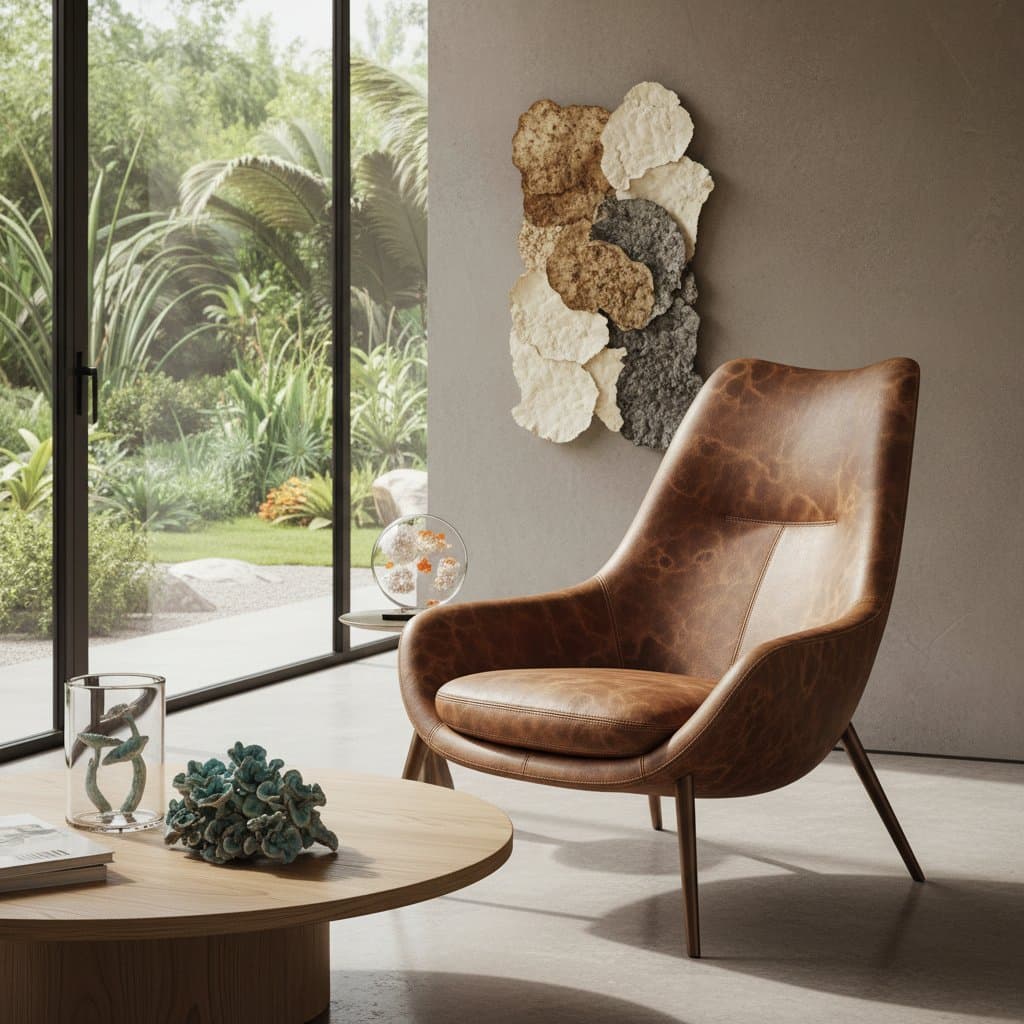
Mycelium Furniture: Leather Without the Livestock
Mushroom Leather: Revolutionizing Vegan Furniture Design
Many individuals seek ethical and sustainable materials for furniture, yet they often encounter compromises. Traditional leather provides a luxurious feel, but it carries significant environmental and animal welfare drawbacks. Synthetic options eliminate animal products, though they depend on plastics that release microfibers and resist biodegradation. Mushroom leather emerges as a solution, cultivated from mycelium, and it reshapes perspectives on upholstery and sustainable design.
This material merges craftsmanship with scientific advancement. It delivers the supple texture of leather, aligns with plant-based ethics, and withstands daily use in furniture. Beyond a temporary fad, mushroom leather redefines seating, resting, and gathering on surfaces that demonstrate regard for humanity and the environment.
Why Furniture Designers Are Paying Attention
Alternatives to vegan leather have appeared for years, primarily based on polyurethane or PVC. These substances provide strength, but they derive from fossil fuels and often possess an artificial touch. Mushroom leather presents a tactile warmth that resembles genuine hide, attracting premium furniture makers and environmentally aware decorators.
Designers highlight several key attributes:
- Texture: The intricate fiber network of mycelium creates a subtle natural grain, appearing organic rather than manufactured.
- Finish: Companies such as Mylo and Reishi employ specialized treatments that replicate the smoothness of calfskin, all while preserving biodegradability.
- Color: The material absorbs dyes effectively. Natural shades like clay, olive, and charcoal accentuate its inherent qualities, whereas bespoke hues in blush or deep navy introduce contemporary elegance.
Mushroom leather grows in sheets of adjustable thickness, adapting to diverse uses. It suits soft coverings for armchairs, rigid elements for ottomans, or even expansive wall panels.
To enhance its appeal, designers experiment with layering techniques. For instance, combining thin mycelium sheets with recycled fabrics creates hybrid upholstery that boosts insulation without added weight. This versatility allows for custom pieces that integrate seamlessly into various interior styles, from minimalist lofts to cozy family rooms.
Design Possibilities in the Home
Consider a mushroom leather sectional sofa featuring matte cognac upholstery that complements a neutral living space. The fabric offers a velvety sensation to the touch, with precise stitching and a robust frame capable of enduring years of relaxation. Alternatively, envision dining chairs encased in mushroom leather tinted sage green, matched with a table crafted from reclaimed oak.
In compact areas, a mycelium-upholstered bench or footstool adds texture without dominating the environment. The material's flexibility and breathability make it ideal for regions with fluctuating temperatures, preventing the cracks that plague animal-derived leathers.
Lighting influences the aesthetic further. Warm LED lights accentuate the fine grain variations, while natural daylight unveils a gentle, organic luster. This interplay results in furniture that conveys vitality and refinement, striking an ideal equilibrium for contemporary residences.
Beyond seating, mushroom leather extends to other home elements. Wall hangings or room dividers crafted from it introduce subtle partitions that diffuse light softly. In bedrooms, headboards upholstered with this material provide a calming backdrop, absorbing sound and maintaining freshness in humid conditions.
Caring for Mushroom Leather
Upkeep proves straightforward for most items. A soft cloth suffices for routine dusting, and a mildly damp sponge handles spot cleaning effectively. Steer clear of abrasive cleaners, given the material's natural absorbency.
Over time, a subtle patina forms, akin to that on conventional leather, which enhances character instead of signaling deterioration. For scuffed spots, apply a small amount of plant-derived wax to revive the shine. The breathable quality prevents the clammy sensation common in synthetic counterparts.
With basic care, mushroom leather endures for extended periods, retaining its pliant feel. Owners report that regular vacuuming with a brush attachment removes dust efficiently, preserving the surface's integrity. In high-traffic areas, protective sprays formulated for natural fibers offer an extra layer of defense against spills.
Integrating Mushroom Leather into Daily Life
The true value of mushroom leather resides in its capacity to influence everyday experiences. It fosters a deliberate, mindful connection to one's living space. Occupying a chair made from this material evokes a link to processes of growth and regeneration.
Satisfaction arises from supporting production methods that prioritize cleanliness and morality. Designers view materials as narrators of tales, and mushroom leather conveys an optimistic narrative. It embodies ingenuity drawn from ecological principles, ease derived from empathy, and allure cultivated rather than harvested.
Sustainability achieves elegance without austerity. Mushroom leather pieces invite touch, adapt to personal tastes, and evolve with the home, creating spaces that nurture well-being and environmental stewardship.