
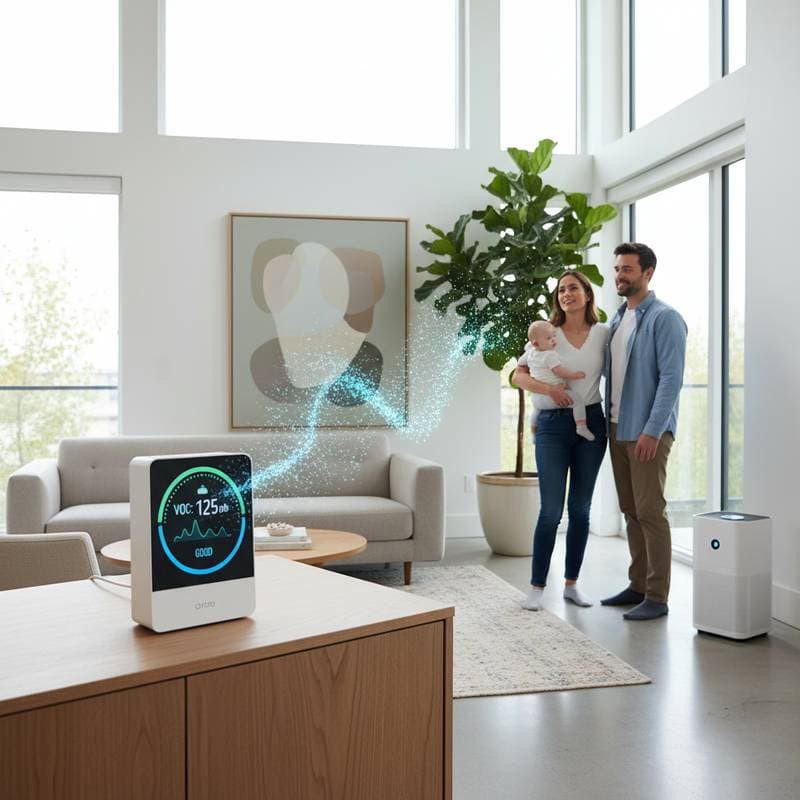
Understanding VOCs and Their Impact on Home Air Quality
Volatile organic compounds, or VOCs, represent gases emitted by common household items such as paints, cleaning agents, furniture, and fuels. These substances often evade detection by odor, yet even modest concentrations irritate eyes, skin, and respiratory systems over time. While standard air purifiers address particles like dust, VOC sensors specifically identify these chemical vapors, enabling precise interventions to enhance indoor environments.
Health effects from prolonged exposure include fatigue, headaches, and worsened conditions for those with respiratory sensitivities. Children and older adults prove particularly vulnerable. Monitoring VOC levels empowers proactive measures, transforming homes into spaces with cleaner, safer air.
How VOC Sensors Function
A VOC sensor typically employs a metal oxide layer that alters electrical resistance upon contact with volatile gases. This change translates into a digital output, often displayed as total VOC (TVOC) levels in parts per billion. Advanced units utilize photoionization, analyzing light interactions with gas molecules to detect a broad spectrum of organic vapors.
TVOC readings aggregate multiple compounds into a single metric, serving as an indicator rather than identifying specific chemicals. Safe ranges generally fall below 500 parts per billion; sustained elevations signal the need for action. These devices provide real-time data, revealing trends invisible to the human senses.
Common Sources of VOCs in the Home
VOCs originate from diverse indoor elements. Paints and varnishes release gases for weeks post-application. New furniture and flooring, bonded with adhesives or foam, contribute steadily. Cleaning sprays, disinfectants with solvents or alcohols, and personal care items like perfumes or nail polish removers add to the load.
Fuel-burning appliances, such as stoves and fireplaces, emit compounds during operation. Electronics warm plastics, prompting minor releases. In energy-efficient homes with sealed designs, reduced air exchange allows accumulation. Identifying these sources through sensor data guides effective reduction strategies.
Selecting an Appropriate VOC Sensor
Opt for devices measuring total VOCs in parts per billion, ideally incorporating humidity and temperature tracking for context. Real-time displays, data logging, and mobile alerts enhance usability. Replaceable sensors or filters ensure longevity, while calibration certificates confirm accuracy.
Budget options range from 80 to 300 dollars; professional models exceed 600 dollars. Simple interfaces with color-coded results suit most households, avoiding unnecessary subscriptions or complex apps. Placement at breathing height in occupied areas yields representative readings, away from sunlight, vents, or drafts.
Step-by-Step Guide to Using VOC Sensors
1. Acquire and Calibrate the Device
Acquire a monitor focused on VOC detection, distinct from those limited to carbon dioxide or particulates. Calibrate per manufacturer instructions to guarantee precision before initial use.
2. Establish Baseline Readings
Position the sensor in a primary living area at adult breathing height. Allow several hours for stabilization, avoiding interference from cooking, cleaning, or open windows. Record initial TVOC levels to form a reference point.
3. Monitor Daily Patterns
Log readings consistently, noting times and activities like candle burning or product use. Over seven days, patterns emerge, linking spikes to specific triggers such as new furnishings or sprays.
4. Pinpoint and Eliminate Sources
Correlate elevations with potential culprits: adhesives in recent installations or solvent-based cleaners. Cease use of suspects temporarily and retest to confirm reductions. Store chemicals in sealed containers outside living zones.
5. Enhance Ventilation Practices
Employ short, intensive sessions: open windows or activate fans to exchange air rapidly. This approach, endorsed by environmental health experts, outperforms constant low-flow methods by maintaining humidity balance while expelling pollutants.
6. Implement Safe Cleaning Routines
Clean surfaces with a mild solution of one part vinegar to three parts water, removing residues without introducing new chemicals. Steer clear of ammonia or strong solvents, which elevate VOC counts.
7. Integrate Filtration Systems
For persistent high levels, deploy purifiers featuring activated carbon, adept at capturing gases overlooked by HEPA filters. Replace filters regularly, every few months, to sustain efficacy. Monitor post-installation to verify improvements.
8. Evaluate and Refine
After interventions, track for another week. Declining baselines indicate success; adjust habits or equipment as needed until levels stabilize below moderate thresholds.
Essential Dos and Don’ts
Dos
- Calibrate sensors prior to trust in results.
- Ventilate immediately following cleaner or paint application.
- Replace filters promptly to preserve absorption capacity.
- Seal and store chemicals away from inhabited areas.
- Inform family about activities that influence air quality.
Don’ts
- Overlook sustained elevations near recent installations.
- Site sensors in kitchens or bathrooms for overall assessments.
- Depend on odors for safety judgments, as many VOCs remain scentless.
- Apply air fresheners, which introduce additional compounds.
- Use acidic cleaners excessively on stone or porous surfaces.
Maintenance for Optimal Sensor Performance
Conduct weekly checks for anomalies in readings. Monthly, dust vents and the exterior gently. Quarterly calibration verifies ongoing accuracy. Annual replacement of sensing elements or filters, if applicable, extends device life.
Post-remodeling or new purchases, initiate fresh testing cycles. Refresh air flow with 10-minute fan or window sessions whenever staleness appears. These routines ensure reliable data over time.
Professional Intervention Scenarios
Persistent high readings despite basic steps warrant a certified indoor air quality expert. Professionals employ advanced tools to probe HVAC systems, insulation, or structural elements. Seek immediate assistance for symptoms like persistent headaches, dizziness, or odors unresponsive to ventilation.
Interpreting Sensor Data Effectively
Low readings reflect adequate ventilation and minimal chemical use. Activity-linked spikes highlight focus areas, such as inadequate exhaust during cooking. Prolonged moderate-to-high levels demand source isolation, potentially via room-specific testing or multiple units.
Data logs build a historical profile, aiding early detection of shifts. Pair readings with humidity controls, as elevated moisture accelerates off-gassing. Fragrance-free selections further stabilize baselines.
Long-Term Benefits of VOC Monitoring
Synthetic materials in modern homes prolong emissions, compounded by airtight constructions. VOC sensors deliver empirical evidence, as noted by environmental health specialists, empowering informed decisions over speculation. Early action averts chronic exposure effects, prioritizing vulnerable household members.
This approach aligns with agency recommendations: source removal, ventilation enhancement, and air purification. Sensors quantify progress, refining efforts efficiently. Sustained monitoring fosters habits yielding enduring health gains, from reduced irritation to overall vitality.