
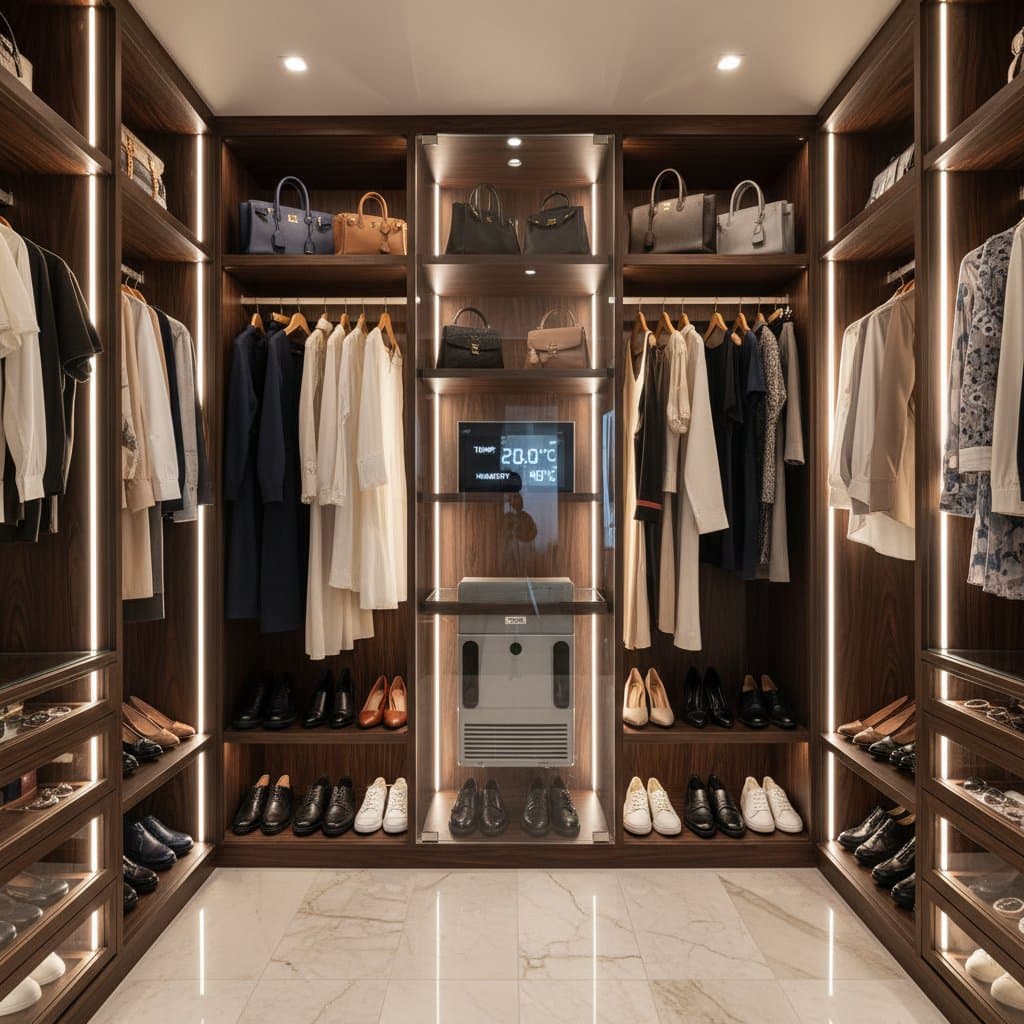
Why Climate Control Preserves Luxury Items
People invest time and money in selecting clothing, handbags, and accessories that reflect personal stories. Each item embodies craftsmanship, memories, or effort. However, even high-quality pieces deteriorate without proper storage conditions. Climate-controlled closets, once limited to elite collectors, now serve anyone seeking to maintain the longevity and beauty of their wardrobe.
The Role of Climate in Storage
Materials like fabric, leather, wood, and metal react to environmental changes. Excess moisture promotes mold growth, while low humidity leads to cracking and brittleness. Temperature fluctuations hasten fading and fiber degradation. Seasonal humidity variations can warp structures, loosen seams, or dull finishes.
Climate-controlled closets maintain stable temperature and humidity levels. This approach focuses on protection rather than excess. It ensures items remain vibrant and intact over time.
Science Behind Preservation
Humidity poses the greatest risk in storage spaces. Damp conditions foster mildew and tarnish, while dryness stiffens leather and dulls silk. Optimal relative humidity for textiles and leather ranges from 45 to 55 percent. This balance avoids the expansion and contraction that result in cracks or color loss.
Stable temperatures prevent condensation within materials. Keep conditions between 65 and 70 degrees Fahrenheit, or 18 to 21 degrees Celsius. Paired with ventilation, this setup reduces oxidation, which yellows natural fibers and packaging.
Effects of Inadequate Storage
Neglected items often develop musty odors from trapped moisture. Leather adheres together, silk loses shape, and metal corrodes. A single humid period can ruin years of curation.
In homes without central systems, closets near exterior walls face extreme shifts. These encourage condensation buildup. Over years, irreversible damage accumulates.
One experience involved a vintage linen jacket that spotted with mildew after a wet summer. Cleaning restored some texture, but fibers remained weakened. This highlights the need for ongoing environmental stability.
Components of a Climate Closet
These closets employ systems to regulate conditions. Features include dehumidifiers, insulated panels, and quiet fans linked to monitors. Larger setups integrate with home HVAC. Smaller ones use portable devices for targeted areas.
For valuable collections, sealed units with sensors and weatherproof doors provide precision. Systems adjust airflow automatically and alert users to deviations.
Key Overview
- Beneficiaries: Homeowners, renters, and collectors preserving fine clothing, shoes, accessories, or textiles.
- Optimal Settings: 65 to 70 degrees Fahrenheit (18 to 21 degrees Celsius), 45 to 55 percent relative humidity.
- Setup Options: Integrated systems or portable units based on space and budget.
- Cost Spectrum: Starting at a few hundred dollars for basic dehumidifiers, up to thousands for advanced installations.
- Upkeep: Clean filters, calibrate devices, and inspect seals annually.
Safeguarding Materials
Tailor conditions to specific needs while avoiding extremes.
Leather: Prioritize humidity to retain natural oils. Dry air cracks seams; excess moisture breeds mildew quickly.
Silk and Wool: Protect from heat and dampness to maintain suppleness. Controlled spaces prevent weakening and fading.
Wood and Veneer: Stable humidity avoids warping in items like shoe trees or boxes. Finishes stay smooth.
Metal Elements: Consistent levels halt oxidation on zippers and clasps, preserving shine and function.
Optimizing Lighting and Ventilation
Use cool LED lights to avoid heat buildup. Warm white tones enhance appearances without raising temperatures. Motion sensors limit exposure.
Promote airflow to eliminate stagnant areas. Position vents low and high for convection. This ensures even distribution, even with doors closed.
Advanced Monitoring Tools
Digital sensors provide real-time data on conditions. Connect them to apps for trend alerts. Integration with smart home devices enables automatic adjustments during weather shifts.
Budget options include affordable standalone hygrometers. They guide use of dehumidifiers or desiccants to correct imbalances promptly.
Affordable Protection Strategies
Partial measures deliver results without full installations.
- Portable Dehumidifiers: Place compact units on shelves to remove moisture silently.
- Desiccants: Reusable silica gel or clay packs absorb humidity at low cost.
- Breathable Covers: Opt for cotton or linen garment bags with vents; skip plastic to prevent trapping dampness.
- Monitoring Devices: Digital thermometer-hygrometers track levels simply.
- Organization Tips: Space items at least one inch apart on sturdy hangers for better circulation.
These methods build a protective environment incrementally.
Beyond Material Value
Preservation extends to emotional significance. Items like a special dress or heirloom bag hold personal narratives. Proper care keeps these stories alive.
A climate closet maintains more than objects. It sustains the histories they represent, ensuring memories endure.
Expert Perspectives
Designers emphasize climate integration in luxury spaces. Organizer Marisa Chen notes that humidity control keeps items looking pristine, beyond mere lighting or storage.
Architect Daniel Ruiz views closets as galleries requiring precise air quality. He incorporates concealed vents and embedded sensors for seamless function.
This philosophy merges preservation with elegant design.
Sustainability Benefits
Extended item life reduces waste and the need for replacements. Quality pieces circulate longer, supporting eco-conscious habits.
Energy-efficient tools, like dehumidifiers with low-power modes, minimize consumption. Durable, resistant materials in setups last longer too.
Pitfalls to Sidestep
Systems falter with poor practices. Address these for optimal performance:
- Overpacking: Allows heat and moisture to build; provide space.
- Sealed Plastics: Trap dampness leading to mold; select permeable options.
- Dirty Items: Residues invite pests; clean thoroughly before storing.
- Skipped Checks: Dust clogs components; maintain regularly.
- Weather Oversight: Monitor during changes, even with automation.
Implementing in Any Space
Assess your closet for problem areas, like uninsulated walls. Insulate or add resistant linings. Seal doors to block fluctuations.
Small areas suit portable dehumidifiers and monitors. Larger ones benefit from HVAC ties or custom vents hidden in cabinetry.
Renters can use stackable boxes with control packets or corrosion-resistant modular racks.
Everyday Advantages
Installed systems enhance routine use. Fabrics stay fresh, leather supple, and items odor-free. Maintenance integrates easily into habits.
Over time, colors hold true, hardware functions smoothly, and shapes persist. These enhancements create a reliably maintained collection.
Preservation complements style. Showcase pieces with lighting and displays. This balance of care and creativity extends enjoyment of cherished belongings.
Sustaining Your Collection
From couture to vintage finds, stable conditions protect investments and sentiments. Begin with basic tools and expand based on needs. Consistency forms the foundation.
View the closet as a balanced system. Regulated air supports contents, fostering harmony in your home.