
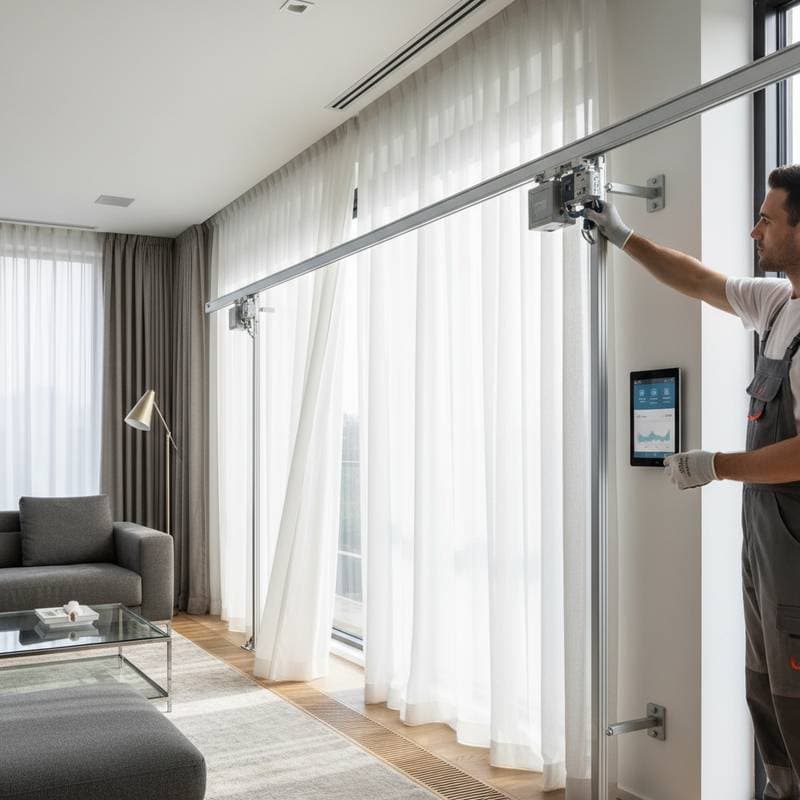
Why Motorized Curtain Tracks Surpass Traditional Rods
Motorized curtain tracks enable effortless opening and closing of curtains via a single touch or voice command. These systems represent an advanced evolution from conventional pull rods.
Traditional rods often prove cumbersome, particularly for expansive windows or substantial drapery. Motorized tracks manage the task with quiet precision and reliability.
This guide examines how motorized systems enhance everyday functionality, promote energy conservation, and safeguard drapes. For curtains intended solely for decoration or infrequent adjustment, manual rods remain a viable option.
Essential Considerations
Motorized curtain tracks incorporate a compact, low-voltage motor that glides drapery along a discreet rail. Integration with remote controls, sensors, or smart home applications expands their utility. Key constraints include proximity to electrical sources and adherence to weight capacities for the fabric. Verify motor compatibility with curtain weight prior to installation to avoid operational strain or excessive noise.
Required Tools and Materials
- Screwdriver set
- Measuring tape
- Level
- Power drill
- Curtain hooks or gliders
- Low-voltage power adapter or nearby outlet
- Remote control or smart plug
- Optional: stud finder for secure mounting
Installation Guide
1. Measure the Window Width
Determine the inside or outside mount area based on your preferred design. Extend measurements by two to four inches on each side to ensure complete coverage.
2. Select the Appropriate Track Length
Choose a track that exceeds the window span slightly. Numerous models accommodate trimming or extension through connector kits.
3. Secure the Brackets
Anchor brackets to wall studs where feasible. In their absence, employ drywall anchors rated for the load. Maintain level alignment to facilitate unobstructed movement.
4. Affix the Track
Secure the track to the brackets via snaps or screws. Position the motor end toward the closest power source to minimize visible wiring.
5. Wire the Motor
Connect the motor to the power adapter or outlet. Certain models support concealed wiring routed behind the curtain header for enhanced aesthetics.
6. Install Drapery Hooks
Attach curtain panels uniformly to the gliders using clips. Ensure each hook engages fully to avert snags during operation.
7. Calibrate Motor Direction
Operate the curtain through a full open and close cycle using the remote or app. Adjust polarity reversal if the direction proves incorrect.
8. Configure Limits and Speed
Establish precise open and close endpoints on most systems. Fine-tune these settings to prevent overextension or fabric bunching.
9. Test and Finalize
Execute multiple cycles to verify smooth performance. Conceal exposed wires with clips or fabric covers to achieve a professional appearance.
Best Practices and Pitfalls
Recommended Actions
- Measure the window span twice prior to purchase.
- Confirm curtain weight aligns with motor specifications.
- Allow the system to cool after extended use to mitigate overheating.
- Maintain fresh batteries in the remote for reliable operation.
Actions to Avoid
- Refrain from manual pulling of powered curtains, as this risks gear damage.
- Position the motor away from moisture unless the unit carries a damp-rated certification.
- Limit each track to its designated panel capacity to prevent overload.
- Complete alignment testing before fully tightening components.
Professional Installation Scenarios
Engage a specialist for installations involving distant power outlets, in-wall wiring concealment, or windows beyond safe ladder access. Seek expert assistance for mounting on fragile plaster or untreated wood, which may fracture under stress. A qualified installer verifies motor torque and weight tolerances suit your drapery configuration.
Investment and Timeline Overview
Basic motorized track kits approximate the expense of mid-tier manual rods augmented with high-end fixtures. Prices span from a few hundred dollars for entry-level units to several hundred for advanced models featuring voice activation. Installation typically requires one to three hours, influenced by window dimensions and surface conditions. Primary expenses stem from motor power, control features, and electrical accommodations.
Ongoing Maintenance- Clean tracks periodically with a dry microfiber cloth.
- Inspect gliders for dust accumulation that impedes motion.
- Activate the motor weekly to preserve component flexibility.
- Monitor for grinding sounds or irregular travel, indicative of misalignment.
- Renew remote batteries annually or upon signal weakening.
Practical Advantages
Motorized curtain tracks introduce subtle yet significant enhancements to daily comfort. They permit light and privacy adjustments without traversing the room. Programmable schedules align openings with dawn or closures during intense sunlight, aiding temperature regulation and fabric preservation.
Interior designer Marisa Kent, specializing in smart home solutions, observes, “Motorized drapery makes it easier to use curtains daily, not just leave them half-open.” She highlights that automation addresses the reluctance to manipulate cords or rods, promoting consistent use.
Paired with temperature sensors, these tracks automate responses to rising room heat, curbing air conditioning demands and shielding furnishings. In cooler regions, scheduled evening closures retain interior warmth. Seasonal energy reductions accumulate meaningfully over time.
Additionally, even motor distribution minimizes uneven stress from manual handling, preserving seam integrity and hem alignment. This feature proves invaluable for bespoke, high-value fabrics, prolonging their durability.
Aesthetic and Usability Enhancements
Motorized tracks facilitate streamlined visuals by recessing hardware behind valances or ceilings, directing focus to the drapery itself. Absence of cords enhances safety for children and pets.
Select from low-decibel motors emitting only a gentle hum. Compatibility with voice assistants or mobile apps enables remote management, ideal for expansive vistas.
Lighting expert Owen Lee of BrightSpace Design emphasizes that automated curtains “help layer light levels with precision.” He recommends integration with dimmers or intelligent bulbs to craft tailored atmospheres for various activities, from focused reading to social gatherings.
Implementing Your System
Transitioning to motorized tracks involves assessing your space's electrical layout and drapery specifications. Start with a compatible kit suited to your window scale. Follow the outlined steps for a seamless setup that yields lasting efficiency and style. Regular upkeep ensures optimal performance, transforming routine tasks into effortless routines.